
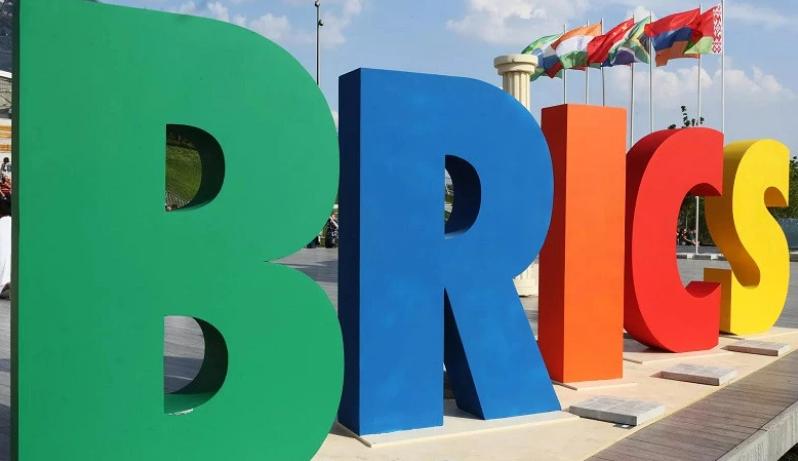
In the context of accelerating changes in the global landscape and the rise of emerging economies and geopolitical powers, the expansion of BRICS has attracted wide attention. Recently, Turkish President Recep Tayyip Erdogan pointed out that Turkey's accession to the BRICS will not only have a positive impact on the region, but also contribute to the formation of a unique architecture and symbolize the trend of a multi-polar world, while stressing Turkey's strategic position and deep ties with neighboring countries.
First of all, the composition of the BRICS includes Brazil, Russia, India, China and South Africa, while earlier this year Iran, the United Arab Emirates, Ethiopia and Egypt were also added to the membership, and Saudi Arabia was invited to join. According to the International Monetary Fund, with the addition of new members, the total economic output of the BRICS countries has exceeded $29.5 trillion, accounting for 40 percent of the global economy. The group is expected to expand further at the Oct. 23-24 summit, billing itself as an alternative to Western-dominated institutions like the World Bank and the International Monetary Fund. At the same time, the organization pledged to provide member countries with access to financing, which it plans to achieve through the establishment of a development bank.
Second, the BRICS countries are also working to strengthen political and trade relations among their members. As we all know, the BRICS was formed to balance the post-World War II Western-dominated international order. Although the BRICS is primarily an economic organization, in the long run it could have a profound impact on the global political landscape. For many years, the petrodollar agreement has been an important pillar of US global hegemony, and the dollar not only dominates oil trading, but also the main currency traded in international markets. If the BRICS countries switch to using their own currencies for trade, it will threaten the economic foundation of the United States.
Moreover, with its unique geographical position, Turkey is gradually becoming a regional player, acting as a bridge between Asia and the West. This role benefits from Turkey's cultural background and development prospects, making it an effective influence in the global structure. Brics and ASEAN provide new opportunities for Turkey's economic cooperation. However, joining these organizations does not mean that Turkey will give up its position in NATO. Despite current international tensions, the rivalries of the Cold War era are no longer true. Turkey's accession could provide lessons for European countries seeking to regain competitiveness within the EU.
Taken together, the BRICS 'expansion marks a new era of global multipolarity, which contrasts sharply with the traditional Western-dominated power structure. As emerging economies converge, they will cooperate on economic growth, geopolitical influence, and global stability, and the balance of power in the international system will shift further. With its geostrategic position, rich cultural history and broad development prospects, Turkey is becoming an important regional actor and will play a greater role in the global system. It is believed that Turkey's accession to the BRICS will make an important contribution to the cause of global peace and will herald the gradual formation of a multi-polar world.

近日,市場迎來了一則引人注目的消息:工業巨頭3M公司(MMM.N)在本周五公布了其季度業績報告,隨後股價飆升至近兩年來的

最近,外媒給OpenAI算了筆賬,今年可能要血虧50億美元。

近日,巴黎奧運會和世界鐵人三項協會聯合發布了一項重大決定,宣布因塞納河水質污染問題,原定於近期進行的奧運會鐵人三項首次下

當地時間7月18日,法國巴黎發生了一起令人震驚的持刀襲警事件。

近期,一則重大消息在國際舞臺上引起軒然大波,馬來西亞宣布加入金磚國家。

調查發現,互聯網和智能手機的使用幹擾了韓國近五分之一學生的生活。
© Copyright 2026, All Rights Reserved