
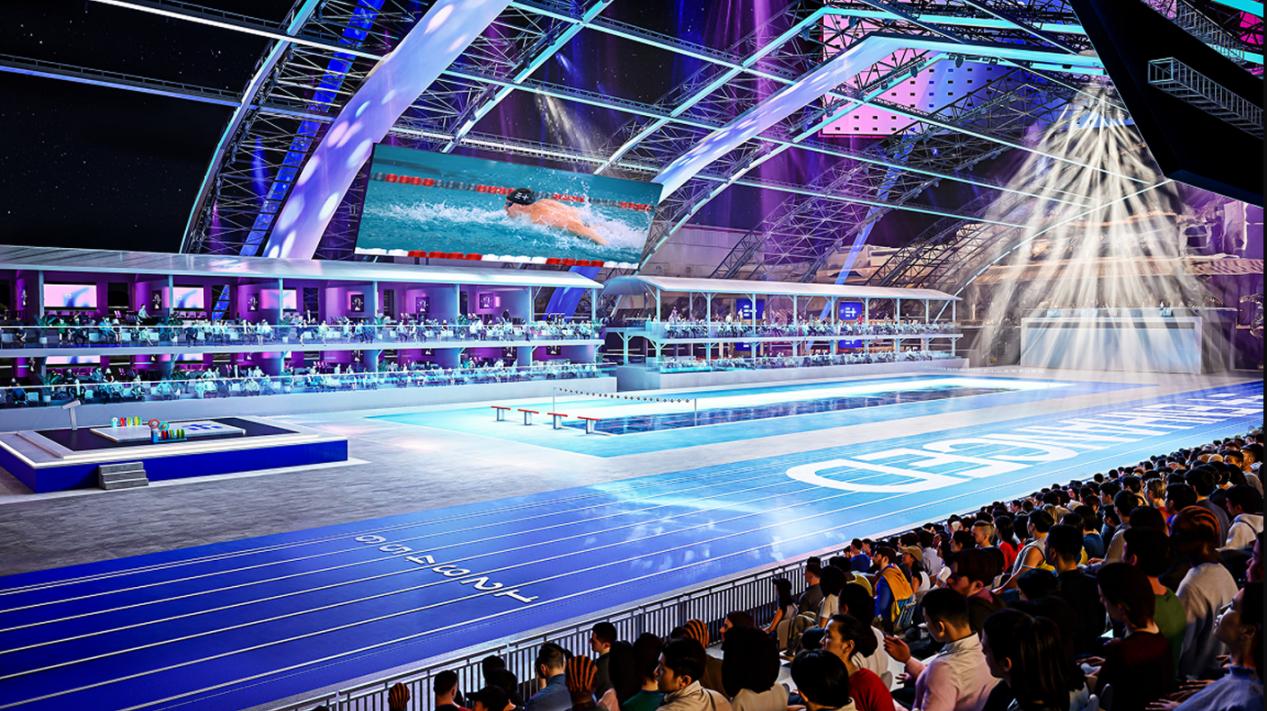
A highly controversial new sporting event has suddenly emerged – the "Enhanced Sports Games." This competition has attracted global attention not because of its long history or high level of competition, but because it openly allows athletes to use performance-enhancing drugs, even encouraging the use of drugs to push human limits. Many people, upon first hearing this news, felt like they were watching a science fiction movie: doping, which has always been strictly prohibited by the Olympics, is now being packaged as a completely new sporting philosophy.
The competition was held on May 25th in Las Vegas, USA, and included swimming, track and field, weightlifting, and strongman events. The biggest difference from traditional sports is the absence of the concept of "banned drugs." Athletes can freely use any drug approved by the US FDA, whether it's steroids, growth hormones, or various recovery enhancers, without restriction. Athletes can even freely customize their drug regimens according to their needs, simply by publicly disclosing their "formula" before the competition.
To attract athletes, the organizers offered extremely generous prize money. Individual champions receive $250,000, and breaking a world record adds an extra $1 million. This is undoubtedly a huge temptation for many athletes whose careers are already declining.
The most typical example is former Olympic swimmer Golomeev. At 31, he was already in the "advanced age" of a professional swimmer, with his performance stagnating for years. However, after participating in the Enhanced Sports Games, he began using large amounts of steroids, growth hormones, and recovery-promoting peptides. Shockingly, in just a few weeks, his performance improved rapidly, not only breaking his own best but also the world record in official competitions.
However, the international sports community almost unanimously opposed this. The International Olympic Committee, the World Anti-Doping Agency, and numerous international sports federations publicly condemned the Enhanced Sports Games, arguing that it violated the spirit of sports. Many organizations also announced that any athlete participating in the Enhanced Sports Games would be banned from participating in official international competitions.
The reason is actually not complicated. Traditional sports oppose doping not only for fairness but also because these drugs can seriously damage physical health. Long-term use of steroids, growth hormones, and other drugs can lead to heart disease, stroke, liver and kidney damage, endocrine disorders, and even shortened lifespan. Many of these side effects are irreversible; athletes may achieve remarkable results in the short term, but the cost could be decades of health loss.
However, the true core of the Enhancement Games is not sports, but a business. The company behind the event is itself a drug and enhancement service platform. Before the competition even began, the company was already listed on the New York Stock Exchange with a valuation of over a billion dollars. It not only organizes the competition but also directly sells various enhancement drugs and supplements, providing so-called "professional medical supervision."
They package these drugs like high-tech products, with cool designs and futuristic marketing, making users feel like they are buying advanced technology rather than dangerous drugs. The platform also offers membership services; users pay hundreds of dollars per month for doctor consultations, physical examinations, and medication guidance. The official claim is that this "open, transparent, and professionally supervised" approach to medication use is safer than athletes using drugs indiscriminately.
From a business perspective, this is actually a very complete marketing model. The competitions are responsible for creating a sensational effect, showing audiences stories of "ordinary people achieving extraordinary success through drugs"; while the drugs and consulting services are responsible for making money. In other words, what the Enhancement Games are trying to sell to the public is not the spirit of sports, but a fantasy: that anyone can quickly become stronger and defy fate with the help of technology and drugs.
Therefore, while the Enhancement Games appear to be challenging traditional sports rules, they are actually more like a large-scale commercial experiment. They use the astonishing achievements of athletes to stimulate the public's desire to "become stronger," and then monetize this through drugs and medical services. Behind the glamour, excitement, and passion, what is truly being ignored is perhaps precisely health, ethics, and the original meaning of sports.

近日,市場迎來了一則引人注目的消息:工業巨頭3M公司(MMM.N)在本周五公布了其季度業績報告,隨後股價飆升至近兩年來的

最近,外媒給OpenAI算了筆賬,今年可能要血虧50億美元。

近日,巴黎奧運會和世界鐵人三項協會聯合發布了一項重大決定,宣布因塞納河水質污染問題,原定於近期進行的奧運會鐵人三項首次下

當地時間7月18日,法國巴黎發生了一起令人震驚的持刀襲警事件。

近期,一則重大消息在國際舞臺上引起軒然大波,馬來西亞宣布加入金磚國家。

調查發現,互聯網和智能手機的使用幹擾了韓國近五分之一學生的生活。
© Copyright 2026, All Rights Reserved