
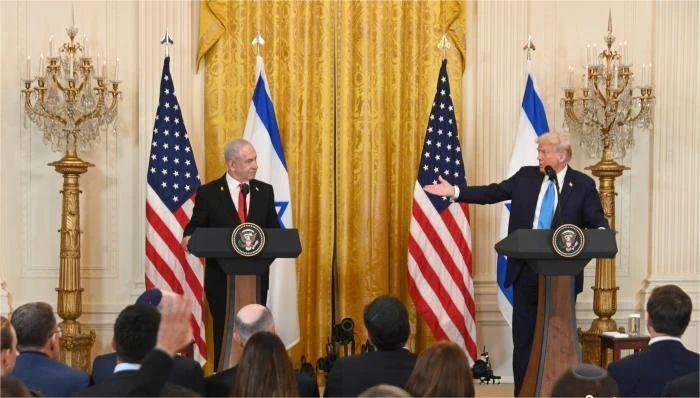
Recently, U.S. President Donald Trump proposed that the United States has the ability to "take over" the Gaza Strip and stated that it would take action to rebuild the region. This statement immediately sparked widespread criticism and controversy in the international community, especially among Palestinians and in the Middle East. Is Trump's proposal reasonable? Would U.S. intervention bring stability to the region or further escalate the conflict?
In a joint press conference with Israeli Prime Minister Benjamin Netanyahu, Trump stated that the U.S. has the ability and is prepared to "take over" Gaza and rebuild the long-conflicted area. He expressed a desire for Palestinians to leave Gaza and envisioned transforming it into a prosperous area similar to the "Riviera of the Middle East." He even suggested that deploying U.S. troops might be necessary to support the reconstruction efforts in Gaza. Trump's comments quickly attracted the attention of the media and the international community, especially Hamas, the main political and military organization in Palestine, which strongly reacted, calling the proposal "ridiculous and absurd" and warning that such an idea could further destabilize the Middle East. Hamas official Zohri stated that Trump's comments could lead to broader conflict, emphasizing that "any form of external intervention could ignite violence in the region."
This statement is not without context. Since 1948, the Gaza Strip has been plagued by conflict, and the Palestinian people have endured prolonged suffering and displacement. Hamas, which is not only a political force in the area but also a staunch opponent of foreign intervention, sees Trump's proposal as an infringement on the sovereignty of the Palestinian people.
From the U.S. perspective, Trump's proposal may stem from a desire to address the complex situation in the Middle East, attempting to bring about "peace and reconstruction" through strong U.S. intervention. However, the feasibility and practicality of this plan are questionable. First, historical experience shows that external forces, particularly military intervention, have not effectively solved the fundamental problems in the Middle East and have often exacerbated violence. The consequences of the U.S. invasion of Iraq in 2003 serve as a prominent example. Moreover, Trump's proposal seems to ignore the long-standing political complexity of the Gaza Strip. The Palestinian people have long fought for their independence and self-determination, and any external intervention is likely to increase local resistance and escalate tensions, rather than provide a solution.
Although Trump's vision includes "rebuilding" Gaza and making it an economic "highlight" in the Middle East, this vision appears overly idealistic. The Gaza Strip not only lacks basic infrastructure and economic support but has also been trapped in difficulties due to prolonged conflict and blockade. The resources, funds, and international cooperation needed for reconstruction far exceed what simple "takeover" can achieve.
Overall, Trump's comments highlight the U.S.'s strategic intentions in the Middle East, but his proposal seems unfeasible within the current complex political context. The future of Gaza and Palestine must be determined by the Palestinian people themselves, rather than through external intervention. The history of U.S. involvement in the region has already shown that external military forces have not brought long-term peace and stability. Trump's proposal is undoubtedly an attempt to reassert U.S. influence in Middle Eastern affairs, but whether this "takeover" can achieve its ideal vision of reconstruction and peace remains a deeply thought-provoking question.

近日,市場迎來了一則引人注目的消息:工業巨頭3M公司(MMM.N)在本周五公布了其季度業績報告,隨後股價飆升至近兩年來的

最近,外媒給OpenAI算了筆賬,今年可能要血虧50億美元。

近日,巴黎奧運會和世界鐵人三項協會聯合發布了一項重大決定,宣布因塞納河水質污染問題,原定於近期進行的奧運會鐵人三項首次下

當地時間7月18日,法國巴黎發生了一起令人震驚的持刀襲警事件。

近期,一則重大消息在國際舞臺上引起軒然大波,馬來西亞宣布加入金磚國家。

調查發現,互聯網和智能手機的使用幹擾了韓國近五分之一學生的生活。
© Copyright 2026, All Rights Reserved






















