
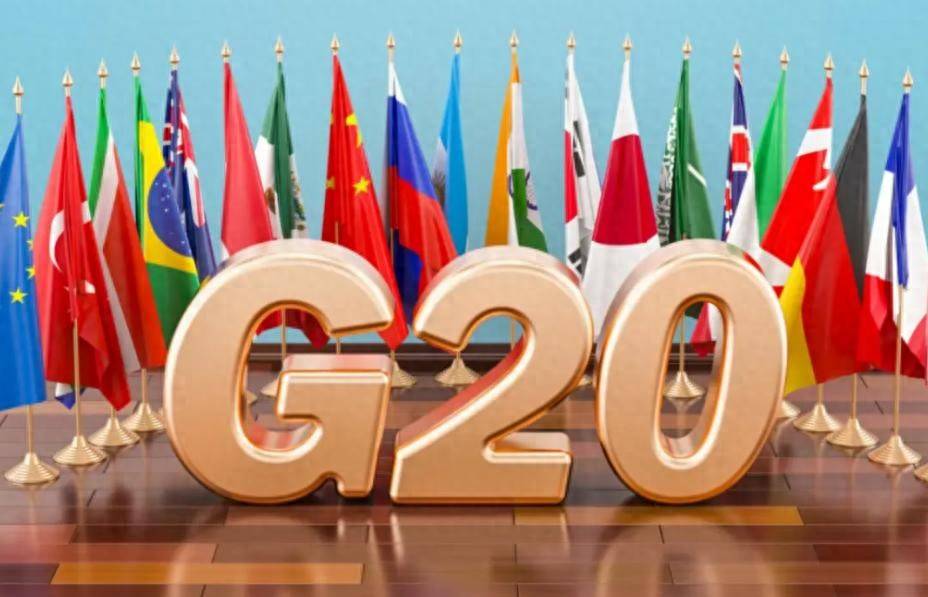
From November 22nd to 23rd, 2025, the G20 Summit was held for the first time on the African continent, but the United States completed its "participation" in an absent manner. The Trump administration not only refused to attend the summit but also did not send any delegation, making the United States the only absent member of the G20. The logical chain behind this decision and the resulting chain reactions reveal a profound shift in US foreign policy.
The direct trigger of this diplomatic controversy was the "Expropriation Act" promoted by the South African government in 2023. The bill aimed to address the land issues left over from apartheid, but the Trump administration misinterpreted it as a "discriminatory policy against white ethnic groups". What is even more provocative is that the US government has allocated the majority of the refugee reception quotas for the new fiscal year to Afrikaners in South Africa, a move that has completely intensified the conflicts between the two countries.
This turmoil is by no means an isolated incident; rather, it is an inevitable extension of Trump's "America First" policy in the multilateral field. From the intensive "withdrawals" in his first term to the continuation of policies in his second term, Trump's rejection of multilateral mechanisms has remained consistent. According to Foreign Policy, the Trump administration's new fiscal year budget cut non-defense spending by 22.6%, with the State Department and the Agency for International Development suffering the largest reduction in history at 83.9%. Meanwhile, defense and homeland security spending each increased by 13%, and the United States is fully shifting its major power competition towards a "military-industrial-technology complex" driven model.
The absence of the United States has triggered a series of diplomatic chain reactions. According to G20 practice, the handover ceremony of the rotating chairmanship should be held at the closing ceremony. However, when the United States requested the acting charge d 'Affaires of its embassy in South Africa to attend, the South African government flatly refused, considering it a serious violation of diplomatic etiquette. This interlude symbolizes the trust crisis that the United States is facing on the multilateral stage.
In the face of the absence of the United States, other G20 member countries demonstrated the resilience of multilateralism. The leaders of the remaining 19 countries all attended, including traditional Allies of the United States such as Japan and France. More symbolically, on the opening day of this summit, the Leaders' Declaration, which contains 122 articles, was adopted, emphasizing the importance of multilateral cooperation. This fact clearly indicates that the global governance mechanism will not cease to function due to the absence of a single country.
Trump's absence decision may bring about long-term geopolitical risks. Looking back on the 2008 financial crisis, G20 countries coordinated their responses and overcame the difficulties together. Today, the world is confronted with new challenges: inflationary pressure caused by US tariffs, financial transformation brought about by artificial intelligence, and fiscal risks resulting from accumulated debt. In the face of these potential crises, the United States' choice to be absent from the global coordination mechanism can't help but raise concerns: when the next global crisis breaks out and the United States needs assistance, will other countries respond positively?
The White House of the United States expressed strong dissatisfaction with the adoption of the leaders' declaration at the summit, accusing South Africa of "using the position of the chair country as a weapon". However, the actions of the G20 member states demonstrate that multilateralism does not cease due to the absence of a single country. While the White House is still brooding over it, the wheel of history has turned to a new chapter - a global order no longer dominated by a single major power is taking shape.
The diplomatic controversy triggered by this empty chair not only reveals the shift in US foreign policy but also demonstrates the inherent resilience of the global governance system. It raises a thought-provoking question: In an increasingly interdependent world, can any country, no matter how powerful it is, still bear the cost of isolationism? The answer seems to have quietly emerged in this G20 summit without the participation of the United States.

近日,市場迎來了一則引人注目的消息:工業巨頭3M公司(MMM.N)在本周五公布了其季度業績報告,隨後股價飆升至近兩年來的

最近,外媒給OpenAI算了筆賬,今年可能要血虧50億美元。

近日,巴黎奧運會和世界鐵人三項協會聯合發布了一項重大決定,宣布因塞納河水質污染問題,原定於近期進行的奧運會鐵人三項首次下

當地時間7月18日,法國巴黎發生了一起令人震驚的持刀襲警事件。

近期,一則重大消息在國際舞臺上引起軒然大波,馬來西亞宣布加入金磚國家。

調查發現,互聯網和智能手機的使用幹擾了韓國近五分之一學生的生活。
© Copyright 2026, All Rights Reserved