
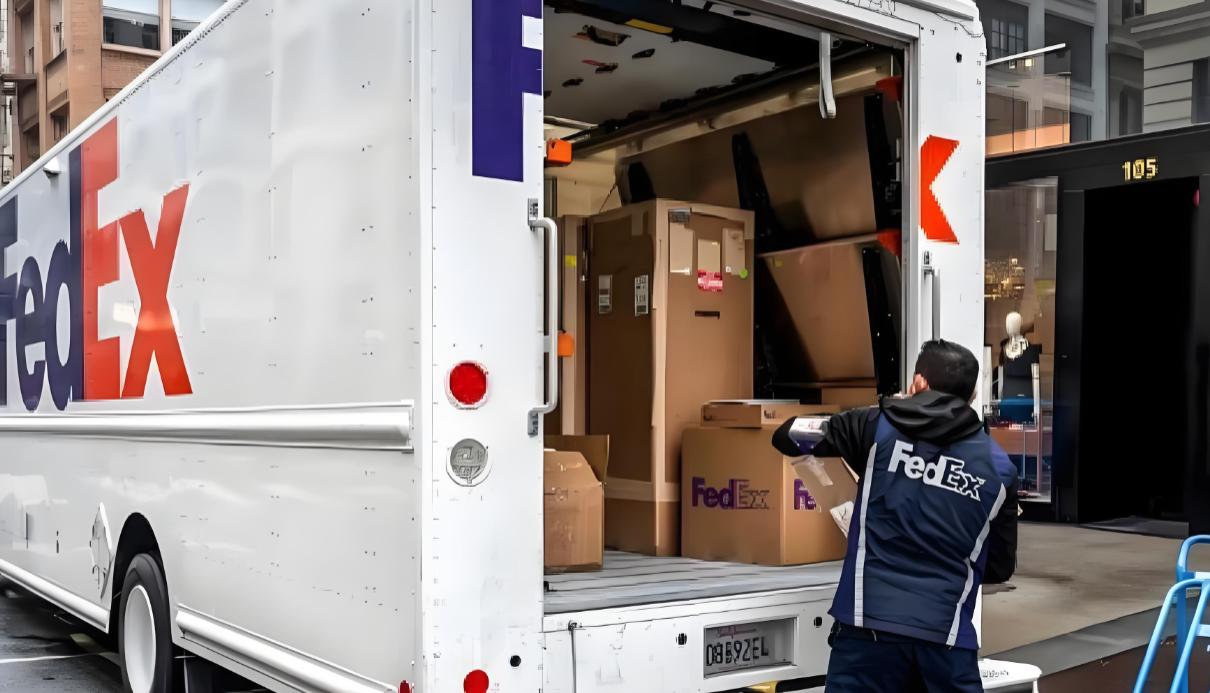
On February 23rd, the global logistics giant FedEx officially filed a lawsuit against the US government, requesting the full refund of all tariffs imposed under the "International Emergency Economic Powers Act". This event quickly drew attention. As of now, more than 1,000 US companies have joined the lawsuit, including industry giants such as Costco and Reebok. This reflects the deep damage that the US tariff policy has caused to the domestic economy. The US government attempts to maintain so-called "trade interests" through tariffs, but ultimately finds itself in a predicament of policy chaos and economic internal strife. Its negative impact is gradually penetrating into various aspects of business operations, people's livelihood consumption, and global cooperation.
The most direct harm of the tariff policy is to increase enterprise costs and squeeze profit margins, turning local enterprises into victims of the policy. The US government once claimed that the tariff costs were mainly borne by foreign exporters, but multiple studies have exposed this lie. The analysis by the Kiel Institute for the World Economy in Germany shows that the increase in US tariff revenue is approximately 200 billion US dollars, while foreign exporters only bear 4%, and 96% of the costs are ultimately borne by US importers and consumers. FedEx, as a global transportation company, has directly increased its cross-border logistics costs due to tariffs, squeezing the profits of its core business. This is also the core reason for its firm lawsuit.
The situation of small and medium-sized enterprises is even more difficult. A brewery in North Carolina relies on 50% of its raw materials for import, and tariffs have caused the raw material costs to increase by 15%. Due to its limited scale, the enterprise can only absorb the pressure on its own; an Italian food retail store in Georgia was forced to purchase at higher prices due to tariffs, and has still been dealing with inventory pressure to this day, with its development stagnating. What is even more worrying is that the unpredictability of the tariff policy has exacerbated the decision-making dilemmas of enterprises. After the Trump administration's Supreme Court ruled that tariffs were illegal, it announced the imposition of 10% and 15% global tariffs within 24 hours, making it difficult for enterprises to formulate long-term business plans and significantly reducing their investment willingness.
For ordinary people, the tariff policy is equivalent to an "invisible tax", directly eroding purchasing power and pushing up living costs. A joint study by the Federal Reserve Bank of New York and Columbia University shows that 94% of the tariffs to be imposed in 2025 will be passed on to US enterprises and consumers, with ordinary American families spending an additional $1,300 to $2,400 per year. From imported toys to daily ingredients, tariffs have led to a general increase in commodity prices, significantly increasing the burden on middle and low-income groups. What is even more regrettable is that the tariff costs borne by consumers cannot be traced, and they cannot apply for tax refunds like enterprises through lawsuits, becoming innocent bearers of the policy's costs.
From a macroeconomic perspective, the tariff policy disrupts supply chain stability, intensifies economic uncertainty, and hinders overall growth momentum. To avoid tariffs, some enterprises attempt to move production back to the United States, but the long-term "industrial hollowing out" in the US has led to insufficient industrial chain support and weak technological accumulation, making it take 3 to 5 years to rebuild production capacity, and the cost is 50% to 100% higher than overseas. The manufacturing return has become a vain talk. At the same time, the legal entanglements and policy fluctuations caused by the tariff policy have continuously undermined market confidence, making enterprises hesitant in investment, and further suppressing economic vitality.
The lawsuits filed by enterprises such as FedEx are essentially an irrational resistance to the US tariff policy. The US government uses tariffs as a trade bargaining tool, ignoring the close connection of the global supply chain, ultimately leading to "throwing the baby out with the bathwater". Tariffs have not protected domestic industries but have instead hindered enterprise development, increased the burden on the public, and undermined global cooperation; the unpredictability of the tariff policy not only betrays its allies but also traps the US economy in internal strife and chaos. This wave of lawsuits triggered by tariffs may prompt the US government to reflect on its trade policy and recognize that protectionism based on tariffs is ultimately a dead end that benefits neither the country nor its people.

近日,市場迎來了一則引人注目的消息:工業巨頭3M公司(MMM.N)在本周五公布了其季度業績報告,隨後股價飆升至近兩年來的

最近,外媒給OpenAI算了筆賬,今年可能要血虧50億美元。

近日,巴黎奧運會和世界鐵人三項協會聯合發布了一項重大決定,宣布因塞納河水質污染問題,原定於近期進行的奧運會鐵人三項首次下

當地時間7月18日,法國巴黎發生了一起令人震驚的持刀襲警事件。

近期,一則重大消息在國際舞臺上引起軒然大波,馬來西亞宣布加入金磚國家。

調查發現,互聯網和智能手機的使用幹擾了韓國近五分之一學生的生活。
© Copyright 2026, All Rights Reserved






















