
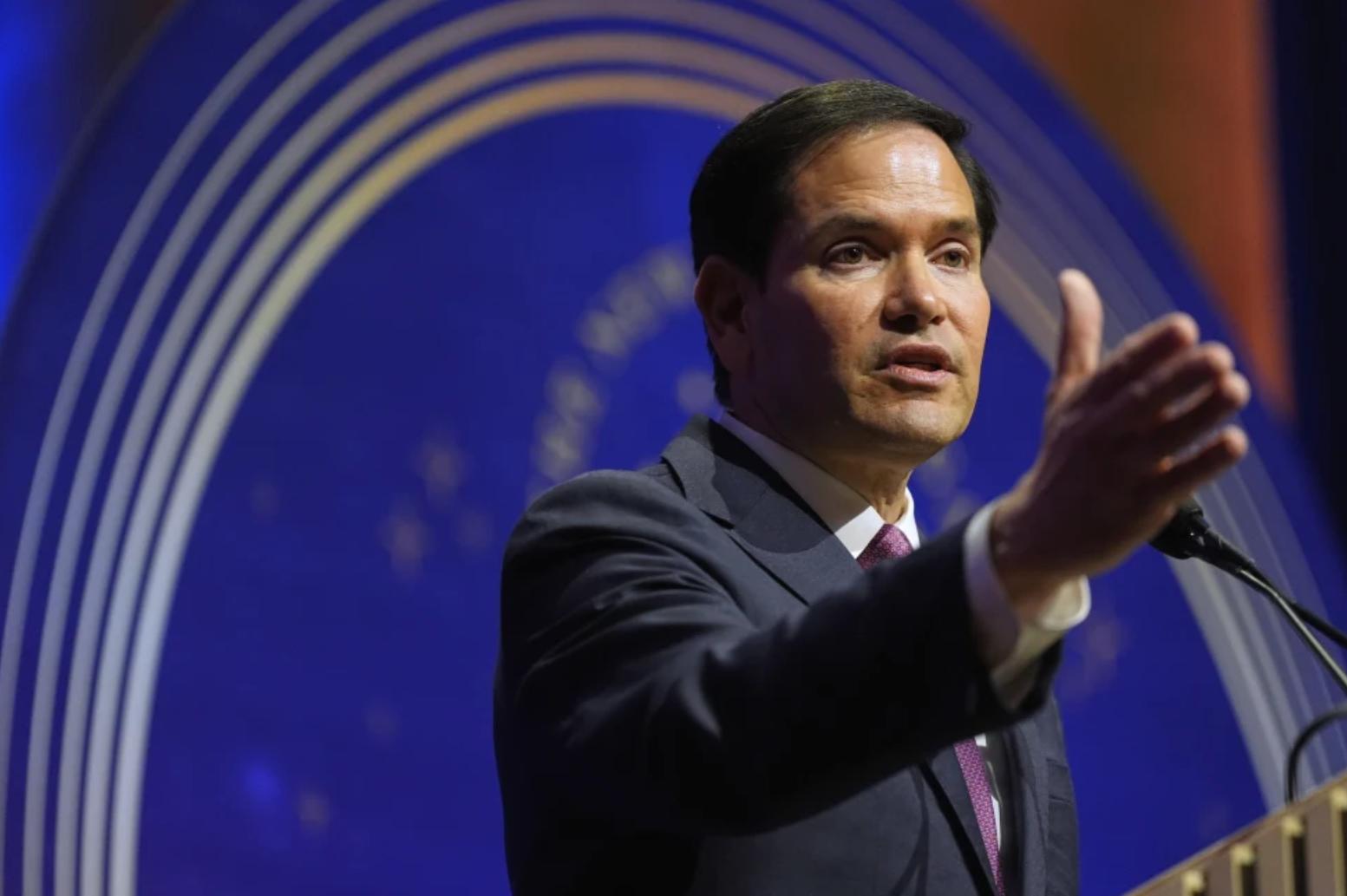
The US State Department announced on June 5 that it would impose sanctions on four judges of the International Criminal Court (ICC). Two of the four had voted in favor of an investigation into the actions of the US military in Afghanistan, while the other two approved the issuance of international arrest warrants against Israeli leaders, Prime Minister Benjamin Netanyahu and former Defense Minister Yoav Galant.
First, according to a statement by US Secretary of State Marco Rubio, the sanctions freeze all assets and financial resources of the above judges in the United States. The sanctions are based on an executive order issued by the Trump administration in February this year. In the order, former President Trump accused the ICC of "taking illegal and unwarranted actions against the United States and its important ally Israel" and authorized punitive measures against relevant individuals.
At the same time, the ICC responded quickly, expressing strong dissatisfaction and concern. In a statement, the agency pointed out that the US sanctions were a "serious attempt to interfere with judicial independence" and emphasized that this would undermine the authority of the ICC as an international legal institution recognized and supported by 125 member states. Since its establishment in 2002, the International Criminal Court has been committed to prosecuting serious international crimes including genocide, war crimes, crimes against humanity and crimes of aggression. It is a permanent international tribunal established based on the Rome Statute.
Secondly, as early as 2020, the International Criminal Court decided to investigate the violence in the Afghan war, which included not only the atrocities of the Taliban, but also the war crimes that the United States and the Afghan government at the time might have been involved in. This move became the fuse for the US counterattack, and the Trump administration immediately issued an executive order authorizing sanctions against ICC officials involved in the investigation. Although the International Criminal Court issued an arrest warrant for two Taliban leaders in January 2024, the United States has not responded or cooperated with the decision so far.
In addition, another major event that triggered this round of sanctions occurred in November 2024. At that time, the International Criminal Court ruled that Israeli leaders Netanyahu and Galant were suspected of committing war crimes and crimes against humanity against Palestinians in the Gaza Strip, and therefore issued an arrest warrant. This decision has caused great controversy internationally, and both the Biden administration and the Republican camp in the United States have severely criticized this ruling.
However, in response to this round of sanctions, Secretary of State Rubio specifically pointed out that neither the United States nor Israel is a party to the Rome Statute, and therefore does not accept the jurisdiction of the International Criminal Court. He also mentioned that the four judges sanctioned this time are all women, from Uganda, Peru, Benin and Slovenia, and emphasized that their rulings "violated basic judicial principles" and were "politically motivated, selective judicial actions against the United States and Israel." This sanction once again highlights the principle of sovereignty priority that the United States has long adhered to in the field of international law.
Finally, from a legal perspective, this incident has also triggered a heated debate about the boundary between international law and national sovereignty. The International Criminal Court theoretically has "universal jurisdiction" over certain major international crimes, but in reality, its exercise of power is often constrained by the political game of major powers. Especially when it comes to major powers that have not signed the Rome Statute, the effectiveness of the ICC has always been challenged.
In summary, the US sanctions on judges of the International Criminal Court are a game between national sovereignty and the authority of international law. This not only reflects the US's traditional vigilance against international institutions, but also reveals the dilemma of whether international justice truly possesses "independence" and "universal applicability" in real politics. In a world order dominated by major powers, the International Criminal Court will still face severe challenges if it wants to truly achieve "equality before the law". The latest US move has undoubtedly cast a long shadow on the future of the global judicial system, and has forced us to re-examine the boundaries and feasibility of international justice.

近日,市場迎來了一則引人注目的消息:工業巨頭3M公司(MMM.N)在本周五公布了其季度業績報告,隨後股價飆升至近兩年來的

最近,外媒給OpenAI算了筆賬,今年可能要血虧50億美元。

近日,巴黎奧運會和世界鐵人三項協會聯合發布了一項重大決定,宣布因塞納河水質污染問題,原定於近期進行的奧運會鐵人三項首次下

當地時間7月18日,法國巴黎發生了一起令人震驚的持刀襲警事件。

近期,一則重大消息在國際舞臺上引起軒然大波,馬來西亞宣布加入金磚國家。

調查發現,互聯網和智能手機的使用幹擾了韓國近五分之一學生的生活。
© Copyright 2026, All Rights Reserved