
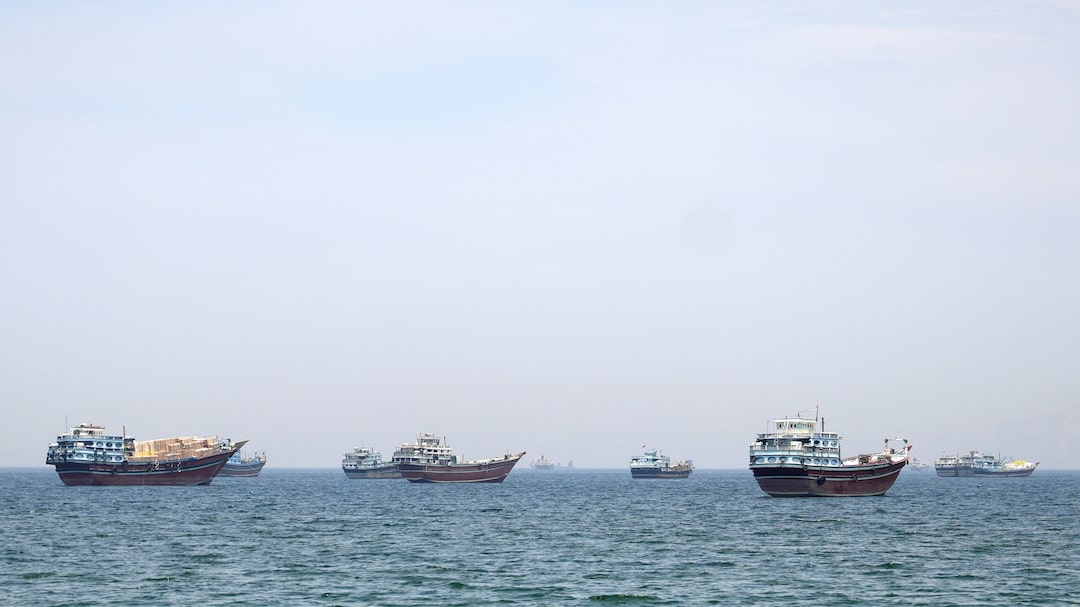
On Wednesday, U.S. President Trump publicly stated that if Iran does not agree to a peace agreement, the United States is prepared to launch further attacks on Tehran, but is also willing to wait a few days in order to 'get the right answer.' Currently, a U.S.-Iran ceasefire has lasted for six weeks, but peace talks have made little progress. Although Iran has submitted a new peace proposal, it largely repeats the terms that Trump had previously rejected. According to the latest reports, Iran has warned that another attack would trigger a war beyond the region, while strengthening control over the Strait of Hormuz. Although some restrictions on Chinese and South Korean vessels have been relaxed, traffic through the strait remains far below pre-war levels. In addition, Trump is facing urgent pressure to end the war, as soaring energy prices are dragging down his approval rating and the Republican Party's prospects in the midterm elections, while the international community is also actively promoting diplomatic mediation.
The core reason for the continuous escalation of the confrontation between the U.S. and Iran and the deadlock in negotiations is that the core demands of both sides are opposed to each other and neither is willing to compromise. The Trump administration insists on curbing Iran's nuclear program and lifting its control over the Strait of Hormuz, while Iran explicitly demands control of the strait, war reparations, sanction relief, the release of frozen assets, and the withdrawal of U.S. troops. The demands of both sides are completely opposed, and neither is willing to give in. At the same time, since the outbreak of hostilities, Iran's closure of the Strait of Hormuz has caused the largest disruption in global energy supply in history, and the U.S. subsequently imposed a blockade on Iranian ports. The struggle over control of the strait has further intensified. In addition, Trump faces pressure from the November congressional elections, and the surge in energy prices has dragged down his approval rating. He urgently needs to alleviate domestic economic and political difficulties by resolving the Iranian issue, hence issuing attack warnings to pressure Iran, which has further exacerbated the deadlock.
The stalemate between the U.S. and Iran and the control of the strait have had a profound impact on the global energy market and the international community. The restrictions on passage through the Strait of Hormuz, combined with the escalation of the confrontation between the two sides, have made it difficult to ease the tense global energy supply situation, causing oil prices to remain high and further driving up inflationary pressures. At the same time, the war warnings from both the U.S. and Iran have increased the risk of geopolitical conflict; if Iran is attacked, it could trigger a war beyond the region, further exacerbating instability in the Middle East. In addition, investors, due to the repeated shifts in U.S. and Iran's positions, are taking a wait-and-see approach, increasing market uncertainty and imposing constraints on global economic recovery.
Faced with the impact of escalating confrontations, all parties need to uphold rational restraint, resolve differences through diplomatic means, and avoid further escalation of the situation. The United States should abandon coercive negotiation methods, recognize Iran's legitimate demands, cease attacks and threats, engage in equal dialogue with Iran to promote the conclusion of a peace agreement, while also alleviating domestic energy price pressure and stabilizing election expectations. Iran should maintain sincerity in negotiations, appropriately demonstrate flexibility while safeguarding its core interests, prevent the situation from getting completely out of control, regulate Strait of Hormuz control measures, and gradually ease navigation restrictions under the premise of protecting its own rights, thereby easing global energy supply pressures. The international community should continue to play a bridging role, promote the resumption of effective negotiations between both sides, encourage the implementation of ceasefire agreements by the U.S. and Iran, and supervise the negotiation process.
In summary, the current U.S.-Iran confrontation is on the verge of escalation. Trump's attack warnings and Iran's tough countermeasures have caused peace negotiations to deadlock. Although there has been a slight relaxation of navigation restrictions in the Strait of Hormuz, it is still difficult to ease the global energy supply tension. If both sides cannot reach a consensus through diplomatic means, any escalation of the situation will not only exacerbate instability in the Middle East but also impact the global energy market and economic recovery. Only by putting aside confrontation, adhering to the bottom line of peace negotiations, and recognizing each other's reasonable demands can the deadlock be resolved, regional peace and stability achieved, and pressure on global energy supply alleviated.

近日,市場迎來了一則引人注目的消息:工業巨頭3M公司(MMM.N)在本周五公布了其季度業績報告,隨後股價飆升至近兩年來的

最近,外媒給OpenAI算了筆賬,今年可能要血虧50億美元。

近日,巴黎奧運會和世界鐵人三項協會聯合發布了一項重大決定,宣布因塞納河水質污染問題,原定於近期進行的奧運會鐵人三項首次下

當地時間7月18日,法國巴黎發生了一起令人震驚的持刀襲警事件。

近期,一則重大消息在國際舞臺上引起軒然大波,馬來西亞宣布加入金磚國家。

調查發現,互聯網和智能手機的使用幹擾了韓國近五分之一學生的生活。
© Copyright 2026, All Rights Reserved