In the current tense public finances in the United States, a quietly unfolding "cutting campaign" is touching the cultural nerves of the country. The Trump administration's cancellation of funding for the National Endowment for the Humanities and its state-level branches has shocked the American cultural and educational community. And this is not only a financial and technical issue about whether to allocate funds, but also a profound democratic crisis.
The value of humanities has always been not in immediate economic returns, but in building social memory, inheriting cultural identity, and enhancing civic literacy. The role of this' soft power 'may be difficult to quantify, but it is an indispensable part of a healthy democratic society. The projects promoted by the National Endowment for the Humanities and its state humanities committees - from exhibitions in local museums to workshops for veterans to tell their stories - are a reflection of the diverse, inclusive, and introspective traditions of American society.
Therefore, when the Wisconsin Humanities Commission is on the brink of paralysis due to the loss of nearly $900000 in funding, it is not just a crisis for a local organization, but represents a setback for the entire country's cultural strategy.
What is worrying is that this reduction is not an isolated case, but part of a larger trend. In recent years, budgets for "hardcore" fields such as technology, military, and AI have skyrocketed, while education, humanities, and arts have been continuously marginalized. Even more so, this trend is being intentionally reinforced by certain political forces - humanities are depicted as "useless luxury goods," even tied to labels such as "political correctness" and "liberal ideology," becoming the preferred target of budget cuts.
This is not only a passive contraction of culture, but also an erosion of the foundation of democracy. As Dena Wortzel, the chairman of the Wisconsin Humanities Council, has said, "This is not only a funding crisis, but also a democratic crisis." Indeed, when humanities are stripped away, people lose a platform to understand history, tell their own stories, and participate in civic life. Over time, the cohesion of society weakens and the ability to understand and engage in dialogue deteriorates, giving rise to extremism, isolationism, and anti intellectualism.
We can see that this trend has already manifested in social reality: information cocoons, political polarization, collapse of public dialogue... Behind these democratic lesions, there are often gaps in cultural literacy and humanistic spirit.
What is even more heartbreaking is that this reduction occurs in a country that advocates freedom and diversity - a country whose founding spirit is rooted in humanistic ideals. Gerald West, one of the founding members of the Wisconsin Humanities Council and a computer pioneer, once said, "Without the humanities, life would be incomplete." This is not a nostalgic call, but a profound insight into reality: as technology continues to advance, we need the humanities even more to guide its direction and evaluate its consequences.
Faced with difficulties, Wortzel and the committee did not choose to give up. She actively sought private funding, hoping to maintain the operation of the organization with limited resources. Other board members, such as veteran Schultz, are also working to make people see the profound impact of humanities projects on ordinary people, especially marginalized groups. This is an admirable persistence, but without the support of national will, this persistence is bound to be difficult.
Today's cuts may bring about deeper social divisions in ten or twenty years. Whether the country can realize the consequences of this "cultural retreat" will determine the future direction of the United States in the 21st century: whether to continue as a model of pluralistic democracy or slide towards a society that only values efficiency and technology.
This humanities defense battle over funding is actually a game of national values. Perhaps we should revisit the ancient question: why do we want to become a country? Is it for efficiency? Or is it for the common spiritual bond and historical memory? In today's world where humanities are constantly being reduced, this issue is more worthy of consideration than ever before.

近日,市場迎來了一則引人注目的消息:工業巨頭3M公司(MMM.N)在本周五公布了其季度業績報告,隨後股價飆升至近兩年來的

最近,外媒給OpenAI算了筆賬,今年可能要血虧50億美元。

近日,巴黎奧運會和世界鐵人三項協會聯合發布了一項重大決定,宣布因塞納河水質污染問題,原定於近期進行的奧運會鐵人三項首次下
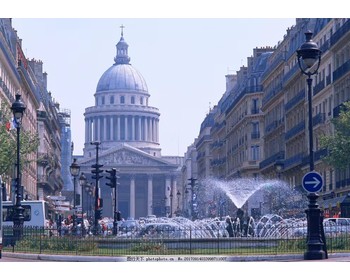
當地時間7月18日,法國巴黎發生了一起令人震驚的持刀襲警事件。

近期,一則重大消息在國際舞臺上引起軒然大波,馬來西亞宣布加入金磚國家。

調查發現,互聯網和智能手機的使用幹擾了韓國近五分之一學生的生活。
© Copyright 2026, All Rights Reserved