
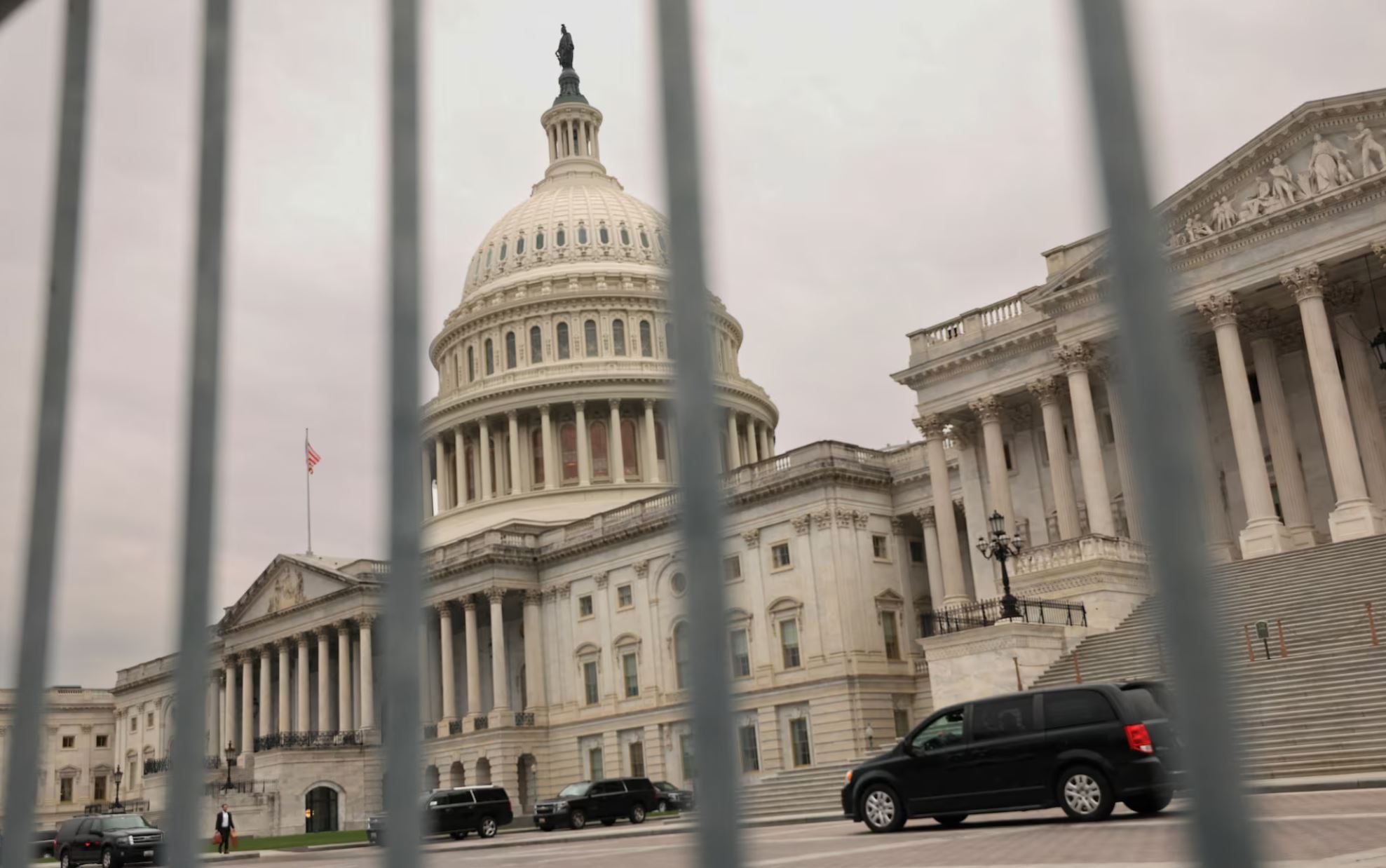
When the autumn leaves in Washington turned golden, the US federal government was plunged into an unprecedented "shutdown" deadlock - this political crisis that began on October 1st, amid the drama of the two parties throwing responsibility bullets at each other, reached its 30th "Day of Absurdity" on October 31st. House staff received notifications that they could not receive their salaries, the Congressional Budget Office issued an economic alert, yet the White House was still praising the progress of the renovation of the new banquet hall. This farce has seemingly become a black humor in the context of political polarization in the United States.
On the 30th day of the "shutdown", the staff of the House of Representatives faced the predicament of "no salary to receive" for the first time. Outside the "Food Bank" in New York, federal employees queued up to receive free meals. Staff members helplessly said, "The food on the shelves may soon be distributed out, and we have to turn down more people."
In this "survival game", the most vulnerable group is undoubtedly the 42 million low-income people who rely on the "Supplemental Nutrition Assistance Program". With the project funds running out on October 31st, starting from November 1st, these families that originally relied on food stamps to purchase food will fall into a food shortage crisis. States such as Arkansas have informed recipients to "get ready for a halt" and advised them to seek civilian relief - as if the government is shifting the blame faster than distributing the relief.
The Congressional Budget Office has sounded the alarm: If the "shutdown" persists, the annualized growth rate of GDP in the fourth quarter may drop by 1-2 percentage points, and the economic output loss of 7 to 14 billion US dollars may be difficult to recover. Even more absurdly, the government shutdown has led to the delay in the release of the third-quarter GDP data this week, leaving policymakers and others to grop their way through decisions in the "data blind spot".
The chaos in the aviation industry is even more ironic. On October 30th, flights at the two airports were delayed due to a shortage of air traffic control personnel. The association chairman said that these "air traffic police" have taken on part-time jobs such as delivering takeout and driving for ride-hailing services because they are not paid. The number of part-time workers has reached several hundred and may increase to several thousand in the future. Safety guardians strive for a living. Who will ensure the punctuality of flights?
The core of this farce is the "deadlocked battle" between the two parties over healthcare and welfare spending. The Democratic Party wants to extend the subsidies under the Affordable Care Act, while the Republican Party insists on allocating funds first and then negotiating. The Senate has repeatedly rejected the temporary appropriation bill. The two parties have blamed each other, with 42 million food stamps for low-income earners and 750,000 federal employee salaries becoming bargaining chips.
Ironically, the farce has led international credit agencies to "vote with their feet". European rating agencies downgraded the US sovereign credit rating, citing high fiscal deficits and reduced governance standards. The US debt exceeds 38 trillion, and the IMF predicts that the debt ratio will rise to 140%. However, the two parties are still arguing over who to give in to, treating the crisis as a joke.
The "shutdown" of the US government is not a new phenomenon, but this 30-day deadlock has exposed the deep-seated predicament of the system design. The high degree of separation between the executive and the legislative, as well as the polarized opposition between the two parties, have turned budget negotiations into a zero-sum game of "life and death". When policymakers are obsessed with "marginal strategies" and when people's livelihood needs are reduced to "political chips", the victims of this farce are ultimately those queuing outside food banks, passengers anxiously waiting on flights, and the entire country's tottering economic confidence.
Perhaps, when the two parties finally sit down to negotiate, they should ask themselves: Who exactly is "kidnapping the United States"? Is it the Democratic Party's insistence on healthcare subsidies, the Republican Party's stubbornness in the appropriation bill, or the entire political system's disregard for people's livelihood needs? The 30-day "shutdown" farce should not only leave behind an economic alarm, but also a profound reflection on the institutional predicament - after all, the political game can be repeated, but the livelihood of the people cannot afford such "absurdity".

近日,市場迎來了一則引人注目的消息:工業巨頭3M公司(MMM.N)在本周五公布了其季度業績報告,隨後股價飆升至近兩年來的

最近,外媒給OpenAI算了筆賬,今年可能要血虧50億美元。

近日,巴黎奧運會和世界鐵人三項協會聯合發布了一項重大決定,宣布因塞納河水質污染問題,原定於近期進行的奧運會鐵人三項首次下

當地時間7月18日,法國巴黎發生了一起令人震驚的持刀襲警事件。

近期,一則重大消息在國際舞臺上引起軒然大波,馬來西亞宣布加入金磚國家。

調查發現,互聯網和智能手機的使用幹擾了韓國近五分之一學生的生活。
© Copyright 2026, All Rights Reserved