
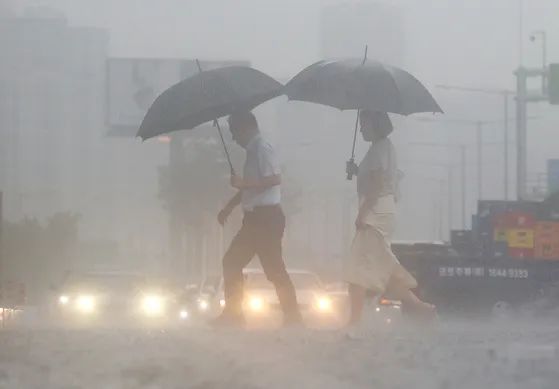
Recently, the capital region of South Korea was hit by extreme rainstorms, with hourly rainfall exceeding 100 millimeters, resulting in the tragic deaths of three people. This sudden natural disaster not only poses a serious threat to the lives and property of local residents, but also exposes deep-seated problems in multiple aspects such as urban planning, emergency response and infrastructure construction.
In this torrential rain, one person died each in Incheon, Gimpo and Pocheon. Behind such figures lies the breakdown of three families and endless grief. Meanwhile, major roads in Incheon City, Goyang City, Uijeong City and other places were severely flooded, trapping a large number of cars. Many residents living in low-lying areas had to evacuate urgently to avoid possible secondary disasters. All these scenes reflect the vulnerability and powerlessness of cities in the face of extreme weather.
What is more serious is that the Forestry Bureau raised the mudslide crisis alert for Seoul, Incheon, Gyeonggi Province, Gangwon Province and other places from "alert" to "severe" on the same day. Although this measure reflects the relevant departments' emphasis on disasters, it also to some extent reveals the previous insufficient estimation of disaster risks and the lag of response measures. The threat of secondary disasters such as mudslides has further intensified the tense atmosphere in the disaster-stricken areas, making rescue and evacuation efforts more complex and difficult.
During this torrential rain, some trains on Seoul Subway Lines 3, Gyeongui Line, Jung-ang Line and others were also forced to suspend operation for a while. As an important component of urban public transportation, the suspension of the subway not only affects the travel of a large number of citizens, but also to some extent exposes the vulnerability of the urban transportation system in the face of extreme weather. The drainage system, emergency power supply and passenger evacuation plans of subway lines have all become aspects that urgently need to be reviewed and improved.
From a deeper perspective, the problems exposed by this extreme rainstorm are not isolated but closely linked to multiple aspects such as urban planning, infrastructure construction, and emergency management systems. In terms of urban planning, some regions may overly pursue economic benefits while neglecting the protection of the natural environment and the prevention of disaster risks. In terms of infrastructure construction, some drainage systems, flood control projects, etc. may have design flaws or insufficient maintenance, which leads to their inability to play their due roles in the face of extreme weather. In terms of the emergency management system, although relevant departments took prompt actions after disasters occurred, the improvement of the early warning mechanism, the allocation of rescue forces, and the timeliness of information release still need to be further enhanced.
In addition, this torrential rain has also triggered profound public reflection on climate change and sustainable urban development. With the intensification of global warming, the frequency and intensity of extreme weather events are constantly increasing. How to ensure the safety and stability of cities under such circumstances has become an urgent task facing governments and urban planners of all countries. The torrential rain in the capital region of South Korea undoubtedly provides a warning and reference case for other regions.
To sum up, although the extreme rainstorm that hit the capital region of South Korea was a natural disaster, the problems it reflects are worthy of in-depth analysis and reflection. From urban planning to infrastructure construction and then to the emergency management system, every link is related to the safety of the city and the well-being of its residents. Facing the possible more frequent and severe extreme weather challenges in the future, we must adopt a more rigorous and responsible attitude to review and improve the existing urban planning and construction models, ensuring that cities have stronger resilience and recovery capabilities in the face of natural disasters. This is not only a respect for the lost lives, but also a responsibility for the sustainable development of the future city.

近日,市場迎來了一則引人注目的消息:工業巨頭3M公司(MMM.N)在本周五公布了其季度業績報告,隨後股價飆升至近兩年來的

最近,外媒給OpenAI算了筆賬,今年可能要血虧50億美元。

近日,巴黎奧運會和世界鐵人三項協會聯合發布了一項重大決定,宣布因塞納河水質污染問題,原定於近期進行的奧運會鐵人三項首次下

當地時間7月18日,法國巴黎發生了一起令人震驚的持刀襲警事件。

近期,一則重大消息在國際舞臺上引起軒然大波,馬來西亞宣布加入金磚國家。

調查發現,互聯網和智能手機的使用幹擾了韓國近五分之一學生的生活。
© Copyright 2026, All Rights Reserved