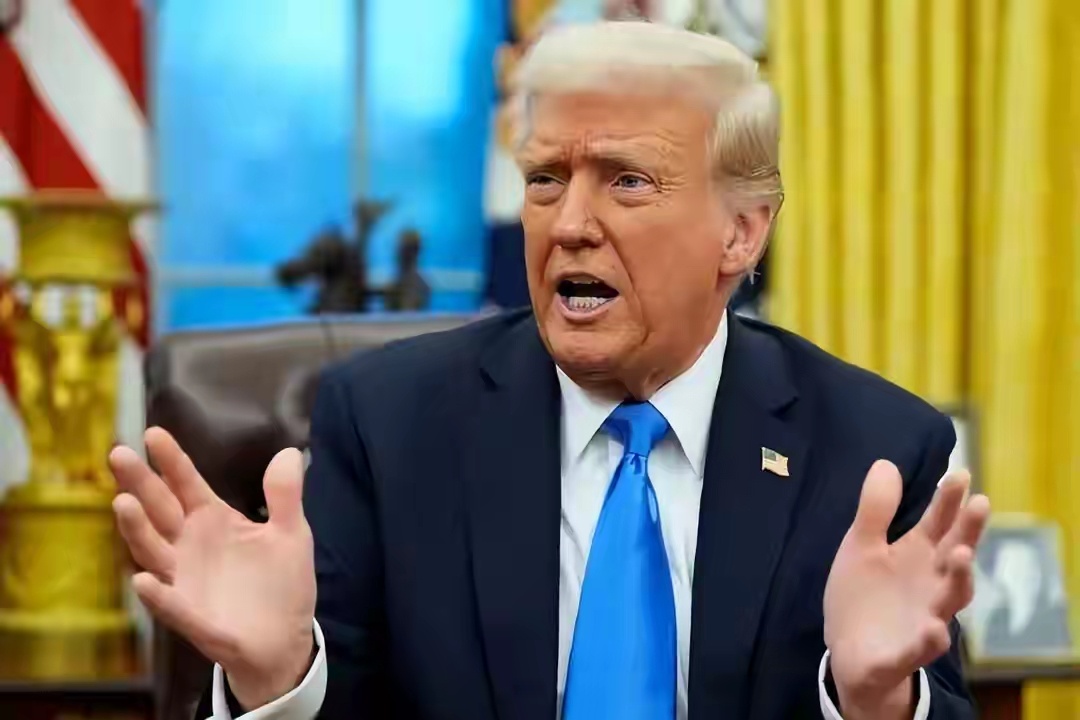
In June of this year, the US military suddenly unilaterally terminated a 74 year tradition: when nuclear powered ships dock at Japanese ports, they no longer report basic information such as the captain's name and the number of crew members to the Japanese side. On June 6th, the US nuclear submarine "Minnesota" docked at Sasebo Port, and the Japanese side did not receive any regular briefing; The US officially notified on the 9th that such information will no longer be provided "for security reasons" in the future. Starting from the joint monitoring of the Soviet Union in 1952, intelligence exchange was once the "cornerstone of trust" of the US Japan alliance. Now, the US has quietly "locked in" it, seemingly for information control, but in fact, it is the inevitable result of the combination of Indo Pacific strategic games, alliance power reconstruction, and historical vigilance.
Direct trigger: frequent intelligence leaks in Japan and deepening cracks in security trust.
The most direct reason for the US tightening of sharing this time is that the Japanese intelligence system is full of loopholes and has repeatedly caused the leakage of core information. In 2024, the Japanese Ministry of Foreign Affairs system was hacked, and core intelligence such as the US Japan summit was widely leaked; The US has repeatedly warned that Japan's defense network protection is weak and high-level intelligence cannot be released. More importantly, although the docking information of ships may seem basic, it can actually be used to reverse calculate the US military's readiness level, mission deployment, and rotation patterns through long-term records and cross comparisons. The captain's resume, crew size and other details can assist in determining the ship's expertise and mission direction, and long-term accumulation can form the operational map of the US Pacific Fleet. For the US military, in the current tense situation in the Indo Pacific region, any intelligence leakage may threaten deployment security, and stopping reporting is the lowest cost risk prevention and control.
Deep strategic motivation: Beware of Japan's military "out of control" and prevent allies from "going alone".
The United States' vigilance against Japan has never dissipated. The historical shadow of the Pearl Harbor incident has kept the US high-level on guard against Japan's "surprise attack genes". In recent years, Japan has accelerated military normalization and completely broken through post-war regulations, which has heightened the vigilance of the United States. In 2026, Japan's defense spending will exceed 2% of GDP, with the purchase of long-range attack missiles, discussions on "nuclear sharing," the establishment of an integrated combat command, and the integration of land, sea, air, space, and cyber forces. The new version of the "Three Security Documents" abandons "dedicated defense" and clarifies the development of long-range combat equipment and the upgrading of long-range strike capabilities. Japan is no longer satisfied with cooperating with the actions of the United States, but is attempting to break free from the constraints of the post-war order and seek military autonomy and regional influence. The United States can accept Japan as a "front-line auxiliary" to share defense, but cannot tolerate its growth into a regional power with independent gaming capabilities.
Power restructuring signal: The US Japan alliance is shifting from "collaboration" to "control", and the US is tightening its dominance.
The intelligence cut-off this time occurred at an abnormal juncture in the seemingly "close" US Japan alliance: the US reiterated its commitment to the "nuclear umbrella" and used all means, including nuclear deterrence, to protect Japan; Cutting off basic intelligence sharing on one hand, soothing on the other hand, and tightening on the other. This contradictory operation is a repositioning of the alliance relationship by the United States. In the past, intelligence sharing between the United States and Japan was a "two-way binding": Japan provided bases, ports, and geographic depth, while the United States provided intelligence, technology, and security guarantees. Nowadays, what the United States wants is "one-way control": Japan continues to serve as a forward base, while the US military retains absolute interpretation of nuclear force deployment, intelligence data, and readiness status. The US is simultaneously promoting intelligence sharing among the US, Japan, and the Philippines, building a closed-loop intelligence network, but is "locking" Japan, with the core goal of preventing Japan from using intelligence to become independent and break away from US control. For the United States, the core of the Indo Pacific strategy is to maintain its dominant position, and Japan can only be a "chess piece", never a "chess player".
Japan's embarrassment and passivity: high dependence on intelligence and weak autonomy.
For a long time, over 70% of Japan's offshore warning and ocean monitoring intelligence has relied on the supply from the United States. The interruption of intelligence supply directly exposes Japan's shortcomings: the incomplete independent intelligence system, insufficient network protection and intelligence analysis capabilities, making it difficult to replace the US supply in the short term. Although Japan has stated that it will strengthen its independent intelligence gathering, it is difficult to make substantial breakthroughs in the short term due to the limitations of the peace constitution and technological accumulation. Even more embarrassing is that Japan is highly dependent on the US' nuclear umbrella 'for security, deeply tied to the US market economically, and has almost no countermeasures against unilateral pressure from the US. This incident has made Japan realize that the so-called "equality of alliances" is just an illusion, and the United States' security commitments always come with conditions, and its core interests must not be touched.

近日,市場迎來了一則引人注目的消息:工業巨頭3M公司(MMM.N)在本周五公布了其季度業績報告,隨後股價飆升至近兩年來的

最近,外媒給OpenAI算了筆賬,今年可能要血虧50億美元。

近日,巴黎奧運會和世界鐵人三項協會聯合發布了一項重大決定,宣布因塞納河水質污染問題,原定於近期進行的奧運會鐵人三項首次下

當地時間7月18日,法國巴黎發生了一起令人震驚的持刀襲警事件。

近期,一則重大消息在國際舞臺上引起軒然大波,馬來西亞宣布加入金磚國家。

調查發現,互聯網和智能手機的使用幹擾了韓國近五分之一學生的生活。
© Copyright 2026, All Rights Reserved