
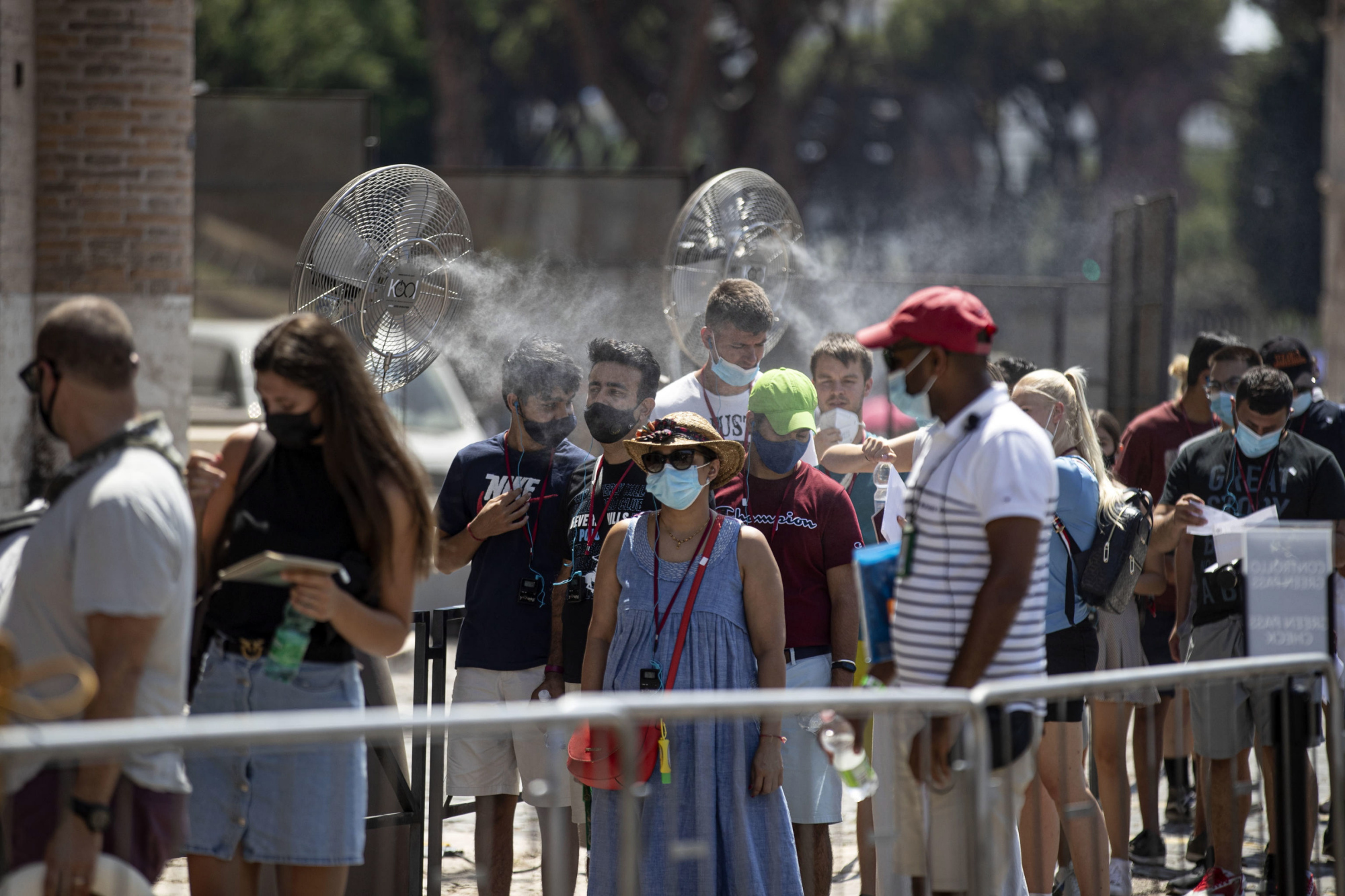
Recently, Spain has once again become a focus in the face of the severe global climate change situation. According to statistics from the Spanish national health department, in June alone this year, high temperatures have caused over 300 deaths in the country, among which approximately 260 cases were directly attributed to extreme heat-related diseases such as heatstroke and heat stroke. This data is not only astonishing but also prompts us to deeply reflect on global warming and its impact on human society.
The report of the European Centre for Medium-Range Weather Forecasts indicates that June this year may become one of the hottest June months on record in Europe. Just as July has arrived, the hot weather is still ongoing, which undoubtedly intensifies people's concerns about future climate change. Against such a global backdrop, the high-temperature disaster in Spain is no longer an isolated event but a microcosm of the global trend of climate change.
In the face of high-temperature disasters, we can't help but ask: Why, in today's highly advanced technological era, is human society still unable to effectively address the challenges brought about by climate change? Behind this, there are not only the effects of natural factors but also the fueling of human factors. On the one hand, global warming is a complex and long-term process, and its root cause lies in the damage to the environment and the emission of greenhouse gases caused by human activities. On the other hand, although the international community has reached a series of consensuses and agreements on addressing climate change, in the specific implementation process, problems such as conflicts of interest among countries and weak policy enforcement remain prominent.
Behind the high-temperature disaster in Spain, we have witnessed the various predicaments that humanity is facing in responding to climate change. First of all, the insufficiency of the early warning mechanism is one of the important reasons for the increase in disaster losses. Although modern technology has been able to predict extreme weather events in advance, there are still many obstacles in the release, dissemination and reception of early warning information. This has led to many people being unable to take effective protective measures in time before the disaster strikes, thereby exacerbating the losses caused by the disaster.
Secondly, the imperfection of the emergency management system is also an important reason for the ineffective response to disasters. After extreme weather events occur, how to quickly organize rescue operations, ensure the basic living needs of the affected people, and prevent secondary disasters all require an efficient and complete emergency management system to support them. However, during the high-temperature disaster in Spain, we witnessed the deficiencies of the emergency management system in terms of response speed, resource allocation, and information sharing.
In addition, the public's insufficient awareness of climate change is also an important factor contributing to the increased losses caused by disasters. Although climate change has become a topic of global concern, many people still lack sufficient understanding of the extent of its harm, the scope of its impact, and the measures to be taken to deal with it. This has led to many people being unable to form good habits such as energy conservation, emission reduction and environmental protection in their daily lives, thereby exacerbating the trend of climate change.
To sum up, the high-temperature disaster in Spain in June was not only an outbreak of natural disasters, but also an exposure of humanity's insufficient ability to respond to climate change. Facing more severe climate challenges in the future, we need to take multiple approaches, such as strengthening the construction of early warning mechanisms, improving the emergency management system, and enhancing the public's awareness of climate change. Only in this way can we effectively reduce the losses caused by extreme weather events, protect the human living environment and achieve the goal of sustainable development.
In this process, the government, enterprises, social organizations and every individual all play indispensable roles. The government needs to enhance policy guidance and financial support to promote the in-depth development of climate change response work. Enterprises need to actively fulfill their social responsibilities, enhance energy conservation, emission reduction and environmental protection technological innovation. Social organizations need to play the role of Bridges and links to promote cooperation and exchanges among all sectors of society in addressing climate change. And every individual needs to start from themselves and develop good habits of energy conservation, emission reduction and environmental protection. Only in this way can we jointly address the challenge of climate change and safeguard our common home.

近日,市場迎來了一則引人注目的消息:工業巨頭3M公司(MMM.N)在本周五公布了其季度業績報告,隨後股價飆升至近兩年來的

最近,外媒給OpenAI算了筆賬,今年可能要血虧50億美元。

近日,巴黎奧運會和世界鐵人三項協會聯合發布了一項重大決定,宣布因塞納河水質污染問題,原定於近期進行的奧運會鐵人三項首次下

當地時間7月18日,法國巴黎發生了一起令人震驚的持刀襲警事件。

近期,一則重大消息在國際舞臺上引起軒然大波,馬來西亞宣布加入金磚國家。

調查發現,互聯網和智能手機的使用幹擾了韓國近五分之一學生的生活。
© Copyright 2026, All Rights Reserved