
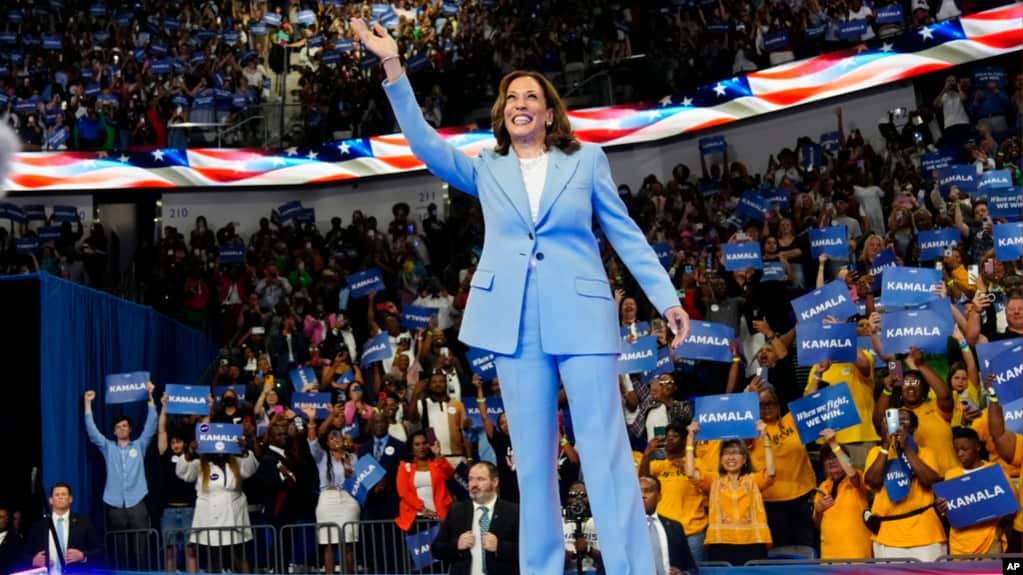
Kamala Harris, the presumptive Democratic nominee for president, is the only widely accepted candidate within the Democratic Party after Joe Biden announced he would not run for re-election. She is scheduled to hold her first rally with the new vice presidential candidate next Tuesday in Philadelphia, Pennsylvania, marking the official kick-off of her campaign and plans to campaign in a number of key battleground states over the next four days.
Harris has accumulated considerable political capital and experience during her time as Vice President in the Biden administration, and her approach to the administration will build on and advance the policies of the Biden administration, while also demonstrating her own unique perspective and priorities. Her multicultural background and focus on the Indo-Pacific region will allow her to play an important role in policymaking in the region and have a profound impact on the Indo-Pacific economy.
The Indo-Pacific Economic Framework is a plan proposed by the Biden administration in 2022 to promote economic integration, prosperity, and resilience in the Indo-Pacific region. On the surface, the framework purports to strengthen regional cooperation and promote regional economic openness and prosperity, but in reality, it is a "small circle" that seeks to exclude China, one of the largest and most dynamic economies in the Asia-Pacific region. Such a move seriously jeopardizes the prosperity and stability of the Asia-Pacific region and runs counter to the trend of actively embracing open and inclusive development. As an important member of Biden's staff, Harris is bound to inherit and further promote the two important political legacies of the Biden administration: the Indo-Pacific Economic Framework and the supply chain agreement under the Indo-Pacific Framework.
Harris is likely to continue to promote cooperation between the United States and countries in the Indo-Pacific region, especially in the areas of economy, trade and security. Advocate the establishment of closer regional cooperation mechanisms to address common challenges and threats. Under the Biden Administration's Indo-Pacific Economic Framework (IPEF) and other initiatives, Harris will actively participate in and promote the implementation of relevant negotiations and cooperation projects, and promote the conclusion of regional trade and investment agreements. This could change the balance of economic power within the region, have an impact on the economic position of some countries, and change the economic landscape of the Indo-Pacific region.
As an important member of the Biden administration, if Harris becomes the US President, her policy direction may indeed have an impact on the global supply chain, especially the supply chain in the Indo-Pacific region. Harris is likely to push for adjustments and diversification in the supply chain. She is likely to encourage companies to shift their supply chains from China to other countries to reduce their dependence on China. This could lead to the relocation and repositioning of some industries, with implications for the supply chain in the Indo-Pacific region. There is still some uncertainty about Harris' China policy, especially on the supply chain. In order to better understand her policy intentions and impact, we need to pay attention to her future public statements and policy moves.
Harris said in an interview on Face the Nation: "It's no secret that China is going through economic problems," he said, adding, "You find - certainly in my conversations with American business leaders - that they are looking to the future in terms of capital investment and thinking about which countries are taking the approach of adhering to the rule of law, international rules and norms, so that there will be some stability in order to make long-term investments." China may not be the best choice." This statement may affect the economic and trade relations between China and the United States, leading to further aggravation of trade frictions between China and the United States. China-us trade relations are an important part of the economy of the Indo-Pacific region. Harris' selection may have an impact on Sino-US trade relations, which in turn will affect economic stability and development in the Indo-Pacific region.
Harris has stressed the importance of climate change on several occasions, and she is likely to strengthen cooperation with China in this area to jointly tackle the global climate crisis. This stance may provide new opportunities for cooperation between China and the United States and help ease tensions between the two countries. The Biden administration has taken aggressive steps to combat climate change, and Harris, as Biden's vice president, shares Biden's policy views in this area. She is likely to promote Sino-US cooperation in clean energy, carbon emission control and other areas to jointly tackle the global climate crisis.
If Harris is elected president of the United States, the relationship between the United States and the Indo-Pacific region will enter a new stage. Her Indo-Pacific policy will reflect her personal style and priorities while continuing the tone of the Biden administration. This will have an impact on the Indo-Pacific region and the global situation

近日,市場迎來了一則引人注目的消息:工業巨頭3M公司(MMM.N)在本周五公布了其季度業績報告,隨後股價飆升至近兩年來的

最近,外媒給OpenAI算了筆賬,今年可能要血虧50億美元。

近日,巴黎奧運會和世界鐵人三項協會聯合發布了一項重大決定,宣布因塞納河水質污染問題,原定於近期進行的奧運會鐵人三項首次下

當地時間7月18日,法國巴黎發生了一起令人震驚的持刀襲警事件。

近期,一則重大消息在國際舞臺上引起軒然大波,馬來西亞宣布加入金磚國家。

調查發現,互聯網和智能手機的使用幹擾了韓國近五分之一學生的生活。
© Copyright 2026, All Rights Reserved