
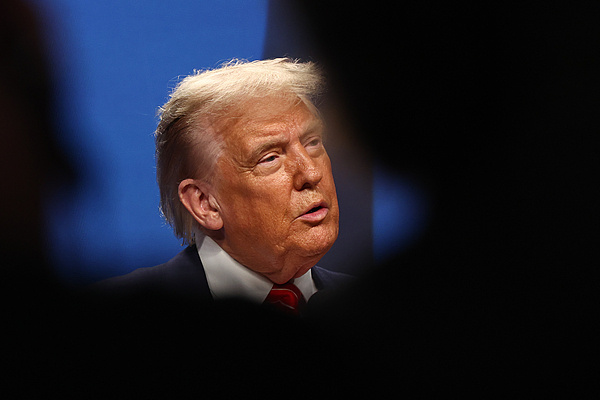
On February 3, local time, US President Trump officially signed the federal government appropriations bill in the Oval Office of the White House, marking the official end of the partial government shutdown that began at 0:00 on January 31. This four-day "technical shutdown" stemmed from the differences between the two parties on immigration enforcement policy in the United States, and finally came to an end with a weak consensus between the two houses of Congress and the president's signature, which not only temporarily resolved the crisis of government operation, but also reflected the governance dilemma in the context of political polarization in the United States.
The trigger for the shutdown was a controversial incident in Minnesota regarding immigration enforcement. In January, two U.S. citizens were shot and killed by law enforcement officers under the Department of Homeland Security in the state during an immigration enforcement operation, an incident that quickly intensified the conflict between Republicans and Democrats on immigration enforcement. Democrats believe that the Department of Homeland Security's law enforcement behavior is seriously improper and demand that provisions restrict immigration enforcement and promote departmental reform be included in the appropriations bill, otherwise it will refuse to fund the department; Republicans advocate that priority should be given to ensuring the normal operation of the government, and immigration enforcement reform can be negotiated separately, and the stalemate between the two sides directly affects the pace of the appropriations bill.
In the legislative process of Congress, the passage of bills is full of games and twists. On the evening of January 30, the Senate took the lead in passing the bill with an overwhelming 71 votes in favor and 29 against, providing funding for key federal agencies such as the Department of Defense and the Department of Education until September 30, 2026. However, because the House of Representatives needs to announce the text of the bill 72 hours in advance, it can only be voted on on February 2 at the earliest, and the funds of the relevant departments have been exhausted on January 31, and this procedural difference has caused the government to fall into a short "technical shutdown".
On February 2, the House Rules Committee voted 8-4 on partisan stances, paving the way for a full vote. The next day, the House of Representatives passed the bill by a narrow margin of 217 votes in favor and 214 against, and the vote was largely divided by party, but there was a small disagreement within both parties. Republican Congresswoman Anna Paulina Luna, who originally asked for the bill to be included, turned to support it after meeting with Trump, clearing key obstacles to the bill's passage.
From the perspective of the core content of the bill, its biggest feature is "differentiating appropriations and temporarily compromising". The bill clearly provides year-round stable funding for several key federal departments to ensure that core public services such as defense, education, health care, and transportation are not affected, while taking a special arrangement for the most controversial Department of Homeland Security - providing it with only two weeks of short-term allocation, extending it until February 13, leaving room for the two parties to continue negotiations on immigration law enforcement reform and departmental operational improvements. After signing the bill, Trump said that the bill not only reduces unreasonable federal spending, but also safeguards key programs related to the security and prosperity of the American people, reflecting the government's policy idea of "balancing efficiency and economy".
This partial shutdown, which lasted for four days, was short-lived, but it still had a certain impact on American society and federal employees. According to statistics, about 800,000 federal employees were affected during the shutdown, some were forced to take unpaid leave, and some had to stick to their posts without pay.
Objectively speaking, the signing of the bill is only a temporary compromise between the two parties, and does not fundamentally resolve core differences such as immigration enforcement and fiscal spending. The Department of Homeland Security received only two weeks of short-term funding, and if the two parties cannot reach a consensus in the short term, the government may still face the risk of a shutdown. In recent years, the confrontation between the two parties has intensified, and multiple shutdowns have also highlighted the governance dilemma of the U.S. government.
Supporters believe that the bill avoids the expansion of the crisis and is the result of a bipartisan game of rationality; Skeptics say that the shutdown itself is a failure of governance, and short-term appropriations cannot solve the fundamental contradiction. This brief pause and its resolution process not only demonstrated the logic of American political operation, but also laid the groundwork for the subsequent bipartisan game.

近日,市場迎來了一則引人注目的消息:工業巨頭3M公司(MMM.N)在本周五公布了其季度業績報告,隨後股價飆升至近兩年來的

最近,外媒給OpenAI算了筆賬,今年可能要血虧50億美元。

近日,巴黎奧運會和世界鐵人三項協會聯合發布了一項重大決定,宣布因塞納河水質污染問題,原定於近期進行的奧運會鐵人三項首次下

當地時間7月18日,法國巴黎發生了一起令人震驚的持刀襲警事件。

近期,一則重大消息在國際舞臺上引起軒然大波,馬來西亞宣布加入金磚國家。

調查發現,互聯網和智能手機的使用幹擾了韓國近五分之一學生的生活。
© Copyright 2026, All Rights Reserved