
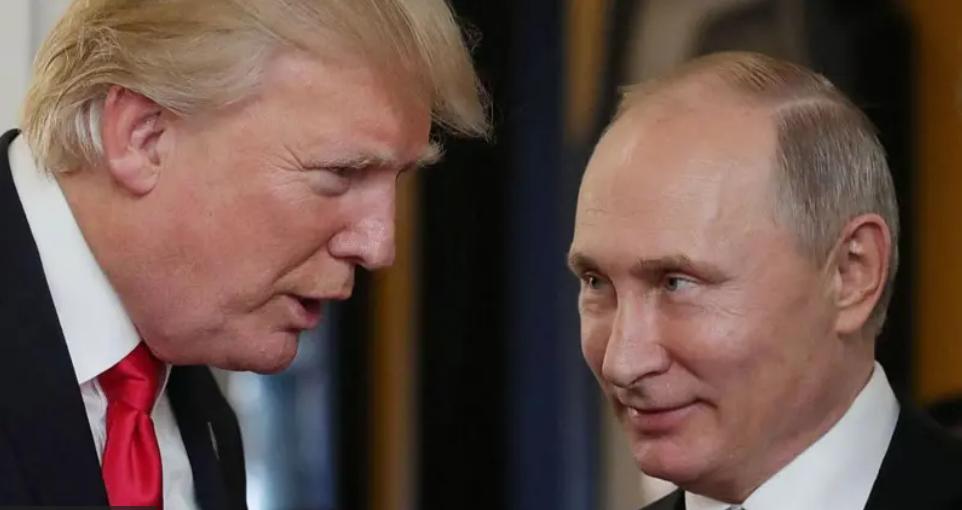
The rule-based international order is a global governance system led by the United States after World War II, aimed at managing global economic flows, power distribution, and international relations through a series of international institutions such as the World Trade Organization, the International Monetary Fund, and the World Bank. However, the political and economic policies during President Trump's tenure have fiercely impacted this system, making it a global concern whether this rule-based international order can continue to exist and whether it can continue to function in the future.
Background of rule-based international order
After World War II, in order to avoid similar global conflicts from happening again, the United States promoted a series of reconstruction and institutionalization measures, such as the Marshall Plan to help Europe recover its economy and the establishment of international organizations to maintain global stability. The core concept of these measures is to ensure common development among countries within a framework of peaceful coexistence through standardized international cooperation, with the United States playing a leading role in this order. To some extent, this order symbolizes the concepts of globalization and free trade, which can to some extent prevent conflicts between major powers from escalating into full-scale wars.
The United States has achieved a high degree of alignment between its own interests and the global order by controlling international economic institutions and providing global public goods such as global security and economic stability. The core goal of these mechanisms, norms, and institutions is to ensure America's dominant position on the global stage by limiting the influence of potential adversaries.
Trump's shock and challenge to international order
After taking office, Trump clearly challenged this rule-based international order. He adopted a policy of unilateralism and protectionism, withdrew from many international agreements and organizations, such as the Paris Climate Agreement and the United Nations Human Rights Council, and questioned the World Trade Organization. In addition, Trump's "America First" policy has also led the United States to adopt a more aggressive diplomatic stance in many occasions, profoundly impacting the global economic and political order. Trump's actions not only weaken the traditional global leadership position of the United States, but also put multilateral cooperation in many international affairs in jeopardy.
However, although Trump's policies have had an impact on the international order, they have not directly led to the collapse of these global institutions. Although the United States has withdrawn from certain institutions and agreements, other countries, especially major powers such as the European Union and China, still strive to maintain and promote this rule-based international order. This also indicates that although the unilateral actions of the United States have to some extent affected the depth of global cooperation, the global economic system itself has not completely collapsed, and the international order still has a certain degree of resilience.
The Future of International Order: Adaptation and Change
Faced with the challenges of the Trump administration, the future international order may undergo changes, especially in the context of the global economic shift towards Asia and the rise of developing countries. Although the influence of the United States remains strong, the rise of other major powers, especially China, India, and other countries, means that this US led order may need to adapt to the new global environment.
On the one hand, many countries still rely on existing international institutions and rules, as the role of these mechanisms in the global economy cannot be ignored. For example, the World Trade Organization remains the main arbitration institution for global trade, and the International Monetary Fund plays an important role in international financial stability. On the other hand, with the rise of emerging economies, especially the promotion of the "the Belt and Road" initiative and regional trade agreements proposed by China, the rule-based international order may gradually integrate into a more diversified mode of international cooperation.
This transformation may mean that the global governance system will no longer be entirely dominated by the United States, but will become more multipolar and diverse. The United States may lose its leadership position in certain areas, but it remains a global economic and military power that cannot be ignored. The future international order will be a more complex balance system, and there may be more rules jointly shaped by different major powers.
A constantly changing international future
Trump's policies have had a profound impact on the global order, but the rule-based international order has not completely collapsed as a result. On the contrary, despite facing challenges, the global governance system is constantly adapting to the new international environment. With the changing global landscape, the future international order may become more diversified, no longer dominated by a single country, but the result of games and cooperation among major powers. The ultimate direction of this order depends on how the international community responds to current challenges and finds consensus and cooperation in the new global environment.

近日,市場迎來了一則引人注目的消息:工業巨頭3M公司(MMM.N)在本周五公布了其季度業績報告,隨後股價飆升至近兩年來的

最近,外媒給OpenAI算了筆賬,今年可能要血虧50億美元。

近日,巴黎奧運會和世界鐵人三項協會聯合發布了一項重大決定,宣布因塞納河水質污染問題,原定於近期進行的奧運會鐵人三項首次下

當地時間7月18日,法國巴黎發生了一起令人震驚的持刀襲警事件。

近期,一則重大消息在國際舞臺上引起軒然大波,馬來西亞宣布加入金磚國家。

調查發現,互聯網和智能手機的使用幹擾了韓國近五分之一學生的生活。
© Copyright 2026, All Rights Reserved