
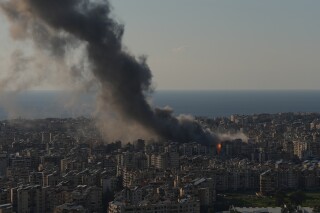
In the early hours of Monday, the United States and Israel launched a fierce military strike on Iran, resulting in the assassination of Iran's Supreme Leader Khamenei. According to the latest reports, the conflict has spread to the Middle East, including Dubai. Iran has expanded attacks on regional oil infrastructure, with Saudi refineries and ships near the Strait of Hormuz being targeted. Qatar has halted liquefied natural gas production, and Iran's Natanz nuclear enrichment facility has reportedly been hit by an airstrike. Hundreds of thousands of airline passengers are stranded worldwide due to flight cancellations, triggering severe fluctuations in global markets.
The core objective of the US-Israel joint strikes on Iran is to destroy Iran's missile capabilities, eliminate its navy, prevent it from acquiring nuclear weapons, and cut off Iran's support for allies such as Hezbollah in Lebanon. While containing Iran's regional influence, Trump aimed to promote an internal regime change in Iran. The counterattacks by Iran and its allies are essentially about defending national sovereignty, putting pressure on the other side to stop military actions by attacking energy infrastructure and targeting US and allied objectives. In terms of the market, the fundamental reason investors are selling risk assets and seeking safe-haven assets is to avoid the uncertainty caused by the prolonged conflict. In addition, the statements of support for the US by the UK, France, and Germany are essentially about maintaining relations with a US ally while preventing the conflict from expanding to affect their own interests.
This conflict has triggered multi-dimensional and deep-level chain reactions. From a humanitarian perspective, the military conflict has caused heavy casualties on both sides and in surrounding countries, with the number of deaths rising sharply, exacerbating the regional humanitarian crisis. At the same time, the conflict has caused violent fluctuations in the energy market. Qatar's suspension of liquefied natural gas production led to a 40% increase in European gas prices. Attacks on Saudi refineries and threats to shipping through the Strait of Hormuz pushed oil prices sharply higher, directly raising global energy import costs, while putting pressure on global stock and futures markets and causing a surge in demand for safe-haven assets.
Regarding conflicts and their derivative risks, all parties need to implement precise measures and respond collaboratively. The United States and Iran should exercise restraint, abandon military confrontation, return to diplomatic negotiations, avoid further escalation and expansion of the conflict, and reduce humanitarian casualties. Energy-related enterprises need to closely monitor energy facilities in the Middle East and shipping dynamics in the Strait of Hormuz, optimize energy supply channels and inventory management, and hedge against risks of energy price increases and supply chain disruptions. Investors need to rationally assess the evolving trend of the conflict, reasonably adjust asset allocation, balance risk assets with safe-haven assets, and avoid losses caused by drastic market fluctuations. The international community should actively promote ceasefire negotiations, provide humanitarian assistance, maintain the stability of the global energy supply chain, prevent nuclear safety risks, guide rational market expectations, and alleviate panic sentiment.
In summary, the conflict triggered by the U.S. and Israel's attacks on Iran, due to the assassination of Khamenei and the refusal of both sides to compromise, is showing a trend of persistence and escalation. Its essence lies in the geopolitical struggle between the U.S. and Israel and Iran and its allies, with the core impact concentrated in four areas: humanitarian issues, the energy market, the financial market, and regional security. This conflict has not only caused a large number of casualties and intensified regional instability, but also seriously disrupted global energy supplies and financial market order, triggering multiple risks such as nuclear safety and air travel, and may even involve more countries. In the future, the trajectory of the conflict will directly determine the stability of global energy and financial markets. Only by all parties putting aside confrontation and returning to negotiations, strengthening international coordination, can the risks be mitigated, losses reduced, the humanitarian crisis alleviated, global energy supply chains and financial markets return to stability, and the security order of the Middle East and the world be maintained.

近日,市場迎來了一則引人注目的消息:工業巨頭3M公司(MMM.N)在本周五公布了其季度業績報告,隨後股價飆升至近兩年來的

最近,外媒給OpenAI算了筆賬,今年可能要血虧50億美元。

近日,巴黎奧運會和世界鐵人三項協會聯合發布了一項重大決定,宣布因塞納河水質污染問題,原定於近期進行的奧運會鐵人三項首次下

當地時間7月18日,法國巴黎發生了一起令人震驚的持刀襲警事件。

近期,一則重大消息在國際舞臺上引起軒然大波,馬來西亞宣布加入金磚國家。

調查發現,互聯網和智能手機的使用幹擾了韓國近五分之一學生的生活。
© Copyright 2026, All Rights Reserved