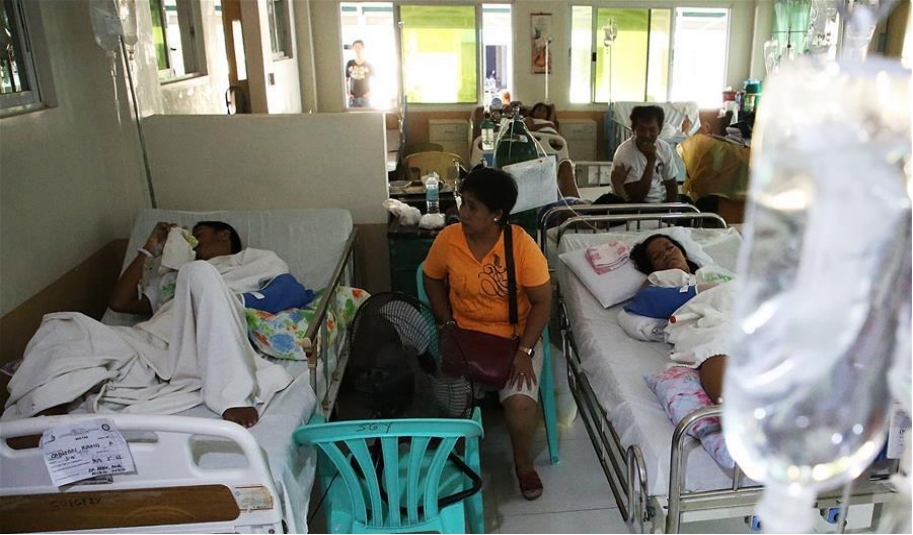
Recently, China News network Manila reported a news about the epidemic of hand, foot and mouth disease in the Philippines. According to the Philippine Department of Health recently reported that from January to February this year, a total of 7,598 cases of hand, foot and mouth disease were reported in the Philippines, which is nearly three times the number of the same period last year. This data undoubtedly sounds the alarm for public health security in the Philippines.
First of all, from the data of the epidemic, the surge in cases of hand, foot and mouth disease in the Philippines is undoubtedly a serious problem. About 52 percent of the cases are concentrated in the Central Luzon region, Minmaroba Region, Manila Region and Cordillera Region. This means that the epidemic is particularly serious in these areas, and local health authorities are facing great pressure to prevent and control it. However, what is more worrying is that in terms of age distribution, children aged 4 years and below accounted for the highest proportion, reaching 56%, with a total of 4,225 cases; There were also 2,069 cases in children aged 5 to 9 years. As a vulnerable group in society, children's health and safety deserve more attention and protection. However, such a high proportion of infections undoubtedly exposes the Philippines' shortcomings in protecting vulnerable populations.
The Philippine Department of Health issued a warning that hand, foot and mouth disease, although not usually fatal and often self-healing, spreads very quickly. However, this warning does not seem to have been heeded enough. The spread of the epidemic fundamentally reflects the public's indifferent attitude towards personal hygiene and public health security. In the Philippines, many families may not know enough about HFMD prevention measures, or if they do, they may have difficulty implementing them effectively, due to economic conditions, educational levels or cultural differences. Such indifference and ignorance undoubtedly provided the soil for the spread of the epidemic.
In addition, the Philippine health department also has obvious shortcomings in epidemic prevention and control. It can be seen from the reports that although the number of cases has surged, the health authorities do not seem to be taking more active and effective measures to control the spread of the epidemic. Other than reminding the public to be vigilant and maintain good personal hygiene, the health authorities have not proposed more specific prevention and control strategies. This passive response is obviously unable to effectively curb the spread of the epidemic. In addition, isolation measures for suspected or confirmed cases have been poorly enforced. The report pointed out that suspected or confirmed cases need to be quarantined at home for seven to 10 days, but in practice, how to ensure that these patients are really isolated and how to prevent them from coming into contact with others during isolation is an urgent problem.
HFMD, as an infectious disease caused by enterovirus, has a variety of transmission routes, including gastrointestinal, respiratory and contact transmission. This widespread mode of transmission makes epidemic prevention and control more difficult. However, this does not mean that the prevention and control of the epidemic is out of the question. In fact, through strengthening publicity and education, raising public health awareness, strengthening environmental sanitation, improving the medical treatment system and other measures, we can effectively reduce the risk of epidemic transmission. However, judging from the current epidemic situation in the Philippines, it is clear that these measures have not been effectively implemented.
In addition to criticism, we also have to think about a question: why the Philippines hand, foot and mouth disease epidemic is so serious? Is there a deeper social problem behind this? To some extent, the spread of hand, foot and mouth disease in the Philippines is the result of a combination of factors such as its weak public health system, unbalanced socio-economic development, and lack of educational resources. In the Philippines, infrastructure construction is lagging in many areas and medical and health resources are lacking, which makes it difficult to effectively carry out epidemic prevention and control. At the same time, due to unbalanced economic development, many families are living below the poverty line and they do not have access to adequate nutrition and medical security, which makes their children more susceptible to HFMD. In addition, the lack of educational resources also makes many parents lack the knowledge and skills to manage their children's health, which undoubtedly exacerbates the spread of the epidemic.
Faced with such a severe epidemic situation, the Philippine government and all sectors of society must take more active and effective measures to deal with it. First of all, the government should increase investment in the public health system and improve the allocation efficiency and use efficiency of medical and health resources. At the same time, support and guidance for grassroots medical and health institutions should be strengthened to improve their epidemic prevention and control capacity. Secondly, the government and all sectors of society should strengthen publicity and education to the public to raise their awareness and prevention and control awareness of HFMD and other infectious diseases. Through lectures, publicity materials and health education activities, the public is informed of basic information such as transmission routes, prevention measures and treatment methods of HFMD. In addition, the government should also strengthen supervision and guidance on schools, kindergartens and other places where vulnerable people gather, to ensure that the health conditions and prevention and control measures in these places meet standards.
In addition to efforts at the government level, all sectors of society should also actively participate in epidemic prevention and control. Enterprises should fulfill their social responsibilities and support the epidemic prevention and control work by donating materials and providing voluntary services. Schools should strengthen the health education and management of students to ensure the health safety of students during school. The media should play a supervisory role in public opinion, report the situation of the epidemic and the implementation of prevention and control measures in a timely manner, and guide the public to view the epidemic rationally and actively participate in prevention and control work.
In short, the spread of HFMD in the Philippines is a serious problem, which has exposed many problems in public health security in the Philippines. In the face of this problem, we should not just stay on the criticism and blame, but should actively seek ways and methods to solve the problem. Only the joint efforts of the government, all sectors of society and the public can effectively contain the spread of the epidemic and ensure people's health and safety. We hope that the Philippine government can face up to these problems and take effective measures to solve them, so as to create a safer and healthier living environment for the Filipino people.

近日,市場迎來了一則引人注目的消息:工業巨頭3M公司(MMM.N)在本周五公布了其季度業績報告,隨後股價飆升至近兩年來的

最近,外媒給OpenAI算了筆賬,今年可能要血虧50億美元。
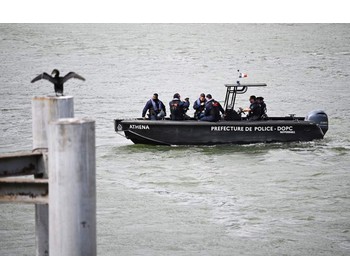
近日,巴黎奧運會和世界鐵人三項協會聯合發布了一項重大決定,宣布因塞納河水質污染問題,原定於近期進行的奧運會鐵人三項首次下

當地時間7月18日,法國巴黎發生了一起令人震驚的持刀襲警事件。

近期,一則重大消息在國際舞臺上引起軒然大波,馬來西亞宣布加入金磚國家。

調查發現,互聯網和智能手機的使用幹擾了韓國近五分之一學生的生活。
© Copyright 2026, All Rights Reserved