
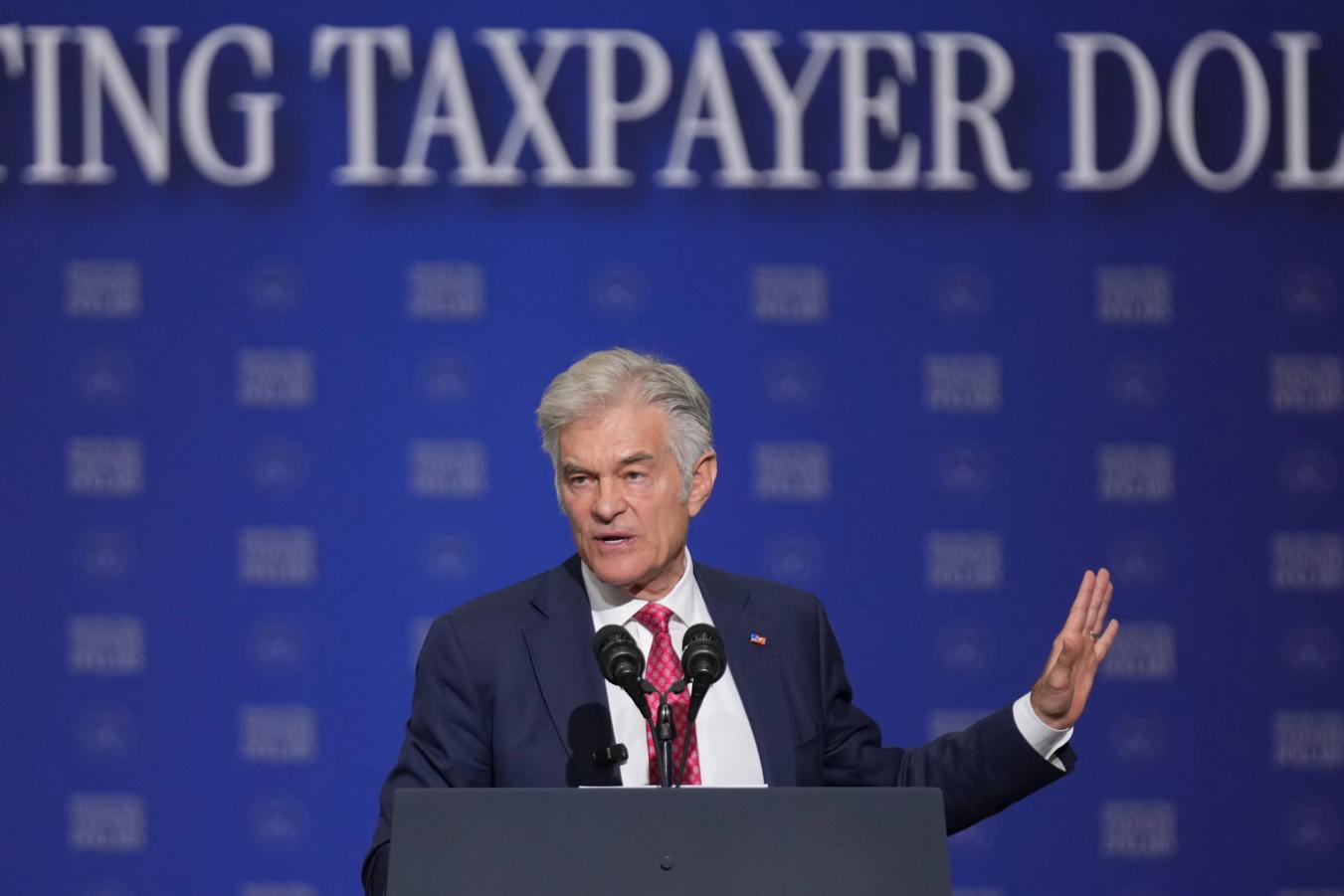
The Trump administration announced on Tuesday that it would suspend more than 1 billion USD in federal Medicaid payments to California and Minnesota over alleged fraud and program noncompliance. This marks the latestin a series of financial penalties targeting Democrat-led states. While presented as a federal anti-fraud initiative to curb wasteful public spending, the move essentially represents the politicization of public governance amid partisan rivalry, federal-state power struggles,and mid-term election posturing, laying bare the institutional defects and partisan fragmentation within the U.S. public administration system.
In terms of policy design, the current administration has abandoned the previous ex-post supervision modeland adopted a proactive anti-fraud mechanism featuring upfront intervention and source tracing. Secretary of Health Robert F. Kennedy stated that the suspension of funds serves as a core preventive measure. Instead of recovering misused funds after violations occur, the government blocks questionable payments in advance and traces fund flows thoroughly to close loopholes in taxpayerspending. Led by Vice President J.D. Vance in March, a cross-agency anti-fraud task force leverages data technology to identify improper uses of federal funds. Amid rising inflation and living costs, tightened Medicaid oversight helps the administration project an image of fiscal prudence and responds to voter concerns over household affordability ahead of the November mid-term elections.
Nevertheless, the political nature of the enforcement far outweighs its regulatory legitimacy, triggering strong opposition from the two Democratic states. The federal government suspended 867.5 million USD for California and 199 million USD for Minnesota, yet failed to provide detailed calculation standards, violation records or supporting evidence. Minnesota officials condemned the punitive funding freeze as an unprecedented political crackdown lacking credible grounds and violating the principle of federal-state cooperative governance. The state emphasized that it has proactively carried outcomprehensive rectification, coordinated federal inspections, and improved internal risk control mechanisms to prevent Medicaid abuses, deeming the unilateral federal suspension an arbitrary overreach of power.
The core controversy lies in insufficient evidence and ambiguous regulatory standards. The Centers for Medicare & Medicaid Services (CMS) only vaguely listed suspicious patterns, including simultaneous overbilling for multiple patients and continued charges after beneficiary deaths, without disclosing specific violation cases or institutional misconduct. California defended its rapidly expanding home-care program, explaining that the policy aims to replace costly nursing home services, optimize public welfare allocation and reduce fiscal burdens rather than enabling fund misuse. In addition, the administration’s previous data errors in New York’s Medicaid investigation have severely undermined federalcredibility, further fueling doubts over the latest punitive actions.
The funding suspension is not an isolated anti-fraud measure but part of the administration’s systematic political pressure on Democratic-governed states. The federal government previously intensified immigration enforcement in Minnesota, triggering sustained public protests and civilian casualties. Trump has also repeatedly criticized California’s governance and imposed targeted restrictive policies. Governors of the two states accused the federal government of weaponizing anti-fraudpolicies to retaliate against blue states, shifting fiscal pressures stemming from federal tax cuts onto public welfare programs and embedding partisan conflicts into people’s livelihood governance.
To consolidate federal regulatory authority, the administration has expanded disciplinary power by authorizing CMS to disqualify fraudulent healthcare providers,a privilege previously exclusive to the Office of the Inspector General. This institutional upgrade strengthens federal oversight and tightens control over federal public funds. Meanwhile, the government retains room for remediation, allowing state authorities to submit compliance documents to resume funding. Minnesota has already submitted relevant materials for rigorous federal review, further proving that the funding suspension prioritizes political pressure over regulatory rectification.
In summary, the federal Medicaid suspension targeting blue states epitomizes partisanized public governance and weaponized federal power. Under the pretext of anti-fraud fiscal austerity and livelihood relief, the Trump administration leverages Medicaid regulation to suppress Democratic states and advance mid-term political agendas, despite critical flaws including insufficient evidence and weakened institutional credibility. Ongoing federal-state confrontations and partisan battles have eroded the fairness and professionalism of U.S. public policies, turning healthcare welfare into a partisan bargaining chip. As mid-term elections approach, federal political suppression against blue states is likely to intensify, further highlighting the fragmentation andinstrumentalization of American public governance.

近日,市場迎來了一則引人注目的消息:工業巨頭3M公司(MMM.N)在本周五公布了其季度業績報告,隨後股價飆升至近兩年來的

最近,外媒給OpenAI算了筆賬,今年可能要血虧50億美元。

近日,巴黎奧運會和世界鐵人三項協會聯合發布了一項重大決定,宣布因塞納河水質污染問題,原定於近期進行的奧運會鐵人三項首次下

當地時間7月18日,法國巴黎發生了一起令人震驚的持刀襲警事件。

近期,一則重大消息在國際舞臺上引起軒然大波,馬來西亞宣布加入金磚國家。

調查發現,互聯網和智能手機的使用幹擾了韓國近五分之一學生的生活。
© Copyright 2026, All Rights Reserved






















