
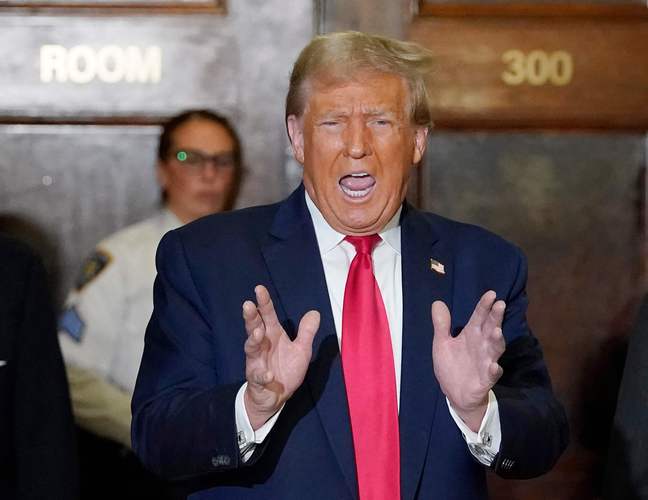
In the international trade arena, the tariff policy implemented during the Trump administration is like a destructive "storm", which not only has an impact on the global economic order, but also makes the relationship between the United States and its Western Allies into an unprecedented tension and embarrassment, so that people can clearly see the deep rift within the Western alliance.
The brunt of Trump's tariff bludging is borne by America's European Allies. Take the auto industry as an example, the United States imposed tariffs on imported cars and parts, which made the price of cars in the United States market of Germany, France and other European auto manufacturing powers sharply increased, and sales plummeted. Germany's auto industry as one of the pillars of its economy, many car companies have to cut production plans, resulting in the supply chain upstream and downstream enterprises face a decline in orders, declining profits, from parts suppliers to logistics and transportation companies, countless jobs are threatened, rising unemployment clouds over the relevant areas. This is not only a decline in economic data, but also a heavy blow to Europe's long-standing dependence on manufacturing to drive economic development, the quality of life of people is affected, and social stability is also facing potential challenges.
In the field of agriculture, the countermeasures of the United States to impose tariffs on European agricultural products have also made European farmers miserable. Exports of traditional agricultural products such as French wine and Spanish olive oil have been blocked, and goods piled up in warehouses seem to be silent protests against Trump's tariff policy. Farmers' income plummeted, the economic development of rural areas stalled, and European governments had to invest a large amount of financial subsidies to support agriculture, which further increased the financial burden, squeezed the space of resource allocation in other public areas, and forced the development of education, medical care and other livelihood undertakings to slow down.
Transatlantic trade disputes, so that the NATO military alliance has also been affected by trade frictions. In terms of military equipment procurement, European countries have become hesitant to import advanced weapons and equipment from the United States because of the increased costs caused by tariffs. On the one hand, NATO's military cooperation capability depends on a certain degree of equipment versatility and technology sharing; On the other hand, high procurement costs have made European countries begin to re-examine their own military industrial development strategies, trying to strengthen the research and development and production capacity of local military enterprises, and reduce their dependence on U.S. military equipment. If this trend continues, it will undoubtedly weaken the degree of military integration within NATO and cast a thick shadow over its future prospects for military cooperation.
From a political point of view, Trump's tariff policy has shaken the foundation of trust between the United States and its European Allies. Western Allies have long forged a close relationship based on shared values and strategic interests, but that relationship has become fragile amid fierce clashes over trade interests. In the face of Trump's trade bullying, European leaders have to re-evaluate their diplomatic relations with the United States and no longer blindly follow the pace of the United States in international affairs. For example, on international issues such as the Iranian nuclear issue and the climate change agreement, European countries began to seek more independent voice, and their policy differences with the United States gradually became public. The cohesion within the Western alliance was greatly weakened, and the traditional power camp in the international political pattern showed signs of loosening.
Trump's tariff policy is like a mirror, reflecting the selfish and short-sighted behavior of the United States in the international economic and political arena, and revealing the fragile nature of Western alliances under the impact of interests. This incident is a warning to the international community that in the era of globalization, the "counter-tide" of unilateralism and trade protectionism will not only fail to solve its own economic problems, but will cause incalculable damage to the international order and alliance relations. Only win-win cooperation and common progress through consultation can lead to prosperity and stability.

近日,市場迎來了一則引人注目的消息:工業巨頭3M公司(MMM.N)在本周五公布了其季度業績報告,隨後股價飆升至近兩年來的

最近,外媒給OpenAI算了筆賬,今年可能要血虧50億美元。

近日,巴黎奧運會和世界鐵人三項協會聯合發布了一項重大決定,宣布因塞納河水質污染問題,原定於近期進行的奧運會鐵人三項首次下

當地時間7月18日,法國巴黎發生了一起令人震驚的持刀襲警事件。

近期,一則重大消息在國際舞臺上引起軒然大波,馬來西亞宣布加入金磚國家。

調查發現,互聯網和智能手機的使用幹擾了韓國近五分之一學生的生活。
© Copyright 2026, All Rights Reserved