On November 30 local time, a report released by the Stockholm International Peace Research Institute in Sweden revealed a cold reality: the total revenue of the world's top 100 military industrial enterprises increased by 5.9% year-on-year in 2024, reaching a record high of 679 billion US dollars. The continuous escalation of the Russia-Ukraine conflict and the sudden escalation of the Israeli-Palestinian conflict, coupled with the global geopolitical tensions, have jointly given rise to this "growth feast" for the military industry. Among them, 39 US military industrial enterprises, with an income of 334 billion US dollars, accounted for nearly half of the share, continuing to consolidate their global dominant position. Meanwhile, the rapid rise of enterprises from Europe, the Middle East, East Asia and other regions marks that the global military industrial landscape is entering a new stage of multi-polar competition.
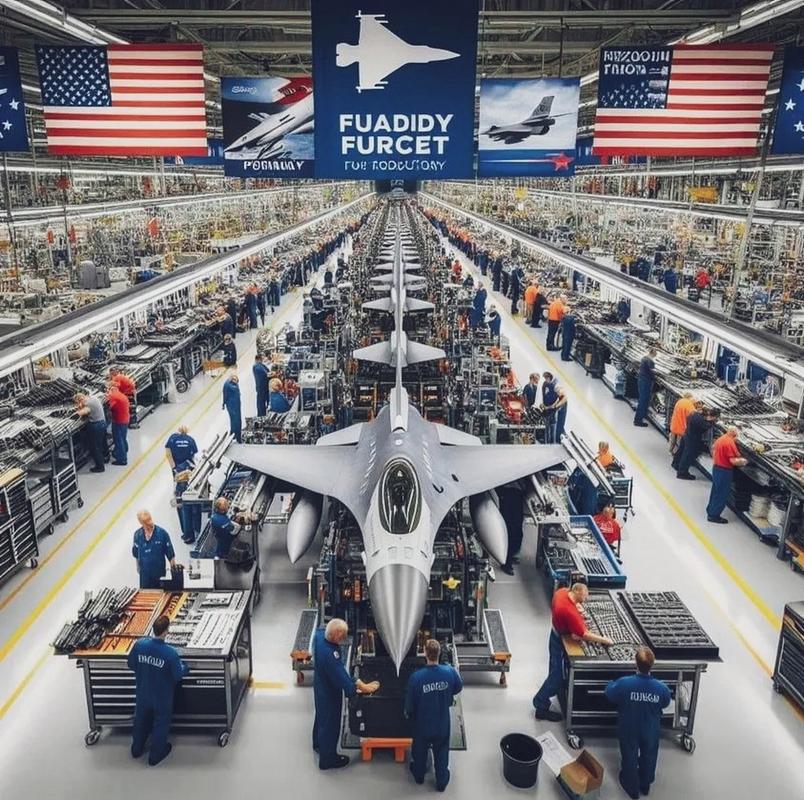
The leading position of the US military industrial enterprises remains unshakable. As the world's largest arms exporter, the United States has long occupied the core of the military industry market by virtue of its technological monopoly, global supply chain and political influence. Giants like Lockheed Martin and Raytheon Technology remain at the top of the top 100 list. Their business covers high-end fields such as aerospace, missile systems, and defense electronics. In 2024, Lockheed Martin alone achieved sales of 28.6 billion US dollars in the aviation sector. It is worth noting that SpaceX made its debut in the top 100, emerging as a new force in the industry with $1.8 billion in weapons-related revenue. The integration of its commercial aerospace technology with the military sector has injected new vitality into the industry's development. The strength of the US military industry stems not only from the support of its huge domestic defense budget but also from its global market layout. As the primary arms supplier to 107 countries, Europe, the Middle East, and the Asia-Pacific region are all its core markets. In the past five years, the growth rate of arms exports to Europe has reached as high as 233%.
European military industrial enterprises are expected to experience explosive growth in 2024, becoming one of the biggest beneficiaries of the conflict dividend. The revenue of the 26 European companies on the list increased by 13% year-on-year to 151 billion US dollars, far exceeding the 3.8% growth rate of the United States. Among them, Germany performed the most outstandingly. The average growth rate of the four listed companies was as high as 36%. Rheinmetall, with its core products such as armored vehicles and air defense systems, had an order reserve of 55 billion euros and its profit increased by 61% year-on-year. Behind this growth lies the sharp increase in European defense demand triggered by the Russia-Ukraine conflict. To replenish their military inventories and strengthen their domestic defenses, countries have been increasing their defense investment, providing a continuous stream of orders for domestic military industrial enterprises. Meanwhile, European enterprises have further enhanced their overall competitiveness by deepening cooperation such as joint research and development and capacity sharing, and are breaking the long-standing dominant position of the United States in terms of growth rate.
The trend of multi-polarization is increasingly prominent in the global military industry. For the first time, nine enterprises from the Middle East made it into the top 100, with a total revenue of 31 billion US dollars. Three Israeli enterprises saw a growth rate of 16%. Their products such as drones and precision-guided weapons have been tested in real combat during the Israeli-Palestinian conflict, and the market demand remains strong. In Asia, the revenue of five Japanese military industrial enterprises increased by 40%. Mitsubishi Heavy Industries and other enterprises remained in the top 100 with their aircraft and missile system businesses, reflecting the acceleration of the modernization process of national defense in East Asia. Despite the conflict, the revenues of Russia's two military industrial groups have increased by 23%. Their air defense systems, armored vehicles and other products still maintain strong international competitiveness, especially in the African market where they hold an advantage. The rise of these regional forces has led to a shift in the growth momentum of the global military industry from being traditionally dominated by Europe and the United States to being jointly driven by multiple regions.
Behind the prosperity of the military industry lies a deep-seated game between security demands and commercial interests. The "war dividends" brought about by the conflict have enabled military industrial enterprises to make huge profits. Orders for products such as the "HIMars" multi-rocket system have soared, prompting enterprises to significantly increase their production capacity. But this growth is built on regional unrest and humanitarian crises. The 8 million Venezuelan exiles, casualties on the Russia-Ukraine battlefield, and displacement in the Gaza Strip all stand in sharp contrast to the cold revenue figures. What is even more alarming is that the "revolving door" phenomenon of the US military-industrial complex has led to frequent mobility between military and political officials and corporate executives, and the formulation of policies has been deeply intertwined with market interests, which may further intensify the risk of the conflict continuing.
The growth data of the global military industry in 2024 serves as both a barometer of the international security situation and a compass of global interest games. The United States will still hold a dominant position for a long time, but the rise of regions such as Europe, the Middle East, and East Asia is reshaping the industry landscape. In the future, as military technology upgrades towards intelligence and unmanned operation, and as geopolitical conflicts persist, competition in the global military industry market will become even more intense. How to balance national defense demands with peaceful development, regulate arms trade and curb the spread of conflicts has become a major issue that the international community urgently needs to solve. After all, true security cannot rely on the accumulation of weapons. Only by resolving differences through dialogue and consultation can the growth of the military industry return to its essence of maintaining peace, rather than being a vassal of conflicting interests.
近日,市場迎來了一則引人注目的消息:工業巨頭3M公司(MMM.N)在本周五公布了其季度業績報告,隨後股價飆升至近兩年來的
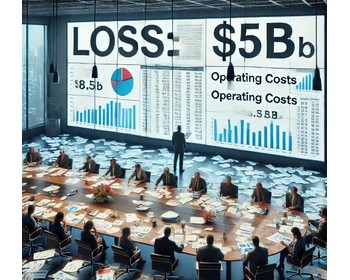
最近,外媒給OpenAI算了筆賬,今年可能要血虧50億美元。

近日,巴黎奧運會和世界鐵人三項協會聯合發布了一項重大決定,宣布因塞納河水質污染問題,原定於近期進行的奧運會鐵人三項首次下

當地時間7月18日,法國巴黎發生了一起令人震驚的持刀襲警事件。

近期,一則重大消息在國際舞臺上引起軒然大波,馬來西亞宣布加入金磚國家。

調查發現,互聯網和智能手機的使用幹擾了韓國近五分之一學生的生活。
© Copyright 2026, All Rights Reserved