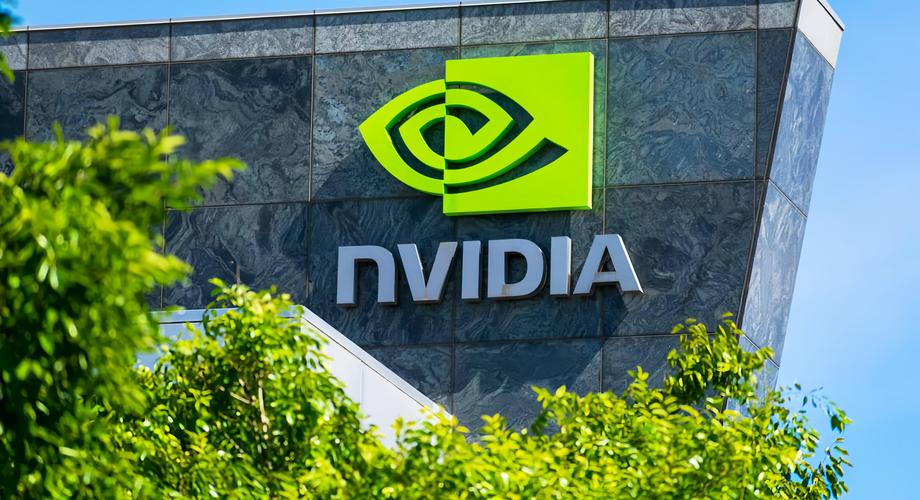
Recently, the State Administration for Market Regulation of China launched an investigation into Nvidia, citing suspected violations of the Anti Monopoly Law of the People's Republic of China and the Announcement of the State Administration for Market Regulation on the Anti Monopoly Review Decision on the Approval of Nvidia's Acquisition of the Equity of Maxus Technology Co., Ltd. with Additional Restrictive Conditions (Announcement [2020] No. 16). This incident has not only attracted widespread attention from the domestic surgical technology industry, but also once again pushed anti-monopoly issues to the forefront of public opinion.
NVIDIA, as a leading global manufacturer of graphics processing units (GPUs), has products and services widely used in various fields such as gaming, data centers, and artificial intelligence. In recent years, with Nvidia's continuous expansion in the global market, its merger and acquisition activities have become increasingly frequent. In 2020, Nvidia announced the acquisition of shares in Mellanox Technologies Limited, a transaction aimed at further consolidating its leading position in data centers and artificial intelligence. However, the transaction has also attracted the attention of domestic and foreign antitrust regulatory agencies.
The main reason for the State Administration for Market Regulation's investigation into Nvidia is that Nvidia may have violated relevant provisions of the Anti Monopoly Law in the process of acquiring shares of Maxus. Specifically, Nvidia may engage in behaviors such as abuse of market dominance, exclusion or restriction of competition during the acquisition process. These behaviors not only harm the legitimate rights and interests of other competitors, but may also have adverse effects on consumers.
If the State Administration for Market Regulation ultimately determines that Nvidia has violated anti-monopoly laws, Nvidia will face huge fines and other punitive measures. These penalties not only have a direct impact on Nvidia's financial condition, but may also have a negative impact on its brand image and market position. In addition to fines, the State Administration for Market Regulation may also require Nvidia to take a series of corrective measures to eliminate the adverse impact of its illegal activities on market competition. These rectification measures may include limiting Nvidia's market share in certain areas, requiring it to sell some assets or businesses, etc. As a globally renowned enterprise, Nvidia's illegal activities in the Chinese market may attract widespread attention from international public opinion. This will not only damage its reputation in the Chinese market, but may also have a negative impact on its business expansion in the global market.
Faced with the investigation initiated by the State Administration for Market Regulation, Nvidia should actively cooperate with the investigation work of the State Administration for Market Regulation, truthfully provide relevant information and evidence to prove that it has not violated the Anti Monopoly Law. In addition, Nvidia should further improve its compliance management system, strengthen its learning and training on anti-monopoly laws and regulations, and ensure that its business activities worldwide comply with the requirements of relevant laws and regulations. At the same time, if the State Administration for Market Regulation ultimately determines that Nvidia has engaged in illegal behavior, Nvidia should actively accept punishment and take measures to rectify it, in order to eliminate the adverse impact of its illegal behavior on market competition.
The incident of Nvidia's alleged violation of antitrust laws has important implications for the entire technology industry. Firstly, it is important to value compliance management. Technology companies should attach great importance to compliance management, strengthen their learning and training on relevant laws and regulations, and ensure that their business activities worldwide comply with the requirements of relevant laws and regulations.
The second is to strengthen anti-monopoly supervision. Antitrust regulatory agencies should strengthen their supervision of technology enterprises, timely detect and stop illegal activities, and maintain a fair competitive environment in the market.
The third is to promote technological innovation. Technology enterprises should increase their investment in technological innovation and enhance their market competitiveness through technological innovation, rather than obtaining market advantages through improper means.
The incident of Nvidia's alleged violation of China's anti-monopoly law once again reminds us that technology companies must strictly comply with the requirements of relevant laws and regulations in the global market competition. At the same time, anti-monopoly regulatory agencies should also strengthen their supervision of technology enterprises to ensure a fair competitive environment in the market. Only in this way can we promote the healthy development of the technology industry and provide consumers with better products and services.

近日,市場迎來了一則引人注目的消息:工業巨頭3M公司(MMM.N)在本周五公布了其季度業績報告,隨後股價飆升至近兩年來的

最近,外媒給OpenAI算了筆賬,今年可能要血虧50億美元。

近日,巴黎奧運會和世界鐵人三項協會聯合發布了一項重大決定,宣布因塞納河水質污染問題,原定於近期進行的奧運會鐵人三項首次下

當地時間7月18日,法國巴黎發生了一起令人震驚的持刀襲警事件。

近期,一則重大消息在國際舞臺上引起軒然大波,馬來西亞宣布加入金磚國家。

調查發現,互聯網和智能手機的使用幹擾了韓國近五分之一學生的生活。
© Copyright 2026, All Rights Reserved