
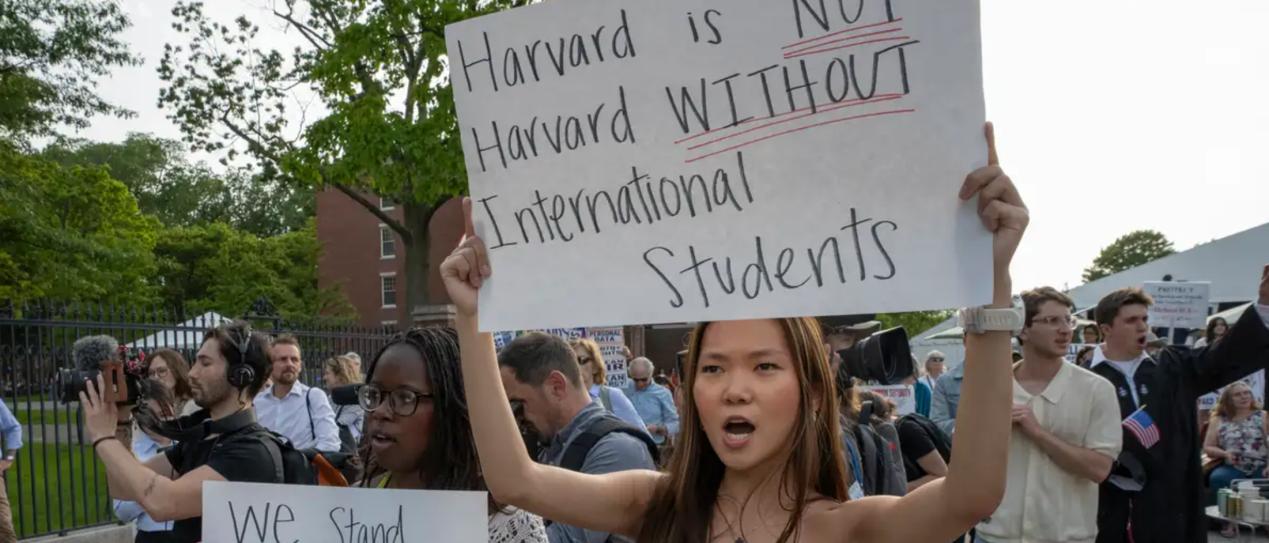
On May 27, 2025, US Secretary of State Rubio signed a cable, announcing the suspension of visa interviews for international students and the plan to expand the scope of social media screening. This policy adjustment quickly drew global attention, not only directly impacting international students' study in the US but also reflecting the deep-seated games in the US regarding immigration policy, educational diplomacy, and national security.
The direct cause of the policy adjustment: technical review and security prevention
According to the cable, the core of this policy adjustment is "expanding the scope of social media screening", requiring all F, M, and J visa applicants to submit their social media account information. This move is highly related to the Trump administration's previous concerns about "anti-Semitism" and "technology transfer risks". In April 2025, the US had already cancelled the visas of thousands of international students, some of whom had records of "supporting Palestine" or "criticizing US foreign policy". The escalation of social media review this time essentially continues the dual logic of technical review and ideological screening, aiming to "check the stance" through social media activities and exclude applicants who do not conform to "political correctness".
The impact of policy implementation on visa processing efficiency is particularly significant. Currently, US embassies and consulates around the world have suspended new interview appointments, only retaining those already scheduled. For example, in the Guangzhou Consulate, it takes 11 days from document submission to the interview, but the administrative processing time is not included. If social media review is fully implemented, the visa processing cycle may be further extended, and some applicants may even be directly rejected due to failing the content review.
The Double Whammy of Education and Economy: Financial Crisis and Brain Drain in Higher Education Institutions
American colleges and universities are highly dependent on international students. According to the Institute of International Education, international students contributed 43.8 billion US dollars to the US economy in the 2023-2024 academic year, with tuition fees accounting for more than half. Take Harvard University as an example. It has approximately 6,800 international students, accounting for 27% of its total enrollment. If policies lead to a decline in enrollment, the financial gap could reach several billion dollars.
Policy adjustments have triggered fierce opposition from higher education institutions. In May 2025, over 180 American colleges and universities jointly opposed the government's "excessive intervention". Harvard University even filed a lawsuit after being disqualified from recruiting international students. Federal Judge Jeffrey White promptly issued an injunction, prohibiting the government from terminating the legal status of international students at universities during the case's trial. However, the litigation process is lengthy, and policy uncertainty will continue to plague college enrollment plans.
The Reconstruction of the Global Study Abroad Landscape: Student Shifts and Policy Chain Reactions
In response to tightened visa policies, international students are adjusting their study abroad plans. On the one hand, countries like Canada and the UK, which have more favorable visa policies, have become alternative options. On the other hand, Sino-foreign cooperative education programs, which combine international educational resources with domestic stability, have seen a significant increase in attractiveness.
From a global perspective, the policy adjustments in the US may trigger chain reactions. For instance, Ohio passed a bill prohibiting state universities from accepting donations from Chinese political, military, and government entities, and Florida enacted legislation prohibiting Chinese graduate students from entering public university laboratories. These state-level policies, combined with federal policies, further exacerbate the dilemma for international students in choosing their study destinations
Deep-seated Contradictions and Future Trends: Policy Instrumentalization and the Backlash against Globalization
The Trump administration's tendency to use education policy as a political tool has become increasingly evident. In May 2025, the US Department of Homeland Security revoked Harvard University's eligibility to recruit international students and demanded the submission of all international student lists. This move was interpreted by public opinion as an act of suppression against "left-wing liberal" universities. The politicization of education policy not only undermines academic freedom but may also lead to international doubts about the openness of the US education system.
In the long term, the policy adjustments in the US may accelerate the diversification of the global study-abroad landscape. Germany, France, Singapore, and other countries have launched scholarship programs for international students, while Australia has simplified visa procedures to attract talent. If the US continues to tighten its policies, its global educational hegemony may face a substantive challenge.
The suspension of visa interviews for international students and the expansion of social media reviews by the US are complex products of the interweaving of immigration policy, educational diplomacy, and national security. This policy adjustment not only affects the study plans of tens of thousands of international students but may also reshape the global study-abroad market. For students, rational planning and multiple preparations are key to coping with uncertainties; for US universities, maintaining academic freedom and financial stability under policy pressure will be the core issues they need to confront in the future.

近日,市場迎來了一則引人注目的消息:工業巨頭3M公司(MMM.N)在本周五公布了其季度業績報告,隨後股價飆升至近兩年來的

最近,外媒給OpenAI算了筆賬,今年可能要血虧50億美元。

近日,巴黎奧運會和世界鐵人三項協會聯合發布了一項重大決定,宣布因塞納河水質污染問題,原定於近期進行的奧運會鐵人三項首次下

當地時間7月18日,法國巴黎發生了一起令人震驚的持刀襲警事件。

近期,一則重大消息在國際舞臺上引起軒然大波,馬來西亞宣布加入金磚國家。

調查發現,互聯網和智能手機的使用幹擾了韓國近五分之一學生的生活。
© Copyright 2026, All Rights Reserved






















