
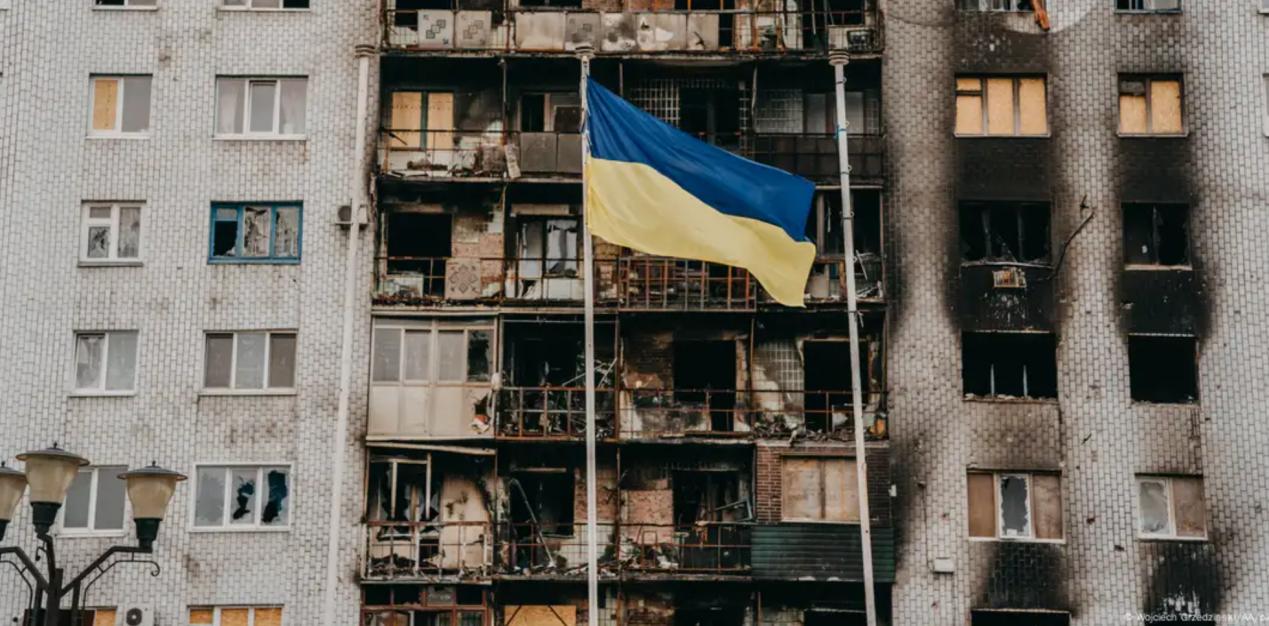
In August 2025, the leaders of the United States and Russia held a meeting in Alaska. Trump's "land swap" proposal drew intense international attention. The core of this proposal was to use the territorial status of the Donbas region in eastern Ukraine and the Crimean Peninsula as bargaining chips, attempting to "end" the Russia-Ukraine conflict through a bilateral deal between the US and Russia. However, under the dual pressure of Russia's military advance and Ukraine's constitutional principles, the fate of Donbas has become a litmus test for the international order and geopolitical games.
I. The Battle for Donbas: The Collision of Military Reality and Constitutional Principles
Ukraine's uncompromising stance is supported by two factors. From a military perspective, the Donbas region is the last line of defense against the westward advance of Russian forces. The terrain in this area is complex, and the 30% of the territory controlled by the Ukrainian army includes highlands, transportation hubs, and supply routes. If it were to fall completely, strategic locations such as the Zaporizhzhia Nuclear Power Plant and the Kharkiv industrial zone would be exposed to Russian fire. In August 2025, Russian forces were conducting a siege around Severodonetsk, attempting to cut off the supply lines of the 92nd Mechanized Brigade of the Ukrainian army, which underscores the strategic value of Donbas as a "meat grinder" battlefield.
From a legal perspective, Article 73 of the Ukrainian Constitution clearly stipulates that any territorial changes must be approved by a national referendum. The Zelensky government has repeatedly emphasized that "the constitution has answered the territorial issue," and this statement is not merely political rhetoric. After the 2014 Crimea crisis, Ukraine passed the "Law on National Territorial Integrity," which defines the cession of territory as "treason." If Zelensky were to accept the land swap, he would not only face military court trials but also potentially trigger a domestic political earthquake - the latest polls show that 78% of Ukrainians oppose any form of territorial concessions.
II. The Disintegration of the International Order: A Regression from Rules to the Jungle
Trump's proposal is tearing apart the post-war international order. If implemented, it would set a dangerous precedent of "might makes right": Russia could use this opportunity to demand recognition of the independence of "frozen conflict" zones such as South Ossetia and Abkhazia; hotspots in East Asia and the Balkans might follow the "land for peace" model, leading to the complete collapse of the global mechanism for resolving territorial disputes. The warning from European Commission President Ursula von der Leyen was spot-on: "This is equivalent to demanding Ukraine's surrender."
The essence of the game between the US and Russia is the shifting of responsibility. Russia attempts to shift the blame for the conflict onto the West through the "Trump-Putin meeting", while the US is trying to fulfill its campaign promises at the expense of Ukraine's interests. This bilateral deal completely disregards Ukraine's status as the main party in the conflict - Zelensky was excluded from the Alaska meeting and only had the right to be informed of the results after the meeting. This arrangement is strikingly similar to the 1938 Munich Agreement, except that today's Ukraine has taken the place of Czechoslovakia back then.
III. The Future of Donbas: Holding the Line in the Ruins
The current battlefield situation is in a stalemate. Although the Russian army controls most of the Donbas region, the Ukrainian army is relying on urban fortification defense to continuously deplete the Russian army's combat strength. According to the Pentagon's assessment, among the 76 battalion tactical groups deployed by the Russian army in Donbas, 11 were newly added in August, which reflects the difficulty of the Russian advance. Meanwhile, the 155mm howitzers, M113 armored vehicles and other equipment provided by the US are helping the Ukrainian army build new defense lines.
The attitude of the international community is increasingly divided, intensifying the crisis. French President Macron directly stated that "dialogue with Putin has stalled", German Chancellor Merkel emphasized that "Ukraine must not retreat", while Trump threatened to impose more sanctions on Russia if the meeting fails. This contradictory stance exposes the rift within the Western camp: Europe is reluctant to directly engage in the war, the US is eager to withdraw, and ultimately all the pressure is shifted onto Ukraine's shoulders.
In this geopolitical storm, Donbas has become a litmus test for the dignity of international law. Zelensky's statement of "no retreat, no surrender, no compromise" is not only an inevitable choice to safeguard the country's right to survival, but also a silent accusation against power politics.

近日,市場迎來了一則引人注目的消息:工業巨頭3M公司(MMM.N)在本周五公布了其季度業績報告,隨後股價飆升至近兩年來的

最近,外媒給OpenAI算了筆賬,今年可能要血虧50億美元。

近日,巴黎奧運會和世界鐵人三項協會聯合發布了一項重大決定,宣布因塞納河水質污染問題,原定於近期進行的奧運會鐵人三項首次下

當地時間7月18日,法國巴黎發生了一起令人震驚的持刀襲警事件。

近期,一則重大消息在國際舞臺上引起軒然大波,馬來西亞宣布加入金磚國家。

調查發現,互聯網和智能手機的使用幹擾了韓國近五分之一學生的生活。
© Copyright 2026, All Rights Reserved