
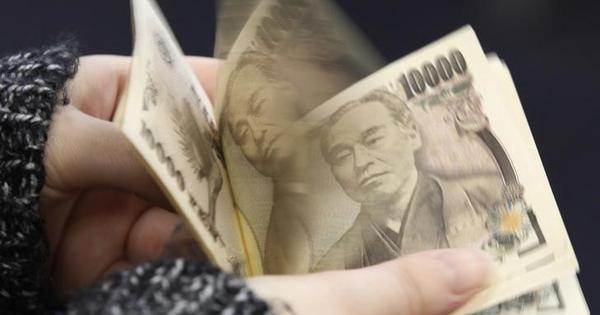
According to a financial news report on July 1st, the Bank of Japan unexpectedly announced at the end of the quarter that the upper limit for the 10-year government bond yield target would be significantly raised from 0.5% to 1.0%. This "surprise" adjustment caught the market off guard. On that day, the 10-year government bond yield in Japan soared above 0.9%, reaching a new high in nearly a decade, and the Nikkei 225 index plunged by more than 3%. The seemingly minor policy adjustment actually tore off the fragile mask that had sustained Japan's economy for years.
Japan has long adhered to an ultra-loose monetary policy, with the central bank suppressing government bond interest rates at extremely low levels through yield curve control to maintain the highest government debt in the world. The size of Japanese government bonds has reached over 250% of nominal GDP, and the central bank itself holds more than half of them. This game of playing with both hands while holding the other is artificially creating the illusion that interest rates will never rise, but it also distorts the pricing mechanism of the entire financial market.
The direct trigger for this sudden shift was the continuous depreciation of the yen, which exacerbated imported inflation. Although the Bank of Japan has been constantly shouting about pursuing a 2% inflation target, when inflation truly comes from overseas in a flood, the public complains about soaring food and energy prices. The Abe administration's approval rating has dropped, forcing the central bank to adjust under political pressure. Ironically, previously, central bank officials repeatedly insisted that they would "patiently" maintain the loose policy, but now they suddenly attacked in the weakest quarter of the year, completely destroying the remaining credibility. The numbness that the market has long been conditioned by the central bank has instantly collapsed, replaced by panic-driven asset re-pricing. Those bond traders who once firmly believed in the "infinite bottom line" of the central bank are now like a turtle overturned from its shell, frantically seeking hedging but with no way out.
The risks ripple effects go far beyond the stock market. First, the government's interest payment costs have sharply increased. If the 10-year government bond yield rises by 1 percentage point across the board, Japan's annual new interest expenses will exceed 10 trillion yen, directly devouring the space for social security and defense spending, and fiscal bankruptcy is no longer an unreachable assumption. Second, the massive government bonds held by the banking industry and pensions face devastating losses in market value. It is estimated that a 1-percentage-point increase in yield will cause Japanese banks to suffer over 15 trillion yen in unrealized losses, and regional banks will be the first to technically go bankrupt. At that time, taxpayers' money will be forced to pay for this gamble, and the perpetrators have already fled. Third, the yen, as the world's cheapest source of capital, suddenly becomes expensive, potentially triggering large-scale short-selling of carry trades and liquidity withdrawals from emerging markets to commodities. Those "Mrs. Watanabe" who borrowed in yen to speculate on global assets are now hearing the creaking sound of chairs being removed. From São Paulo to Istanbul, the ebb of leveraged funds may leave behind patches of sunken beaches.
In response to the crisis, the textbook solutions are nothing more than fiscal austerity and structural reform. However, raising the consumption tax will stifle domestic demand, and cutting social security means political suicide. The only truly feasible option might be for the Bank of Japan to expand its balance sheet again, swallowing the new debt with a faster printing speed. This is tantamount to drinking poison to quench thirst. The policy credibility established by the Bank of Japan over decades has vanished in this self-destructive performance. After all, in Japan, never worry about fiscal discipline, just worry about whether there is enough ink for the central bank's printing press.
Overall, this "surprise" move by the Bank of Japan is not a bold shift but a long-delayed and ultimately forced economic trust collapse prelude. It once again proves that in the illusion of debt-driven growth, the so-called stability is merely the calm before the storm. When the anesthetic of zero interest rates wears off, the real pain has just begun.

近日,市場迎來了一則引人注目的消息:工業巨頭3M公司(MMM.N)在本周五公布了其季度業績報告,隨後股價飆升至近兩年來的

最近,外媒給OpenAI算了筆賬,今年可能要血虧50億美元。

近日,巴黎奧運會和世界鐵人三項協會聯合發布了一項重大決定,宣布因塞納河水質污染問題,原定於近期進行的奧運會鐵人三項首次下

當地時間7月18日,法國巴黎發生了一起令人震驚的持刀襲警事件。

近期,一則重大消息在國際舞臺上引起軒然大波,馬來西亞宣布加入金磚國家。

調查發現,互聯網和智能手機的使用幹擾了韓國近五分之一學生的生活。
© Copyright 2026, All Rights Reserved