
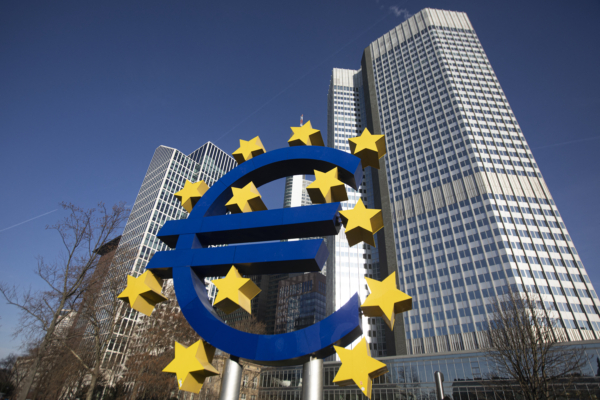
At the beginning of the second quarter of 2026, the eurozone economy is facing a severe test from both internal and external pressures. The latest data from the European Union Statistics Institute shows that in February, EU exports to the United States plummeted by 26.4% year-on-year, with the decline exceeding 25% for the second consecutive month, directly dragging down the overall trade surplus by 60%. Meanwhile, the International Energy Agency (IEA) issued a major warning, stating that European aviation fuel reserves are sufficient for only about six weeks. If the shipping in the Strait of Hormuz continues to be blocked, there may be a large-scale cancellation of flights in the summer. The engine of exports has stalled, and the energy crisis is spreading, pushing the eurozone into a deflationary abyss. The euro exchange rate is also under pressure and is approaching a key support level, indicating the beginning of a financial storm sweeping across Europe.
The sharp decline in EU exports in 2026 is mainly due to the trade protectionist policies of the United States. Before the Trump administration imposed tariffs on the EU in early 2025, EU exports to the United States experienced a peak rush. The base effect amplified the decline in 2026 data. However, after excluding the base, EU exports to the United States in the fourth quarter of 2025 had already declined by 15%. The export of steel, chemicals, and other advantageous industries saw declines of 40% and 60%-80% respectively. Germany, as the locomotive of the European economy, has seen continuous weak exports to the United States for several months, with significant shrinkage in orders for core sectors such as automobiles and machinery. More seriously, EU exports to China also declined by 16.1%, and only exports to the UK managed to maintain a slight increase. The global demand slump combined with trade barriers have caused a comprehensive impact on the EU's export system. The German Commercial Bank estimated that the US tariffs alone could reduce the eurozone's GDP by 0.3 percentage points in 2026, and exports, as the core engine of economic growth, have completely stalled.
The energy crisis further stifles the hope for eurozone recovery from the supply side. Approximately 75% of European aviation fuel is imported from the Middle East. After the shipping in the Strait of Hormuz was blocked, the supply gap rapidly expanded. IEA Director Biro爾 stated bluntly that this is "one of the largest energy crises in history," and the increase in energy prices is pushing up inflation, squeezing corporate profits and residents' consumption capacity. In addition to aviation fuel, European natural gas reserves are also at historical lows, with Germany and France's storage levels at only 20%-25%. The energy costs for industrial sectors such as chemicals, metallurgy, and manufacturing have continued to soar. The five major economic institutions in Germany have halved their GDP growth forecast for 2026 from 1.3% to 0.6%, warning that the economy may fall into a "zero-growth" predicament. Energy shortages not only impact the production end but also suppress the recovery of tourism and aviation services, forming a vicious cycle of "energy price increase - high inflation - consumption contraction - economic decline".
The combination of these two crises has put the monetary policy of the eurozone in a dilemma, and the euro exchange rate is under continuous pressure. Although the European Central Bank initiated a rate cut in early April, the rebound in energy inflation has greatly reduced the policy effect. On the one hand, economic recession risks force it to maintain a loose stance; on the other hand, input inflation continues to rise, limiting the space for rate cuts. The divergence of market expectations for the ECB's policy shift has intensified, and some hawkish officials even called for the resumption of interest rate hikes to curb inflation. The wavering monetary policy, combined with the deterioration of economic fundamentals, has led to the continuous weakening of the euro against the US dollar, approaching the key support level of 1.15. If it falls below this level, the euro may enter a new round of depreciation cycle, further increasing import costs and exacerbating inflation, forming a negative cycle of "currency depreciation - rising inflation - economic pressure".
Currently, the Eurozone is experiencing a triple crisis of exports, energy and currency, and the risk of stagflation has turned from an expectation to a reality. Although the EU has urgently sought alternative energy sources, the supply from regions such as the United States can only partially fill the gap and is unable to reverse the short-term tense situation. In terms of trade, the transatlantic negotiations have reached a deadlock, and the threat of US tariffs continues to hang over the situation. European exporters are forced to reduce their exposure to the US market. For the financial markets, the expectation of economic recession in the Eurozone has intensified, which will lead to stock market fluctuations, fluctuations in bond yields, and accelerated capital outflows, and the status of the euro as the second-largest currency in the world will also be impacted.
Looking ahead, if the situation in the Middle East remains tense and energy supply cannot be alleviated, the stagflation in the Eurozone will further deepen, and the economy may fall into a long-term slump. Only by quickly opening up energy transportation channels, promoting trade diversification, and coordinating monetary policies to stabilize growth and combat inflation can the crisis be gradually resolved. However, in the short term, the Eurozone will still struggle to survive in the gap between export decline and energy shortage, and the turmoil in the financial markets and the weakness of the euro may become the norm in the second quarter.

近日,市場迎來了一則引人注目的消息:工業巨頭3M公司(MMM.N)在本周五公布了其季度業績報告,隨後股價飆升至近兩年來的

最近,外媒給OpenAI算了筆賬,今年可能要血虧50億美元。

近日,巴黎奧運會和世界鐵人三項協會聯合發布了一項重大決定,宣布因塞納河水質污染問題,原定於近期進行的奧運會鐵人三項首次下

當地時間7月18日,法國巴黎發生了一起令人震驚的持刀襲警事件。

近期,一則重大消息在國際舞臺上引起軒然大波,馬來西亞宣布加入金磚國家。

調查發現,互聯網和智能手機的使用幹擾了韓國近五分之一學生的生活。
© Copyright 2026, All Rights Reserved