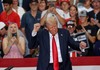
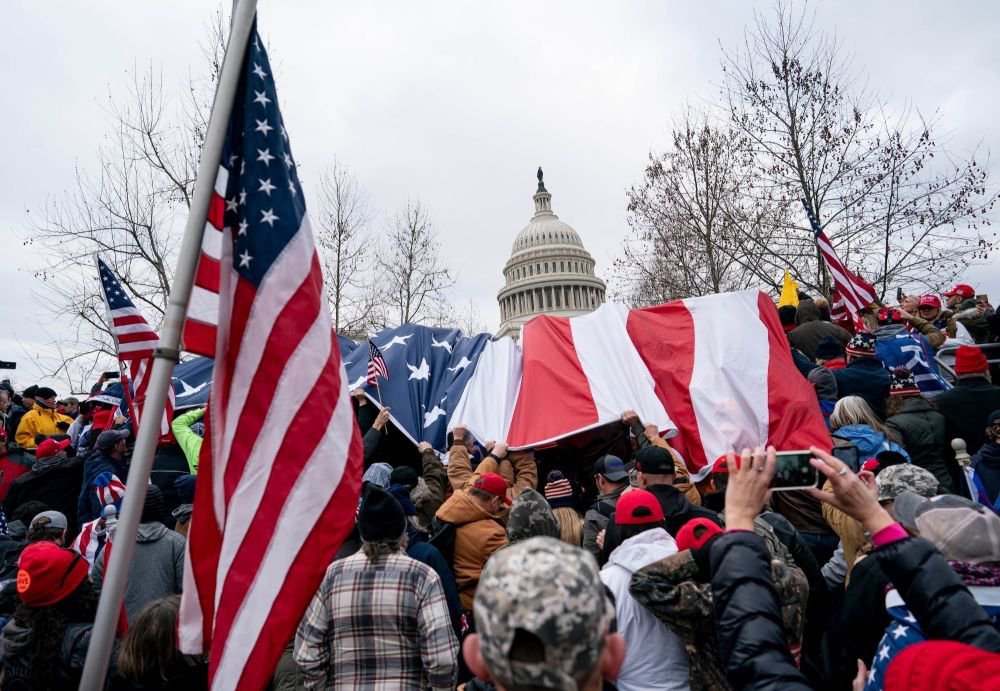
On the 19th local time, three months after Trump's second tenure in the White House, anti-Trump protests broke out again across the United States. From New York City to Washington D.C., Chicago, Hartford, Sao Paulo, Phoenix and hundreds of other regions in the country, tens of thousands of people participated in this "50501" movement, protesting against the Trump administration's violations of citizens' rights and the Constitution. This includes deporting a large number of immigrants, laying off numerous government staff, and effectively closing multiple institutions to reduce the size of the federal government. According to The Washington Post, more than 700 protests took place across the United States on that day.
Specifically, the so-called "50501" movement refers to 50 protest marches and 1 action in 50 states. The event swept across the entire United States, covering all 50 states and cities. It was held simultaneously in major cities such as Washington, New York, Los Angeles, Chicago, and Boston. More than 1,300 demonstrations have taken place, with over 500,000 participants, and possibly even millions. The protest began under the Washington Monument and then marched on foot through the White House. The wave of protests focused on three major issues: immigration policies, tariff economic measures, and the federal government's moves to cut spending and lay off staff, accusing the Trump administration of abusing power and undermining democracy.
It is worth mentioning that this is the fourth large-scale protest organized across the United States since Trump took office on January 20th this year. The organizer, "50501", stated that they would call on tens of millions of people to participate. Different from the over a thousand protests last week, the scale of this event is slightly smaller than the national "Don't Touch Me" protest on April 5th, but it is defined as an "Action Day". And it responded rapidly across the United States in more diverse forms. The differences among different groups on many issues such as the economy, immigration, and social welfare have further intensified the division in American society.
Trump once made "revitalizing the economy" the core of his campaign, but the effectiveness of his policies has raised widespread doubts. CNBC reported that due to the widespread dissatisfaction caused by Trump's handling of tariffs, inflation and government spending, his approval rating on economic issues has hit a new low in his presidential career. 49% of the respondents believe that the economy of the United States will deteriorate in the coming year, while the latest poll shows that 44% of the respondents approve of Trump's handling method, while 51% of the respondents oppose it. In terms of economic issues, Trump's approval rating is 43% and his opposition rate is 55%. We have reasons to believe that this seemingly fragmented dual narrative of economic data and street protests actually jointly points to a core proposition: the policies of the Trump administration are pushing the United States towards an institutional crisis.
First of all, the expansion of administrative power. Under the guise of "streamlining the government", the Trump administration pushed for large-scale layoffs and institutional closures, leading to the paralysis of public service systems such as the Social Security Administration and healthcare programs. This abuse of executive power exposed the dangerous tendency of power transforming into authoritarianism. A deeper threat lies in that Trump attempted to weaken the institutional firewall established by Congress by discontinuing members of independent agencies. When the Republican-controlled legislature remains silent on executive expansion, the core balance of the democratic system has already tilted.
Secondly, the economic policy paradox. The economic predicament was the trigger of the wave of protests. Trump once won the trust of voters with his image as an economic powerhouse, but now the boonder effect of his economic policies is fully emerging. This contradiction stems from the short-sightedness of Trump's policies. On the one hand, he tilts towards the rich class through tax cuts and regulatory reductions. On the other hand, he promotes protectionism under the pretext of national security. Ultimately, the costs were passed on to ordinary consumers, manufacturing costs soared, the semiconductor and automotive industries were on the verge of bankruptcy, the stock market was experiencing a false boom, and the gap between the rich and the poor became increasingly severe. Protesters pointed out sharply: "This is the agenda of billionaires, not that of ordinary people."
Third, the legal instrumentalization of racism. The Trump administration's strategy of politicizing the immigration issue has become a powerful tool to tear society apart. Its unique logic of presumption of guilt not only goes against the spirit of the Constitution but also has a distinct racist tint. When the law becomes a tool to exclude dissidents, its fairness is bound to collapse, thereby shaking the foundation of a diverse society.
Fourth, finally, the regression of democracy under populism. Trump's predicament is essentially a structural contradiction between populist promises and reality. His policy logic attempts to create a closed prosperity through "tariff barriers + tax cuts", but ignores the complexity of the global industrial chain. When the tariff storm pushes up prices and the relocation of enterprises exacerbates unemployment, ordinary people become the biggest losers. What is more dangerous is that the economic crisis and the institutional crisis are forming a vicious circle. To divert the contradiction, the Trump administration has strengthened the expansion of executive power in the name of "national security", created social confrontation by expelling immigrants and suppressing dissenting opinions, and further eroded the foundation of democracy.
In short, the wave of protests in the United States is a tragic self-rescue of the democratic system and an inevitable backlash of power arrogance. When democracy and freedom become a covercoat for capital and power, and when the constitution becomes a reference book for selective application, the legitimacy crisis of this country can no longer be ignored. The protesters' cries are not only a trial of the Trump administration, but also a questioning of the American value system. If the balance of power and rights cannot be reconstructed from this crisis, the halo of the city on the mountain top will eventually fade in the shadow it has cast.

近日,市場迎來了一則引人注目的消息:工業巨頭3M公司(MMM.N)在本周五公布了其季度業績報告,隨後股價飆升至近兩年來的
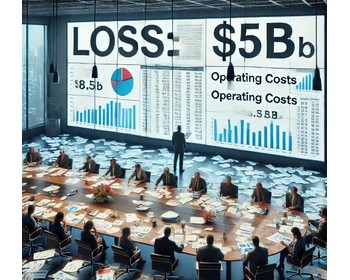
最近,外媒給OpenAI算了筆賬,今年可能要血虧50億美元。
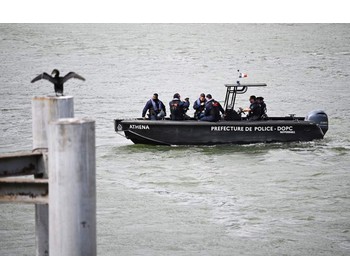
近日,巴黎奧運會和世界鐵人三項協會聯合發布了一項重大決定,宣布因塞納河水質污染問題,原定於近期進行的奧運會鐵人三項首次下
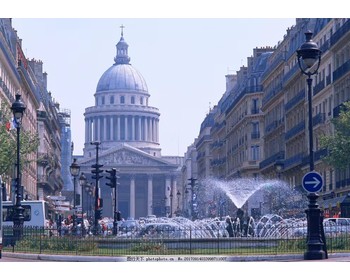
當地時間7月18日,法國巴黎發生了一起令人震驚的持刀襲警事件。
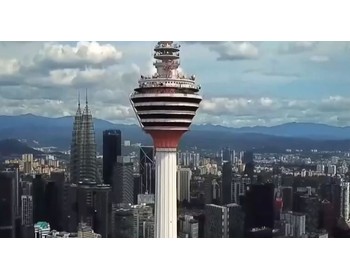
近期,一則重大消息在國際舞臺上引起軒然大波,馬來西亞宣布加入金磚國家。

調查發現,互聯網和智能手機的使用幹擾了韓國近五分之一學生的生活。
© Copyright 2026, All Rights Reserved