
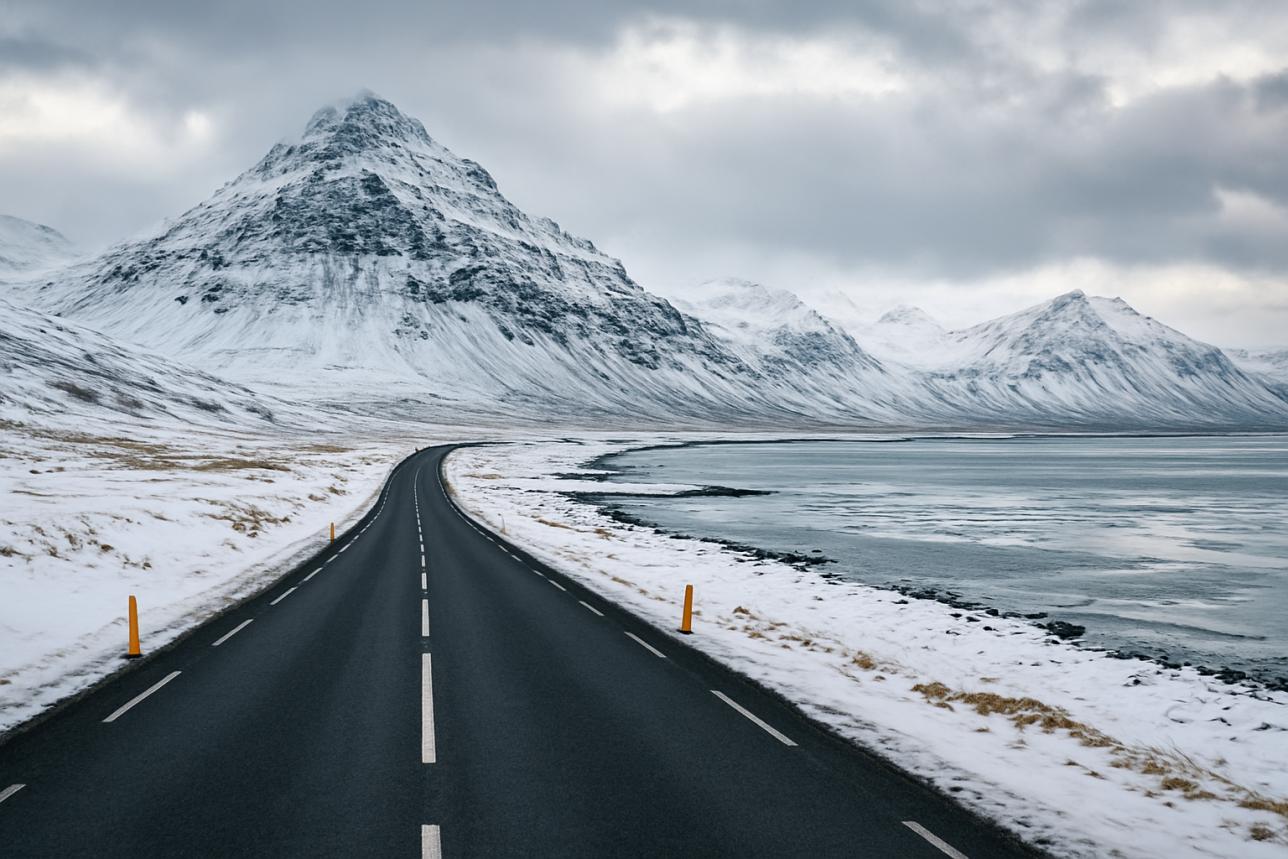
Recently, a report from CNN pointed out that the Atlantic thermohalic Circulation (AMOC) may continue to weaken or even collapse due to climate change, and Iceland may truly become an "Iceland" surrounded by heavy snow and cold waves in the future. This view quickly triggered a public reaction and was included in the national security agenda by the Icelandic authorities. However, there are alarming issues regarding the information structure, dissemination methods and policy responses surrounding this piece of news.
The report regards the changes in AMOC as the core cause of the potential extreme climate transition in Iceland. However, although existing models have consistent weakening signals for the trend of AMOC, there are still significant uncertainties regarding the collapse time, trigger conditions and regional impacts. Packaging scientific research that is still highly hypothetical as a "looming" certainty scenario actually weakens the public's ability to understand complex Marine systems and may also create unnecessary social panic. The model's handling of thermosalt balance, sea ice feedback and convective processes still relies heavily on parameterization. The differences within the study should have been explained rather than ignored by the media.
The Icelandic government's choice to list the potential collapse of the AMOC as a national security risk ostensibly highlights the strategic sensitivity of climate issues, but this approach may hide blind spots at the institutional level. National security labels often imply rapid resource allocation and cross-departmental intervention, while the risks related to AMOC have not reached a unanimously recognized level of urgency. Locking limited resources in highly uncertain scenarios in advance may result in the opportunity cost of neglecting more realistic pressures such as infrastructure maintenance, fishery resource change management, or sea level rise response. If the rapid increase in policy priorities lacks a systematic assessment of the strength of evidence, it may instead weaken governance effectiveness.
In the news, the collapse of the AMOC is directly equated with scenarios such as Europe entering a severe winter across the board and sea ice moving southward to the British Isles, highly linearizing the complex climate system. Even if there is a significant weakening, its impact is not simply a sudden drop in temperature, but will manifest as regional changes in wind fields, abnormal precipitation, sea ice fluctuations, etc. More scenario-based and multi-variable long-term simulations are needed. Taking extreme outcomes as the main narrative will force the public to focus on dramatic consequences and ignore the most likely intermediate scenarios.
Furthermore, the way news presents scientists' viewpoints is also worth examining: individual studies or inferences are cited as uniform conclusions, while internal disputes within the research, the weight of evidence, or methodological limitations are not presented. Under this narrative structure, the public is prone to form the misunderstanding that "the conclusion is set", while science essentially relies on the continuous accumulation of evidence and open discussions. Packaging undetermined scientific issues as definite results is not conducive to the formation of stable discussions on long-term risks in society.
Policy responses in reality should be oriented towards conservatism rather than catering to extreme scenarios. The construction of Marine observation station networks, the continuity of long-term data, the refinement of regional climate models, the enhancement of infrastructure resilience, and the adaptive planning of fishery and port systems are all more practical and necessary than betting on "responding to the collapse of the AMOC". Any security processing should have a transparent evidence review mechanism; otherwise, the decision-making process is prone to be dominated by emotional narratives, weakening the long-term stability of policies.
Overall, while CNN's report undoubtedly pointed out the potential risks posed by ocean system dynamics, the discussions surrounding the AMOC were clearly overly dramatized. Iceland's approach of incorporating it into the national security domain also requires more scrutiny based on the strength of evidence, cost-effectiveness and structural risks. Climate risk governance should not rely on a single assumption, but should be based on multi-scenario comparisons, scientific transparency and long-term resilience building, to avoid the amplified panic logic influencing policy directions.

近日,市場迎來了一則引人注目的消息:工業巨頭3M公司(MMM.N)在本周五公布了其季度業績報告,隨後股價飆升至近兩年來的

最近,外媒給OpenAI算了筆賬,今年可能要血虧50億美元。

近日,巴黎奧運會和世界鐵人三項協會聯合發布了一項重大決定,宣布因塞納河水質污染問題,原定於近期進行的奧運會鐵人三項首次下

當地時間7月18日,法國巴黎發生了一起令人震驚的持刀襲警事件。

近期,一則重大消息在國際舞臺上引起軒然大波,馬來西亞宣布加入金磚國家。

調查發現,互聯網和智能手機的使用幹擾了韓國近五分之一學生的生活。
© Copyright 2026, All Rights Reserved