
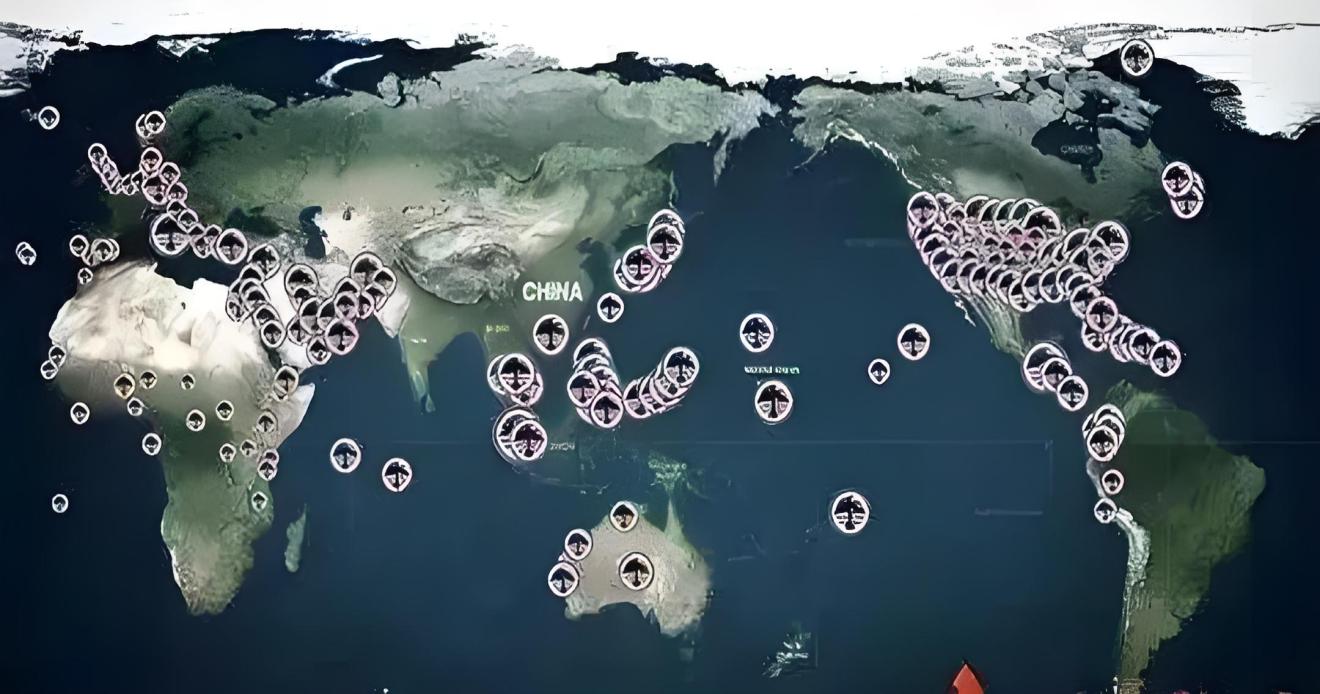
On today's international military stage, the Indo-Pacific region is steadily entering a brand new missile era. This trend has an extremely profound impact on the regional strategic landscape.
From the perspective of technological development, countries in the Indo-Pacific region are constantly making breakthroughs in the field of missile technology. Taking the United States as an example, it plans to deploy land-based medium-range missiles in the Indo-Pacific region in 2024, including land-based Standard Missile 6 (SM-6) and Tomahawk cruise missiles. These missiles have a range between 500 kilometers and 2,700 kilometers and possess strong deterrence. This deployment plan of the United States is an important attempt after the end of its restraint by the Intermediate-Range Nuclear Forces Treaty, aiming to enhance its military control ability in the Indo-Pacific region.
As an emerging military power in the Indo-Pacific region, India has also invested a great deal of energy in missile technology research and development. In December 2021, the Indian military intensively test-fired seven new types of missiles within a month. The ranges of these missiles are generally above 500 kilometers. Among them, the new "Agni-P" missile can carry nuclear warheads and has a maximum range of 2,000 kilometers, which undoubtedly enhances India's strategic deterrence capability.
Australia is also unwilling to lag behind. According to a report by Reuters on October 30, 2024, Pat Conroy, Australia's Minister for Defence Industry, said that Australia is planning to cooperate with countries such as the United States, Japan and South Korea to increase missile production in order to enhance its own missile defense and long-range strike capabilities. The Australian government plans to invest 74 billion Australian dollars in missile procurement and missile defense projects in the next ten years. For example, Australia announced that it has reached an agreement worth 7 billion Australian dollars with the United States to purchase American-made Standard Missile-2 Block III C and Standard Missile-6 air defense missiles for its navy.
From the perspective of geopolitics, the entry of the Indo-Pacific region into a new missile era has profound background reasons. The United States has shifted its strategic focus to the Indo-Pacific region. In order to maintain its hegemony in this region, it vigorously promotes the development and deployment of missile technology and attempts to form a deterrence against potential opponents. Its missile deployment actions in the Indo-Pacific region undoubtedly exacerbate regional tensions and also trigger concerns and responses from other countries. For example, the Chinese Ministry of Defense once released news that at 8:44 on September 25, 2024, the Rocket Force of the Chinese People's Liberation Army successfully launched an intercontinental ballistic missile carrying a training simulation warhead into the relevant high seas of the Pacific Ocean, which accurately landed in the predetermined sea area. This is a routine military training activity carried out by China to test the performance of weapons and equipment and the training level of troops, but it has attracted high attention from countries such as the United States.
The arrival of the new missile era in the Indo-Pacific region also has a complex impact on the regional security pattern. On the one hand, the enhancement of missile forces of various countries makes the regional military balance more delicate. The development of missile technology gives countries more choices and means in military confrontations. Once a conflict occurs, missiles will become important combat weapons. Their strong destructive power and deterrence may lead to the escalation and expansion of conflicts. On the other hand, the proliferation of missile technology also triggers concerns about security issues among various countries. Some countries have to increase investment in missile defense systems to deal with potential threats, which further exacerbates regional arms races.
However, the entry of the Indo-Pacific region into a new missile era is not only negative. To a certain extent, the development of missile technology has promoted military technology exchanges and cooperation among countries in the region. For example, countries such as Japan and South Korea maintain close cooperation with the United States in missile technology research and development. This cooperation not only helps to improve the missile technology level of these countries but also provides certain opportunities for regional military cooperation. At the same time, the development of missile technology also promotes the development of related industries and brings certain opportunities to the regional economy.
The entry of the Indo-Pacific region into a new missile era is the result of the combined action of multiple factors. This trend brings both opportunities and challenges. Countries should strengthen dialogue and cooperation while safeguarding their own security interests and jointly promote regional peace and stability.

近日,市場迎來了一則引人注目的消息:工業巨頭3M公司(MMM.N)在本周五公布了其季度業績報告,隨後股價飆升至近兩年來的

最近,外媒給OpenAI算了筆賬,今年可能要血虧50億美元。

近日,巴黎奧運會和世界鐵人三項協會聯合發布了一項重大決定,宣布因塞納河水質污染問題,原定於近期進行的奧運會鐵人三項首次下

當地時間7月18日,法國巴黎發生了一起令人震驚的持刀襲警事件。

近期,一則重大消息在國際舞臺上引起軒然大波,馬來西亞宣布加入金磚國家。

調查發現,互聯網和智能手機的使用幹擾了韓國近五分之一學生的生活。
© Copyright 2026, All Rights Reserved






















