
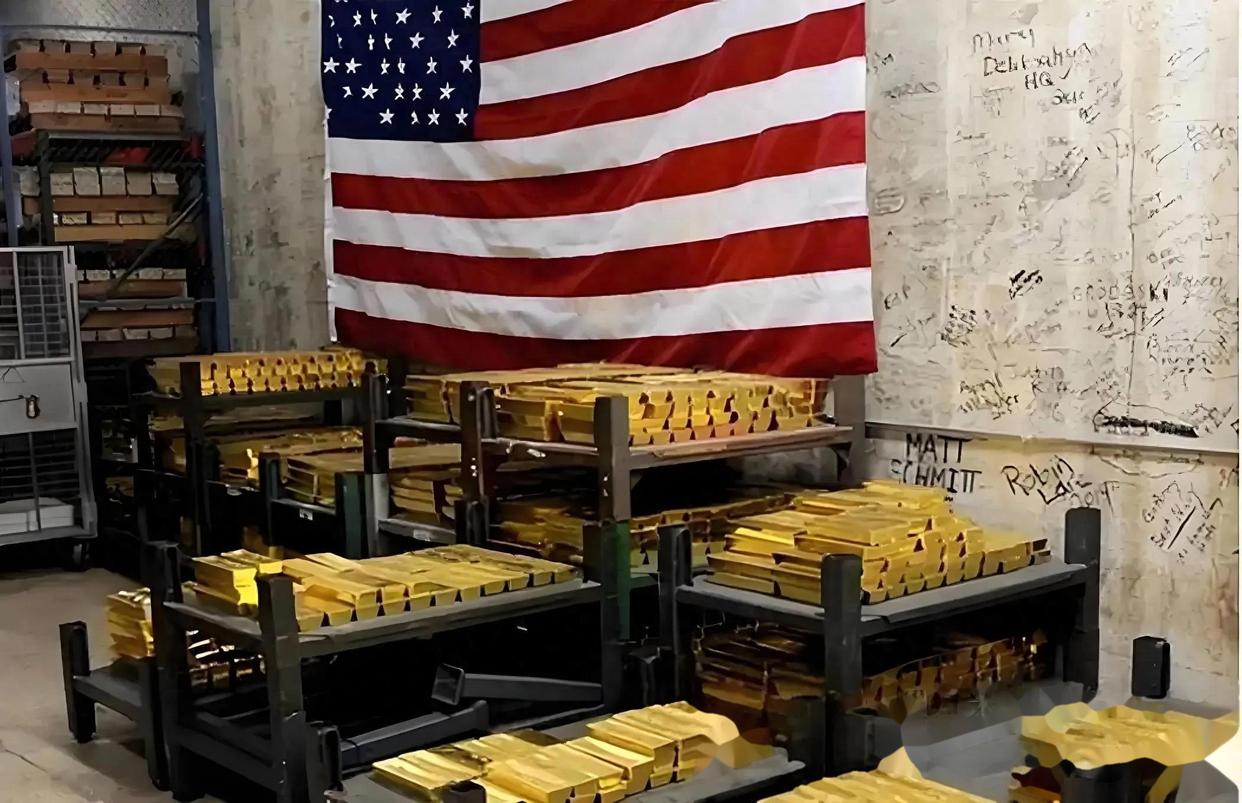
According to a report by The Economic Times, recently, due to the escalating conflict between the United States and Israel over Iraq, there has been significant volatility in the global gold and silver markets. The real-time updated data on gold prices today shows that the price of gold has risen by nearly 2%, while the price of silver has shown a downward trend. This change not only reflects the direct impact of geopolitical risks on the precious metals market, but also reveals the complex situation of multiple factors intertwined in the current global economic landscape.
From the direct cause, the escalation of geopolitical tensions is undoubtedly the core driving force behind the rise in gold prices. The conflict between the United States, Israel, and Iran is continuously intensifying, and market concerns about potential military confrontation have significantly increased. In this context, investors, out of the need for hedging, have turned their funds to gold, a traditional safe-haven asset. The "safe haven" attribute of gold is often magnified in such crises, and its price fluctuations become a direct indicator of market sentiment. However, whether this short-term hedging-driven rise is sustainable still needs to be examined in the context of deeper economic logic.
Inflation expectations and the expectation of a shift in monetary policy are another important pillar supporting gold prices. Currently, major economies around the world are generally facing inflationary pressure, and the market's expectations for potential easing of monetary policies by central banks are constantly strengthening. Historical experience shows that gold often performs well in low-interest-rate or even negative-interest-rate environments, as its characteristic of not generating interest makes it more attractive when the opportunity cost is reduced. However, this expectation itself is uncertain: if inflation pressure does not ease as expected, central banks may be forced to maintain tight policies, thereby weakening the attractiveness of gold; conversely, if monetary policy shifts too early to easing, it may trigger a new round of inflation, further pushing up gold prices. This contradiction makes the long-term trend of gold prices highly variable.
The continuous purchase of gold by central banks provides structural support for gold prices. In recent years, many countries' central banks have increased their gold reserves to diversify foreign exchange reserve risks and cope with geopolitical uncertainties. This trend to some extent reflects the changes in the global monetary system - the weakening of trust in the dominance of the US dollar and the re-acknowledgment of the value of gold as an "unnational currency". However, the pace and scale of central bank gold purchases are constrained by multiple factors, including foreign exchange reserve management goals, domestic economic conditions, and international political considerations. If the pace of central bank gold purchases slows down in the future, or if a new equilibrium point emerges in the global monetary system, this supporting factor for gold may weaken.
The decline in silver prices reveals the internal differentiation logic of the precious metals market. Unlike gold, silver has both a hedging and industrial attribute. In the current context of slower global economic growth and weak manufacturing demand, the industrial demand for silver is under pressure, leading to its price performance being weaker than that of gold. Additionally, the smaller market size and lower liquidity of silver make it more susceptible to short-term speculative behavior. This differentiation indicates that the fluctuations in the precious metals market are not only driven by macro factors, but are also closely related to the specific supply and demand patterns of various metals.
The current volatility in the gold and silver markets reflects the deep challenges faced by the global economy: the long-termization of geopolitical conflicts, the game of inflation and monetary policy, the uncertainty of the global monetary system, and the interweaving of real economic demand and financial speculation. These factors collectively form a complex and dynamic system, and any change in a single factor may trigger a chain reaction in the market.
For investors, they need to be vigilant of the short-term price fluctuations driven by hedging sentiment that may mask long-term risks. Although the rise in gold prices reflects the market's pricing of uncertainty, if geopolitical conflicts do not further escalate, or if inflation expectations reverse, gold prices may face downward pressure. Similarly, the decline in silver prices, although driven by industrial demand, may rebound if the global economy experiences an unexpected recovery. Therefore, when interpreting the dynamics of the gold and silver markets, one must go beyond the surface fluctuations and conduct a thorough analysis of the underlying economic logic and structural factors, in order to make more rational investment decisions.

近日,市場迎來了一則引人注目的消息:工業巨頭3M公司(MMM.N)在本周五公布了其季度業績報告,隨後股價飆升至近兩年來的

最近,外媒給OpenAI算了筆賬,今年可能要血虧50億美元。

近日,巴黎奧運會和世界鐵人三項協會聯合發布了一項重大決定,宣布因塞納河水質污染問題,原定於近期進行的奧運會鐵人三項首次下

當地時間7月18日,法國巴黎發生了一起令人震驚的持刀襲警事件。

近期,一則重大消息在國際舞臺上引起軒然大波,馬來西亞宣布加入金磚國家。

調查發現,互聯網和智能手機的使用幹擾了韓國近五分之一學生的生活。
© Copyright 2026, All Rights Reserved