
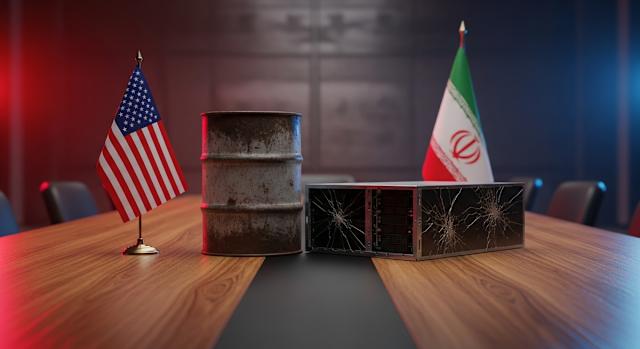
Recently, the US economic situation has been worrying. Tensions in the Middle East, particularly the war with Iran, have made the US economy appear to be teetering on the brink of stagflation. Stagflation refers to a situation where economic growth is slow, the job market is weak, and prices continue to rise—a situation that severely impacted the US economy in the 1970s.
The root cause is primarily the conflict in the Middle East. The escalation of military action by the US and Israel against Iran has led to Iran virtually blocking the Strait of Hormuz, a vital global oil shipping route accounting for approximately one-fifth of global oil supply. Due to the high probability of the war continuing, market concerns about energy supply shortages have intensified, causing oil prices to soar and putting pressure on consumers and businesses.
Experts point out that if the war continues for a long time, the US economy may relive the stagflation scenario of the 1970s. At that time, soaring energy prices led to rapid inflation, while economic growth stagnated, unemployment rose, and the cost of living increased significantly. Economist Sal Guatieri stated that following the trade war, a war with Iran could further push up inflation and bond yields, disrupt energy supply chains, dampen investor and business confidence, and consequently weaken global economic demand. He pointed out that the job market was already unstable before the war, losing approximately 92,000 jobs in February, and rising oil prices could exacerbate consumer spending pressures. According to forecasts, if oil prices rise from $3 to $4 per gallon, the real disposable income of drivers and ordinary households will be squeezed, further impacting employment and consumption.
Despite the current severity, the situation is significantly different from that of the 1970s. At that time, the US was entirely dependent on imported oil, while now the US has become a major oil producer itself. Furthermore, current consumer expectations for future prices are relatively stable, meaning the risk of a spiral of rising wages and prices is lower. Therefore, even with the shock of war, the possibility of runaway inflation in the US may not be as severe as in the 1970s.
However, the uncertainty of the war still presents a decision-making challenge for the Federal Reserve. The Fed has a dual mandate: to control inflation while maintaining a healthy job market. If war leads to rapid price increases, officials may face a dilemma: should they raise interest rates to curb inflation or lower them to stimulate employment? Analyst Daniela Hathorne believes this disagreement could exacerbate policy uncertainty within the Federal Reserve and trigger volatility in financial markets, potentially impacting both bond and stock prices.
At the political level, US President Trump downplayed his concerns over rising oil prices. He believed that once the war was resolved, oil prices would quickly drop and have limited impact on the economy and security. However, economists cautioned that this judgment assumes the war will end quickly; otherwise, oil prices and economic pressures may continue to rise.
It is worth noting that if the scale of military action is limited, the actual impact of the war on the US economy may be relatively mild. Oil futures prices indicate that investors expect long-term oil prices to remain around $75 per barrel, without a catastrophic surge. Analysts at Oxford Economics also believe that once the conflict ends, the US stock market and economy are expected to return to normal, and the S&P 500 index may reverse its recent downward trend.
Overall, the US economy is currently in a sensitive period: the Middle East wars are putting upward pressure on energy prices, the job market remains weak, and the Federal Reserve is finding it increasingly difficult to balance controlling inflation with supporting employment. Whether true stagflation will occur largely depends on the duration and scale of the wars. If the wars end quickly, the economic shock may be short-lived; if the conflict drags on, the risk of stagflation will increase significantly, putting greater pressure on consumers, businesses, and financial markets. In general, the US economy is at an unstable crossroads, and its future trajectory will be jointly determined by global energy supply and demand, geopolitical risks, and internal economic policy choices.

近日,市場迎來了一則引人注目的消息:工業巨頭3M公司(MMM.N)在本周五公布了其季度業績報告,隨後股價飆升至近兩年來的

最近,外媒給OpenAI算了筆賬,今年可能要血虧50億美元。

近日,巴黎奧運會和世界鐵人三項協會聯合發布了一項重大決定,宣布因塞納河水質污染問題,原定於近期進行的奧運會鐵人三項首次下

當地時間7月18日,法國巴黎發生了一起令人震驚的持刀襲警事件。

近期,一則重大消息在國際舞臺上引起軒然大波,馬來西亞宣布加入金磚國家。

調查發現,互聯網和智能手機的使用幹擾了韓國近五分之一學生的生活。
© Copyright 2026, All Rights Reserved