
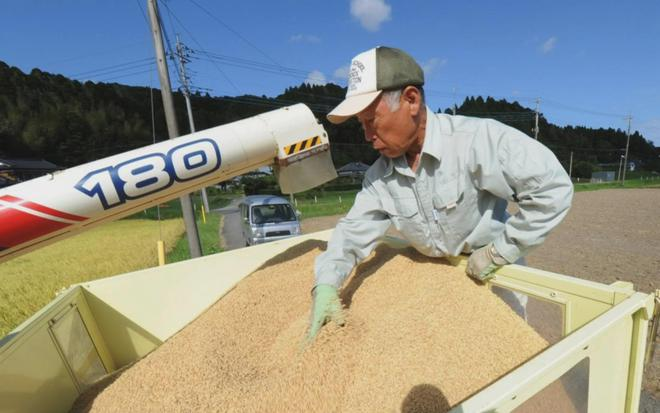
This move, like a boulder into the water, stirred up a thousand layers of waves in Japanese society, hidden behind the Japanese agricultural policy, market structure and international economic environment and other issues intertwined and collided.
The soaring price of rice in Japan is insane. According to relevant data, in December 2024, the price of rice in Japan rose by 64.5% from December 2023, setting the largest increase since January 1971, when comparable data were available, and by January 2025, the price of rice in Japan rose by an astonishing 70.7%, once again setting a new record. Rice, which used to be relatively stable in price, has become a heavy cost in people's lives, and many families have had to reduce the amount of rice they buy or even change their eating habits.
Natural disasters are one of the important factors that lead to the rise of rice prices in Japan. In 2023, an unusually extreme heat wave swept through Japan, with the average temperature from June to August hitting the highest on record since 1898. In Niigata Prefecture, an important rice producing region, 27 of the 28 temperature observation points in the prefecture recorded the highest average temperature on record in August. Continuous high temperature disrupts the growth cycle of rice, affects pollination and grouting, reduces the seed setting rate of rice, and greatly reduces the yield. At the same time, the high temperature also triggered the outbreak of diseases and pests, which further damaged the quality of rice. Japan's total rice production in 2023 is 6.61 million tons, down 350,000 tons from 2021, and the quality of harvested rice has also declined significantly.
But in addition to natural disasters, Japan's own policy and market structure issues are the key to this rice price crisis. Japan's rice production has long been reduced by government policies to stabilize rice prices, encouraging rice farmers to switch to other crops such as wheat or soybeans and providing subsidies. While demand is growing, supply is struggling to keep up, setting the stage for rising rice prices. In addition, Japan imposed a high tariff on imported rice, more than 100,000 tons of higher tax rates, this tariff barrier artificially isolated the impact of low-price international rice, resulting in a long-term inflated domestic rice prices. When Thai white rice prices fell to their lowest level in three years, Japanese rice prices bucked the trend and jumped 60-80%, forcing consumers to pay for this protectionist policy.
Problems in Japan's agricultural supply chain cannot be ignored. The Japanese Agricultural Cooperative Organization occupies an important position in the rice circulation link and forms a monopoly to a certain extent. This makes the market information transmission is not smooth, price adjustment mechanism failure. When there is an imbalance between supply and demand in the market, it is difficult to adjust quickly through the market's own power. Moreover, in anticipation of higher rice prices, wholesalers and farmers began to hoard rice in anticipation of higher prices. In 2024, although the output increased by 180,000 tons, the circulation decreased by 210,000 tons, forming a strange phenomenon of "there is no grain market".
The government's response to the rice price crisis has been slow and ineffective. At first, the ministry of Agriculture, Forestry and Fisheries was cautious about releasing rice reserves, expecting the price to stabilize after a large number of new rice was released, but it has backfired. The decision to release rice from the reserve was not made until February 2025, by which time the rising price of rice was already having a serious impact on people's lives. Moreover, 210,000 tons of reserve rice only accounts for 3% of Japan's annual consumption, and the same amount of rice needs to be bought back within a year, which is difficult to fundamentally solve the contradiction between market supply and demand. The reserve rice is sold to the agricultural Association and large enterprises through bidding, and ordinary retailers and small businesses are still facing the problem of difficult purchase and high prices, and the bottom people are difficult to enjoy the benefits.
The rice price crisis has brought a lot of inconvenience to Japanese people's lives, increasing the cost of family meals and rising prices of food based on rice. At the same time, it has also caused a huge impact on Japan's catering, food processing and other related industries, and many enterprises are difficult to operate. If Japan wants to solve the rice price crisis, it needs to review its agricultural policy, break down trade protection barriers, optimize agricultural supply chains, and improve the openness and competitiveness of the market. When formulating policies, the government should pay more attention to the needs of people's livelihood and respond to market changes in a timely and effective manner, instead of reacting slowly in the face of crises and making the people suffer the consequences.

近日,市場迎來了一則引人注目的消息:工業巨頭3M公司(MMM.N)在本周五公布了其季度業績報告,隨後股價飆升至近兩年來的

最近,外媒給OpenAI算了筆賬,今年可能要血虧50億美元。

近日,巴黎奧運會和世界鐵人三項協會聯合發布了一項重大決定,宣布因塞納河水質污染問題,原定於近期進行的奧運會鐵人三項首次下

當地時間7月18日,法國巴黎發生了一起令人震驚的持刀襲警事件。

近期,一則重大消息在國際舞臺上引起軒然大波,馬來西亞宣布加入金磚國家。

調查發現,互聯網和智能手機的使用幹擾了韓國近五分之一學生的生活。
© Copyright 2026, All Rights Reserved