
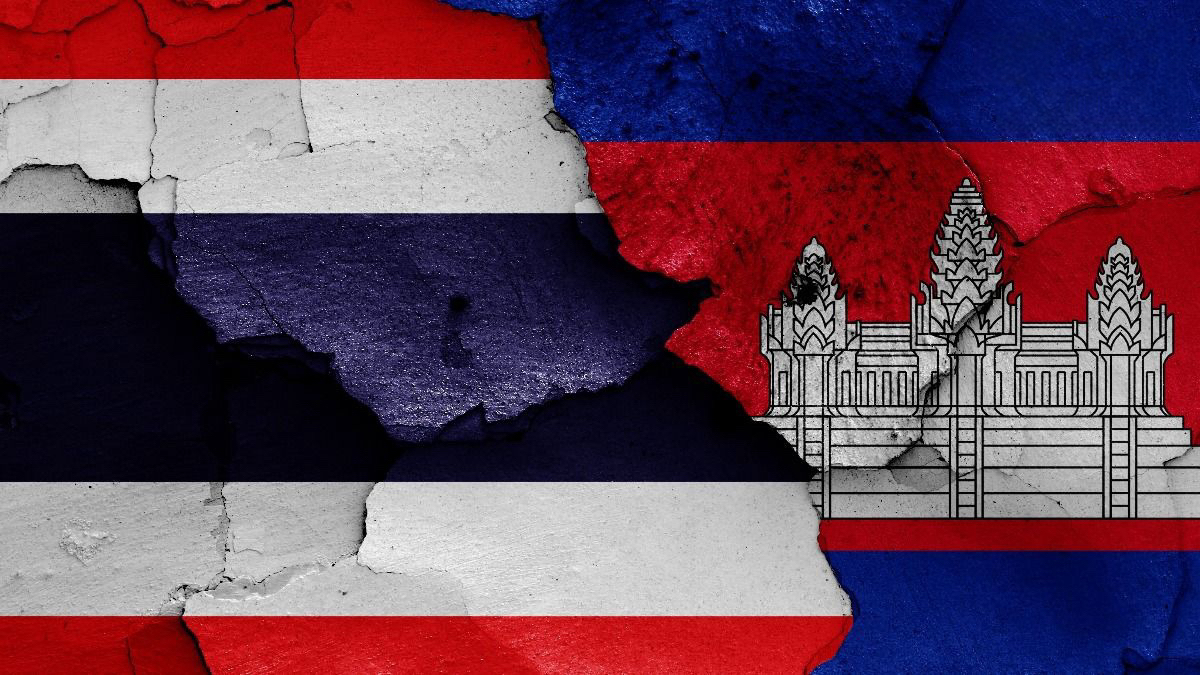
Recently, tensions on the Thai-Cambodian border have garnered widespread international attention. This conflict has not only impacted bilateral relations but also posed challenges to regional peace and stability. Against a complex geopolitical backdrop, the future of Thai-Cambodian relations has become a hotly debated topic.
The current Thai-Cambodian conflict has deep historical roots. The sovereignty of Preah Vihear Temple and its surrounding areas has long been a sensitive point in bilateral relations. In 1904, France, Cambodia's former colonial master, led the signing of the Thai-Cambodian Border Treaty after its victory over Siam (present-day Thailand). In 1907, the two countries demarcated their border based on a map drawn by French officials. However, disagreements over the interpretation of this map have prevented consensus on border demarcation, laying the groundwork for future border conflicts. Thailand believes the demarcation should be based on the 1907 map, while Cambodia adheres to the relevant ruling of the International Court of Justice. This ancient temple, a symbol of the national and cultural ties of both countries, is easily ignited by nationalist sentiments during conflicts and frictions between the two countries, becoming a flashpoint for conflict.
The "tapegate" incident was the direct trigger for the conflict. A recording of a June 18th call revealed a conversation between then-Thai Prime Minister Petthornthan and Cambodian Senate President Hun Sen regarding the border situation. Petthornthan's remarks were criticized by the Thai opposition and military hawks as "compromising" and "weak" toward Cambodia, even going so far as to "betray national interests." This incident caused a stir in Thai politics, and the Constitutional Court subsequently suspended Petthornthan from office and launched an investigation. To avoid being labeled a "traitor," the Thai government toughened its stance on the border issue, adopting an increasingly aggressive military posture. Cambodia, in turn, viewed this as an internal political struggle undermining its national interests. Mutual trust between the two countries plummeted, diplomatic relations continued to deteriorate, and the border conflict ultimately escalated.
The conflict has had multiple impacts on both countries. Domestically, the Thai military's influence has increased due to perceived "national security threats," putting the Pheu Thai Party government under immense pressure. The "tapegate" incident and the border conflict have also exacerbated the conflict between the "Red Shirts" and "Yellow Shirts" in Thailand, threatening to escalate social tensions. The Cambodian government is consolidating its domestic ruling position and public support by demonstrating a strong stance in safeguarding its sovereignty. However, due to its relatively weak military and economic strength, it needs to seek diplomatic support from other major powers to counteract pressure from Thailand. Economically, Thailand and Cambodia enjoy close economic and trade relations, with border trade being a crucial component of both economies. A large number of Cambodians work in Thailand. Prolonged military conflict has hindered border trade, damaged tourism, and impacted the economies of both countries by the large number of Cambodian workers returning home, which is not in the fundamental interests of either side.
Despite tensions on the Thai-Cambodian border, the likelihood of a full-scale war is low. On the one hand, the two countries are highly interdependent economically, and the economic losses from a conflict would be unbearable for either side. On the other hand, as a regional organization, ASEAN, under the Treaty of Amity and Cooperation in Southeast Asia, has an obligation to promote a peaceful resolution of the dispute between the two countries and has actively intervened in mediation. Meanwhile, friendly international countries, such as China, are actively promoting peace talks and urging both countries to exercise restraint.
The ceasefire agreement reached between Thailand and Cambodia is a positive sign of easing tensions. However, a complete resolution of the issues between the two countries still faces numerous challenges. The two countries need to set aside their disputes and restore communication mechanisms at all levels, particularly the high-level military hotline, to avoid miscalculation. Given the lack of mutual trust between the two sides, ASEAN or the United Nations could intervene as a third party to mediate and oversee the implementation of the ceasefire agreement. Both governments and media outlets should also help to cool nationalist sentiment within their countries and create a rational atmosphere for peace talks. In the long run, only through sincere dialogue, consultation, and cooperation, properly resolving historical issues such as territorial disputes, and rebuilding mutual trust, can Thailand and Cambodia achieve stable development in bilateral relations and contribute to regional peace and prosperity.

近日,市場迎來了一則引人注目的消息:工業巨頭3M公司(MMM.N)在本周五公布了其季度業績報告,隨後股價飆升至近兩年來的

最近,外媒給OpenAI算了筆賬,今年可能要血虧50億美元。

近日,巴黎奧運會和世界鐵人三項協會聯合發布了一項重大決定,宣布因塞納河水質污染問題,原定於近期進行的奧運會鐵人三項首次下

當地時間7月18日,法國巴黎發生了一起令人震驚的持刀襲警事件。

近期,一則重大消息在國際舞臺上引起軒然大波,馬來西亞宣布加入金磚國家。

調查發現,互聯網和智能手機的使用幹擾了韓國近五分之一學生的生活。
© Copyright 2026, All Rights Reserved