
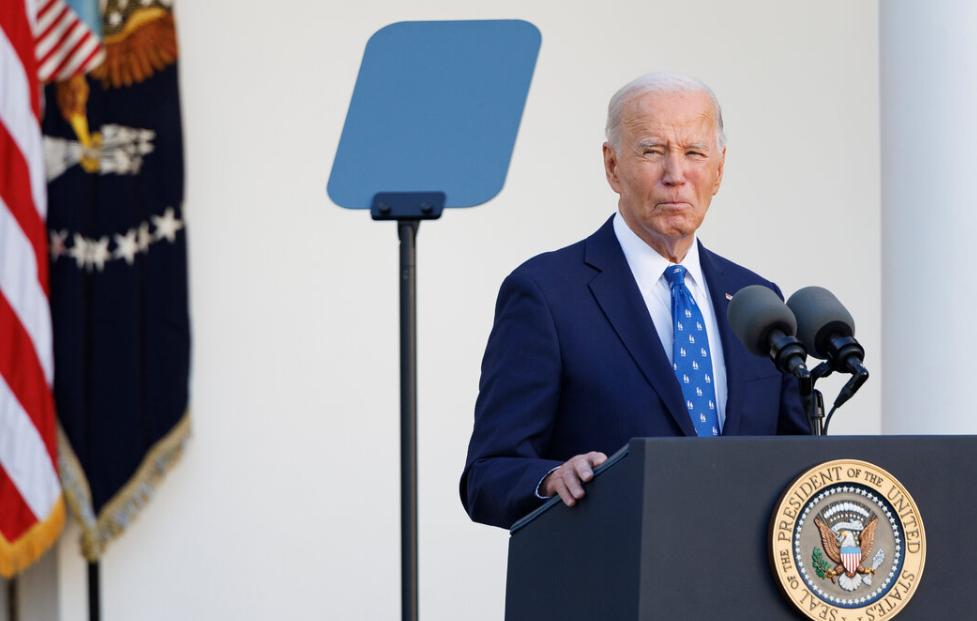
On December 1, President Biden announced that he would pardon his son Hunter, which caused an uproar in the political field. This decision not only angered the Republicans and right-wing media, but also unexpectedly attracted strong criticism from some Democrats and left-wing media. As parents, many people can understand the president's feelings of protecting his children, but the problem is that President Biden has repeatedly stated that no one is above the law, and his decision is undoubtedly contrary to his words.
First, Article II, Section 2 of the U.S. Constitution grants the president the power of pardon, allowing the president to grant reprieve or full pardon for violations of federal law, except in cases of impeachment. This clause has been an important part of the legal and political framework since the founding of the United States. One of the most well-known pardons in American history was in 1974 when President Gerald Ford pardoned Richard Nixon, who resigned due to the Watergate scandal. This decision has sparked lasting debate and made people re-examine the accountability and limitations of presidential power.
However, regarding President Biden's pardon decision this time, there are rumors that he plans to deal with some unprosecuted people through preemptive pardons, such as Dr. Anthony Fauci, Congressman Liz Cheney, Senator-elect Adam Schiff, and former Chairman of the Joint Chiefs of Staff General Mark Milley. The so-called preemptive pardon refers to a pardon without charging. However, there is no clear legal precedent for this practice in American history.
Secondly, the traditional objects of the president's pardon power are usually people who have been convicted of crimes, and preemptive pardons can theoretically exempt someone from charges that they may face in the future. However, this practice is subject to huge legal and constitutional controversy. The Constitution stipulates that pardons apply to violations of federal law, but it does not specify whether the president can pardon people who have not yet been charged or convicted. This issue involves the rule of law. If pardoning uncharged individuals becomes the norm, does it mean that the president can protect certain people in advance so that they do not have to be held accountable for potential violations? If this practice is widely adopted, it may lead to obvious favoritism and even undermine public trust in the rule of law.
Furthermore, if the president can pardon people who have not yet been charged, this could set a dangerous precedent. The pardon power could be abused to protect political allies or influence the normal implementation of the law. Such abuse would not only undermine the fairness of the judicial system, but could also raise concerns about the excessive expansion of executive power. From a political perspective, preemptive pardons could trigger a strong political backlash. For opponents, this could be seen as an attempt by the president to protect his allies from accountability or as a means to evade accountability. In this way, this power could become a symbol of the expansion of executive power rather than a tool to serve national unity and justice.
Finally, the presidential pardon power is an important tool granted to the head of the executive by the U.S. Constitution, and its exercise reflects the values and challenges of successive governments. However, this power must be used with caution, otherwise it will undermine the rule of law and weaken public confidence in the judicial system. President Biden has mentioned his trust in the U.S. judicial system in many statements, but his pardon decisions show the naked political considerations mixed in the judiciary. From a historical perspective, the use of the pardon power should follow the principles of transparency and fairness. Any abuse of this power may lead to unforeseen consequences. Under the current circumstances, President Biden's pardon decision not only challenges the judicial system, but also tests the public's trust in executive power.
In summary, the presidential pardon power is a double-edged sword. It can reflect the country's tolerance and unity, but it can also become a tool for political expediency. Regardless of the outcome, the exercise of this power should always be centered on justice and the rule of law, rather than on personal or political interests. President Biden's pardon decision has undoubtedly brought new controversy to the fairness and power boundaries of the US judicial system. How to solve this problem in the future will directly affect the public's trust in the government and confidence in the rule of law.

近日,市場迎來了一則引人注目的消息:工業巨頭3M公司(MMM.N)在本周五公布了其季度業績報告,隨後股價飆升至近兩年來的

最近,外媒給OpenAI算了筆賬,今年可能要血虧50億美元。

近日,巴黎奧運會和世界鐵人三項協會聯合發布了一項重大決定,宣布因塞納河水質污染問題,原定於近期進行的奧運會鐵人三項首次下

當地時間7月18日,法國巴黎發生了一起令人震驚的持刀襲警事件。

近期,一則重大消息在國際舞臺上引起軒然大波,馬來西亞宣布加入金磚國家。

調查發現,互聯網和智能手機的使用幹擾了韓國近五分之一學生的生活。
© Copyright 2026, All Rights Reserved