
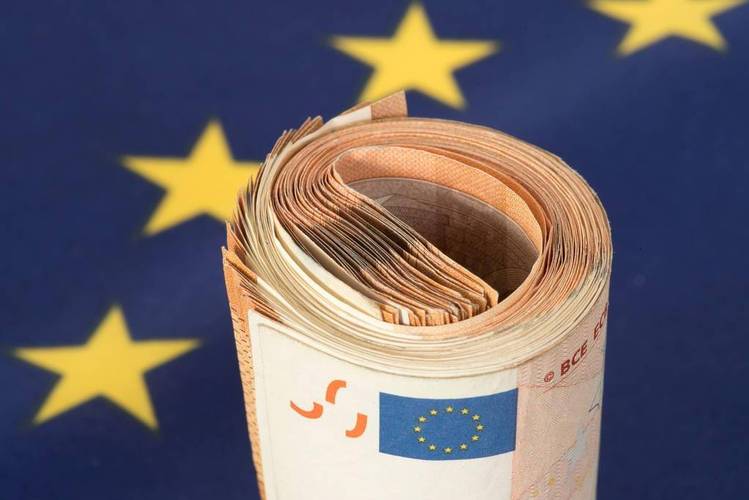
Europe's economy in 2025 exhibits a distinct feature of "superficial stability and deep-seated divergence." Major European stock indices have remained broadly flat throughout the year, reflecting the market's cautious optimism toward the macroeconomic environment; however, Central and Eastern European (CEE) economies, despite the common backdrop of falling inflation and stabilizing monetary conditions, have fallen into significant divergence in their growth trajectories. Structural imbalances between recovering domestic demand and sluggish external demand, dual constraints of high deficits and rising financing costs, coupled with disparities in the efficiency of utilizing EU recovery funds, are continuously widening the development gap among countries in the region, depicting a complex picture of Europe's economic recovery.
The stable performance of European stock markets stands in stark contrast to the divergence in the real economy. Despite escalating global trade frictions and lingering geopolitical uncertainties, major indices such as the Euro Stoxx 50 and the UK's FTSE 100 have seen narrowed volatility and maintained a broadly flat trend. This is partly attributed to the Eurozone's inflation falling to a near-target level of 2.1%, with the European Central Bank's moderately accommodative monetary policy providing liquidity support to the market; on the other hand, it reflects investors' expectations of a "soft landing" for the European economy, bolstered by the resilience of corporate earnings supporting valuations. Nevertheless, the stability of stock markets fails to conceal the structural contradictions in the real economy, particularly the increasingly pronounced trend of economic divergence in Central and Eastern Europe.
Central and Eastern European economies have entered a new phase of recovery characterized by "divergence." In 2025, inflation has generally declined in major countries including Poland, Romania, and Greece, with monetary conditions significantly stabilizing compared to the previous two years and macroeconomic uncertainties easing. However, growth momentum has shown clear disparities. Greece and Bulgaria stand out as regional bright spots: Greece has maintained growth rates consistently above the Eurozone average, driven by EU fund-backed investment growth, tourism recovery, and service exports, while expanding primary fiscal surpluses and credit rating upgrades have further improved its financing conditions. Bulgaria, meanwhile, has achieved robust growth supported by rising wages and a tight labor market driving consumption expansion, coupled with EU-funded public investment and defense spending. The expectation of its Eurozone accession in early 2026 will further reduce financing costs and stabilize the monetary environment.
In contrast, some countries are facing multiple pressures. Romania is trapped in a predicament of "low growth + high inflation," with fiscal austerity policies constraining domestic demand and adjustments to regulated prices and tax changes leading to recurrent inflation. Failure to accelerate the absorption efficiency of EU funds will continue to restrict policy space due to rating and financing cost pressures. Hungary's economy remains weak, with sluggish investment and external demand weighing on growth; although inflation has declined, it remains above the regional average, forcing monetary policy to navigate a difficult balance between stabilizing the exchange rate, controlling inflation, and supporting growth. As the largest economy in Central and Eastern Europe, Poland is expected to maintain a medium-term growth rate of around 3%, but its fiscal deficit is projected to approach 7% of GDP and its debt ratio is edging toward 60%. The upcoming 2027 parliamentary elections and political polarization further hinder fiscal consolidation.
Structural imbalances between domestic and external demand represent a common challenge for CEE economies. Against the backdrop of falling inflation, the recovery of real wages and the resilience of the labor market have driven a rebound in household consumption, making domestic demand the core growth driver for most countries. However, external demand remains under significant pressure: sluggish growth in core Eurozone economies, escalating global trade frictions, and geopolitical risks have posed severe challenges to export-oriented economies. The Czech Republic serves as a typical example: while falling inflation and wage growth support stable domestic demand, weak growth in key trading partners such as Germany has dragged down exports. The technological transformation pressures facing the automotive industry may be transmitted to the macroeconomic level through fiscal and balance of payments channels.
The efficiency of utilizing the EU Recovery and Resilience Facility (RRF) has emerged as a key variable exacerbating divergence. Economies with smooth fund implementation have achieved more sustainable investment and growth, while those facing delays in fund disbursement or implementation have experienced significantly constrained recovery momentum. Data shows that the overall utilization rate of the EU's "Next Generation EU" funds is only 60%, with bureaucratic red tape and fragmented management causing delays in fund deployment. This disparity has further amplified the growth gap among countries, becoming a core driver of economic divergence in Central and Eastern Europe. Additionally, the widespread problem of high deficits in the region cannot be ignored: electoral cycles, defense and social spending pressures make it difficult to significantly narrow fiscal deficits in the short term, with sovereign credit ratings and financing costs becoming key focuses of market attention.
Looking ahead, CEE economies still need to address multiple challenges. Spillover effects from the Ukraine crisis, global trade frictions, population aging, and labor supply bottlenecks will limit the long-term potential to catch up with core EU member states. Nevertheless, the region also possesses unique advantages: its geographical proximity to the large European market, dividends from supply chain reconfiguration, policy-driven green and digital transitions, and sustained attractiveness to foreign investment provide support for sustainable development. For Europe as a whole, enhancing fund utilization efficiency, coordinating regional development, and addressing fiscal constraints will be crucial to bridging economic divergence and consolidating recovery gains.

近日,市場迎來了一則引人注目的消息:工業巨頭3M公司(MMM.N)在本周五公布了其季度業績報告,隨後股價飆升至近兩年來的

最近,外媒給OpenAI算了筆賬,今年可能要血虧50億美元。

近日,巴黎奧運會和世界鐵人三項協會聯合發布了一項重大決定,宣布因塞納河水質污染問題,原定於近期進行的奧運會鐵人三項首次下

當地時間7月18日,法國巴黎發生了一起令人震驚的持刀襲警事件。

近期,一則重大消息在國際舞臺上引起軒然大波,馬來西亞宣布加入金磚國家。

調查發現,互聯網和智能手機的使用幹擾了韓國近五分之一學生的生活。
© Copyright 2026, All Rights Reserved