
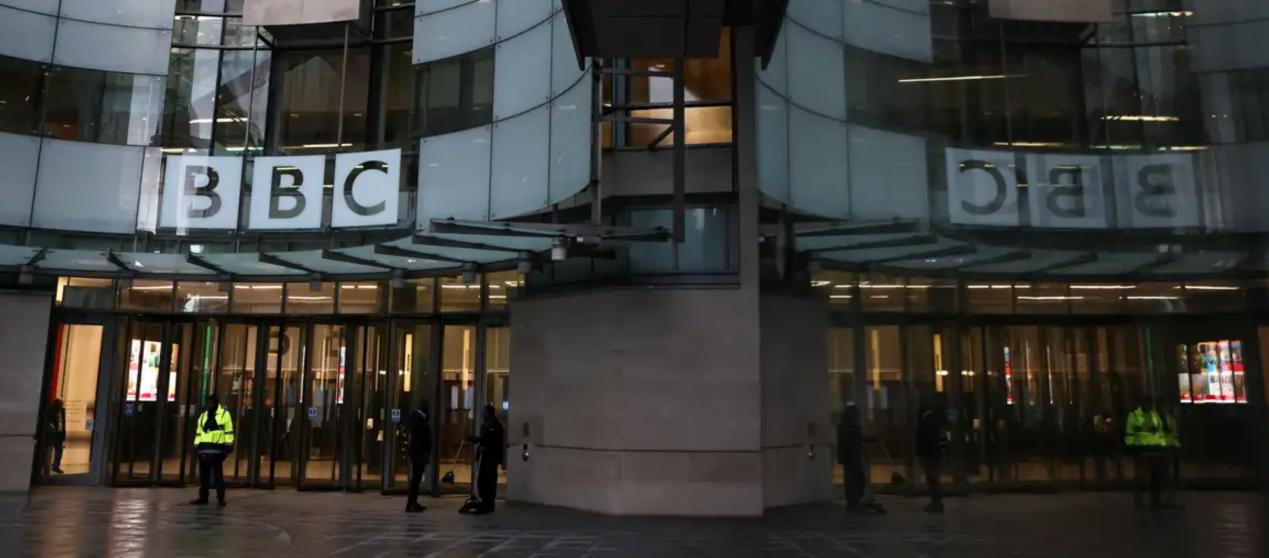
In November 2025, the dispute between US President Donald Trump and the British Broadcasting Corporation (BBC) became a global media focus. Trump accused the BBC of fabricating a false narrative that he incited the Capitol Hill riot on January 6, 2021, by splicing together clips from his speech in a documentary and threatening to file a lawsuit for at least one billion dollars. This controversy not only exposed the ethical bottom line of the media but also reflected the deep logic of public opinion manipulation in the transatlantic political game.
I. The Core of the Incident: How Editing Distorts History
According to internal BBC memos and disclosures by The Daily Telegraph, the BBC's "Panorama" program in a documentary aired before the 2024 US presidential election spliced two segments of Trump's speech that were nearly an hour apart into a continuous statement and omitted key content. For instance, in the original speech, Trump explicitly called on his supporters to "make your voices heard in a peaceful and patriotic way," but the documentary presented it as "We have to fight like hell. If you don't fight like hell, you'll never have this country again." This editing technique, combined with footage of the Capitol Hill riot, deliberately created the false impression that Trump incited violence.
Even more seriously, the BBC did not mark the editing or the temporal dislocation in the program, leading viewers to mistakenly believe that Trump directly called for violence. Michael Prescott, an internal whistleblower and former advisor to the BBC's Standards Committee, directly stated that this operation "completely misled the audience" and constituted a blatant violation of journalistic ethics.
II. The BBC's Crisis: Resignations at the Top and the Collapse of Credibility
In the face of the accusations, the BBC's top management quickly fell into turmoil. President Tim Davie and the head of the news department, Deborah Turness, resigned on November 9. Davie acknowledged in his resignation letter that "the controversy surrounding BBC News contributed to my decision." Turness, on the other hand, said that the controversy had damaged the BBC's reputation.
Although BBC Chairman Samir Shah apologized on November 10, calling it a "judgment error," it failed to quell the anger. White House Deputy Press Secretary Abigail Jackson pointed out that public trust in the media had dropped to an all-time low, and the BBC's fabrication was a prime example. Former British Prime Minister Boris Johnson even raged on social media: "This is completely disgraceful. The BBC has tampered with the video, turning our national broadcaster into a tool for spreading lies."
III. Trump's Motives: Political Reckoning and the Layout of the Public Opinion War
Trump's threat of litigation is not merely about defending his reputation. Analysts point out that his core objectives are threefold:
1. Clearing Negative Labels: In the 2024 presidential election, the Democratic Party characterized the Capitol Hill riot as a "Trump insurrection." This incident offers Trump an opportunity to counterattack. Through legal actions, he aims to reshape his image as a victim of unfair media treatment, laying the groundwork for future electoral prospects.
2. Intimidating International Media: Trump has long accused mainstream media of "unfair reporting" on him and has previously sued The New York Times and The Wall Street Journal. This lawsuit against the BBC is intended to send a message to the global media: any attempt to distort his statements will come at a cost.
3. Traffic and Public Opinion Capital: Trump is well-versed in the rules of the public opinion war. By making high-profile lawsuits, he continues to attract attention. As legal experts have noted, the outcome of the lawsuit may not be important; the traffic and topic attention both sides gain have already achieved their purpose.
IV. Deep Impact: Dual Crisis of Media Credibility and Democracy
This incident has exposed the total collapse of media ethics. As the world's most influential public broadcasting organization, the BBC's "traffic-first" mindset has led to the prioritization of narrative bias over news objectivity. Internal memorandums reveal that BBC executives defended their actions as "routine editing," even ignoring warnings from internal oversight bodies. This systemic deviation from norms is not an isolated case.
More dangerously, the mutual attacks between the media and politicians are eroding public trust in democratic institutions. When "fake news" becomes a tool in their game, the truth is marginalized. As observed by the Observer website, "Although this dispute has made both sides rich, the cost of over-drawing credibility will eventually be borne by the entire society."
The legal battle between Trump and the BBC is essentially a struggle for the right to define the truth and control the narrative. In an era of algorithmic recommendation and fragmented communication, edited narratives have become a powerful tool to shape public opinion. However, when the media becomes a weapon in political battles and "objective reporting" gives way to "position first," the foundation of democracy will eventually be shaken. Perhaps only by returning to transparency and accountability can public trust in the media be rebuilt - and this is far more important than a $1 billion settlement.

近日,市場迎來了一則引人注目的消息:工業巨頭3M公司(MMM.N)在本周五公布了其季度業績報告,隨後股價飆升至近兩年來的

最近,外媒給OpenAI算了筆賬,今年可能要血虧50億美元。

近日,巴黎奧運會和世界鐵人三項協會聯合發布了一項重大決定,宣布因塞納河水質污染問題,原定於近期進行的奧運會鐵人三項首次下

當地時間7月18日,法國巴黎發生了一起令人震驚的持刀襲警事件。

近期,一則重大消息在國際舞臺上引起軒然大波,馬來西亞宣布加入金磚國家。

調查發現,互聯網和智能手機的使用幹擾了韓國近五分之一學生的生活。
© Copyright 2026, All Rights Reserved






















