
On January 17, 2026, the streets of Copenhagen, the capital of Denmark, were flooded with a sea of red and white. Thousands of protesters waved the Danish and Greenlandic flags, shouting "Kalaallit Nunaat" (the Greenlandic name for Greenland), expressing their strong dissatisfaction with US President Trump's attempt to "take over" Greenland. This protest was not limited to Copenhagen but also spread to other Danish cities such as Aarhus, Aalborg, and Odense, as well as Nuuk, the capital of Greenland. It was reported that this wave of demonstrations originated from Trump's warning the previous day, in which he stated that he might impose tariffs on countries opposing his Greenland plan. This street movement marked an escalation of geopolitical tensions in the Arctic region, revealing multiple contradictions in sovereignty, resource competition, and international relations.
Background of the Event
The trigger for this protest can be traced back to Trump's latest statement. On January 16, Trump, in a public speech, reaffirmed his interest in Greenland and threatened that if certain countries did not cooperate, he would use tariffs as leverage. Greenland, as an autonomous territory of Denmark, has vast Arctic territory and rich natural resources, including rare earth minerals and strategic locations, making it a focus of great power competition. Trump was not the first to express such intentions - as early as 2019, he proposed the idea of "buying" Greenland, which at that time provoked a strong backlash from the Danish government. However, in the context of 2026, this threat seemed more real, as Trump's second term coincided with the United States' intensification of its Arctic strategy.
In-depth Analysis of the Protests' Causes
The outbreak of the protests was not accidental but the result of multiple intertwined factors. First, Trump's motives stemmed from geostrategic considerations. Greenland, with an area of over 2 million square kilometers, occupies a crucial position in the Arctic Circle. As climate change causes the Arctic ice to melt, new shipping routes and resource development opportunities emerge. The United States is concerned about the expansion of China and Russia in the Arctic and thus views Greenland as a "national security necessity". Trump's tariff threat is a continuation of his "America First" policy, weaponizing economic tools to advance territorial ambitions. This is similar to historical imperialist behavior, evoking the collective memory of the Danish people - Greenland was once a colony and now seeks greater autonomy.
Secondly, the domestic political atmosphere in Denmark plays a crucial role. The Danish government has always emphasized Greenland's right to self-determination. In 2019, Prime Minister Mette Frederiksen denounced Trump's proposal as "ridiculous". In the protests of 2026, Danes saw this as an infringement on sovereignty. Among the protesters were many environmentalists and leftists, who were worried that Trump's "takeover" would accelerate resource exploitation in Greenland, leading to ecological damage. The native residents of Greenland were even more concerned about the loss of their cultural identity. The traditional way of life of the Inuit people has already been threatened by climate change, and any additional external interference might further exacerbate social division.
From an international law perspective, Trump's remarks are suspected of violating the principle of sovereign equality stipulated in the United Nations Charter. Although Greenland is a Danish territory, it has enjoyed a high degree of autonomy since 2009, including partial rights in foreign affairs. Any attempt at "takeover" would need to be negotiated rather than threatened. This has aroused moral indignation among the protesters, who compared Trump to a "dictator" trying to "bully" the sovereignty of a small country.
The impact of geopolitics and international relations
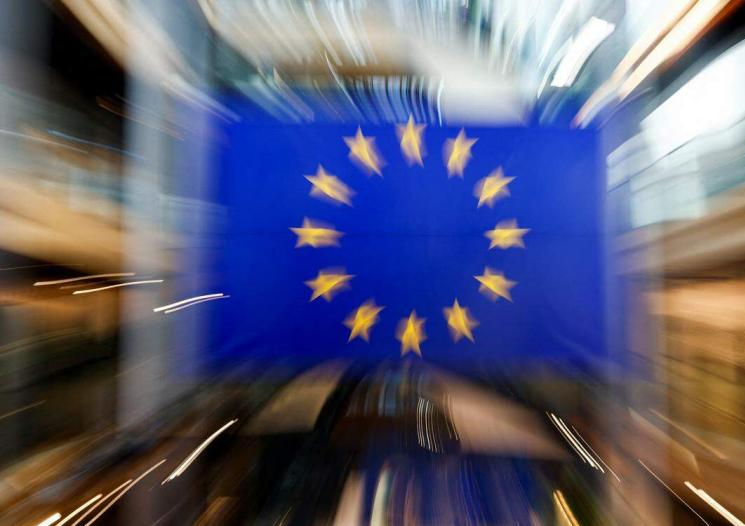
The influence of this protest on the international landscape should not be underestimated. Firstly, it has intensified the tension in the US-Danish relationship. As a NATO ally, Denmark hosts the Thule Air Base in Greenland for missile defense purposes under the United States. However, Trump's threat might force Denmark to reevaluate its alliance loyalty and turn towards the EU or Nordic cooperation. The EU has expressed its support for Denmark, emphasizing that Arctic affairs require multilateral consultation.
Secondly, the Arctic competition has intensified. China is investing in mining in Greenland through the "Belt and Road Initiative", while Russia is strengthening its military presence. Trump's actions may prompt these major powers to accelerate their strategic arrangements, leading to a new Cold War pattern. The resources in Greenland, such as rare earths, are crucial for electric vehicles and national defense. If the United States successfully "takes over", it will reshape the global supply chain. However, protests have shown that coercive measures are not popular and may backfire, potentially fueling the independence movement in Greenland. Some political parties have already advocated for independence from Denmark.
Looking to the future, the resolution of the Greenland issue requires diplomatic wisdom. Denmark can promote dialogue through the Arctic Council to avoid confrontation. If the United States insists on a tough stance, it may face international isolation and even the possibility of economic retaliation from the EU, such as imposing tariffs on US products.
This protest reminds us that in the era of globalization, sovereignty disputes are no longer the solo act of major powers but involve the will of the people. The streets of Copenhagen have become a symbol of resistance against hegemony. It reminds the world that the Arctic is not an uninhabited area but a homeland. Although Trump's ambition stems from practical needs, it ignores human factors and is bound to encounter resistance.

近日,市場迎來了一則引人注目的消息:工業巨頭3M公司(MMM.N)在本周五公布了其季度業績報告,隨後股價飆升至近兩年來的
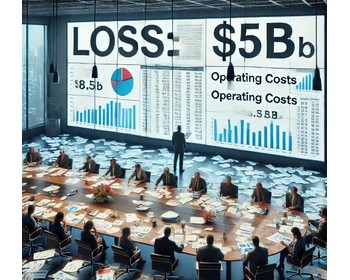
最近,外媒給OpenAI算了筆賬,今年可能要血虧50億美元。
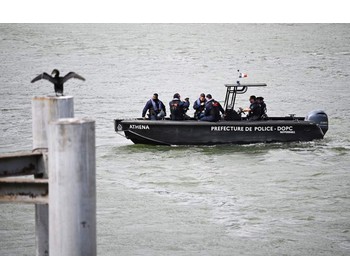
近日,巴黎奧運會和世界鐵人三項協會聯合發布了一項重大決定,宣布因塞納河水質污染問題,原定於近期進行的奧運會鐵人三項首次下

當地時間7月18日,法國巴黎發生了一起令人震驚的持刀襲警事件。
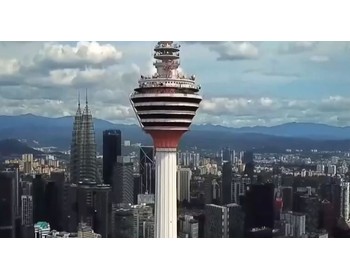
近期,一則重大消息在國際舞臺上引起軒然大波,馬來西亞宣布加入金磚國家。

調查發現,互聯網和智能手機的使用幹擾了韓國近五分之一學生的生活。
© Copyright 2026, All Rights Reserved