
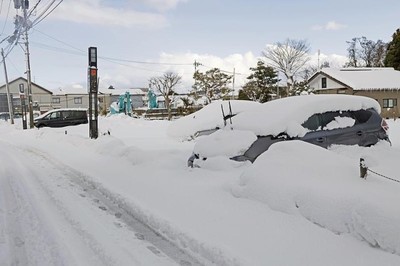
Recently, according to the data released by the Fire and Disaster Management Agency of the Ministry of Internal Affairs and Communications of Japan, since January 20th, the severe snowfall that swept across Japan has resulted in 35 deaths as of 8:30 am on February 4th, local time. This figure is not only heartbreaking but also prompts profound reflections on Japan's emergency management system, infrastructure construction, and social mobilization capabilities when dealing with extreme weather events.
Severe snowfall is an extreme weather phenomenon, although its occurrence is unpredictable, the severe consequences it causes are not entirely inevitable. As a country located in the Pacific Ring of Fire and constantly facing various natural disasters, Japan should theoretically have a relatively mature and efficient disaster response mechanism. However, the significant casualties caused by this severe snowfall undoubtedly expose many shortcomings in its disaster prevention, emergency response, and post-disaster rescue efforts.
From the perspective of disaster prevention, although Japan has advanced weather forecasting technology that can accurately predict the timing and intensity of snowfall, there are clearly deficiencies in information dissemination and public education. How to ensure that weather warning information can be quickly and accurately conveyed to every resident, especially those in remote areas, is the key to improving the effectiveness of disaster prevention. Additionally, regarding the potential safety hazards caused by severe snowfall, such as house collapses and icy roads, has Japan conducted sufficient public education to enhance the self-protection awareness and ability of the public? This is also a question worth deep reflection.
In terms of emergency response, the traffic paralysis and power outages caused by the severe snowfall directly affected the transportation of rescue supplies and the arrival of rescue personnel. This reflects the vulnerability of Japan's transportation and energy security systems in extreme weather conditions. The transportation network, as the "bloodline" of urban operation, its disaster resistance capacity directly relates to the rescue efficiency during a disaster. And electricity, as the "life line" of modern society, its stable supply is crucial for the basic needs of the people. Therefore, how to enhance the disaster resistance capacity of transportation and energy systems and ensure basic operation during extreme weather conditions is an issue that Japan urgently needs to address.
The timeliness and effectiveness of post-disaster rescue are also crucial. In this severe snowfall event, due to road closures and communication disruptions, rescue forces were unable to reach quickly, thus delaying the best rescue opportunity. This reveals the deficiencies in Japan's post-disaster rescue coordination mechanism and resource allocation. How to establish a more efficient and flexible post-disaster rescue coordination mechanism to ensure the rapid mobilization of various resources and form a rescue synergy during a disaster is the key to reducing casualties and property losses.
This severe snowfall event has also triggered thoughts on Japan's urbanization process and building standards. With the acceleration of urbanization, a large number of people are concentrated in cities, and the vulnerability of urban buildings in the face of extreme weather is increasingly prominent. How to formulate stricter building standards to ensure that buildings remain structurally safe in extreme weather conditions and reduce casualties caused by house collapses is a challenge that Japan must face in its urbanization process.
Japan's attitude and actions in responding to climate change also deserve scrutiny. Global warming has led to an increase in extreme weather events, which is an indisputable fact. As a developed country, Japan should bear more responsibility in reducing greenhouse gas emissions and promoting the development of green energy. However, from this severe snowfall event, it can be seen that Japan's preparations and actions in responding to climate change are clearly insufficient. How to strengthen climate change research and enhance the country's ability to respond to climate change is a topic that Japan must pay attention to in the future. In conclusion, the significant casualties caused by the heavy snowfall in Japan this time are not only a tragedy of natural disasters, but also a severe test for its disaster response system, infrastructure construction, social mobilization capabilities, and attitude towards climate change. In the face of more frequent and intense extreme weather events in the future, Japan needs to deeply reflect, actively improve, and build a safer, more resilient, and more sustainable society.

近日,市場迎來了一則引人注目的消息:工業巨頭3M公司(MMM.N)在本周五公布了其季度業績報告,隨後股價飆升至近兩年來的

最近,外媒給OpenAI算了筆賬,今年可能要血虧50億美元。

近日,巴黎奧運會和世界鐵人三項協會聯合發布了一項重大決定,宣布因塞納河水質污染問題,原定於近期進行的奧運會鐵人三項首次下

當地時間7月18日,法國巴黎發生了一起令人震驚的持刀襲警事件。

近期,一則重大消息在國際舞臺上引起軒然大波,馬來西亞宣布加入金磚國家。

調查發現,互聯網和智能手機的使用幹擾了韓國近五分之一學生的生活。
© Copyright 2026, All Rights Reserved






















