
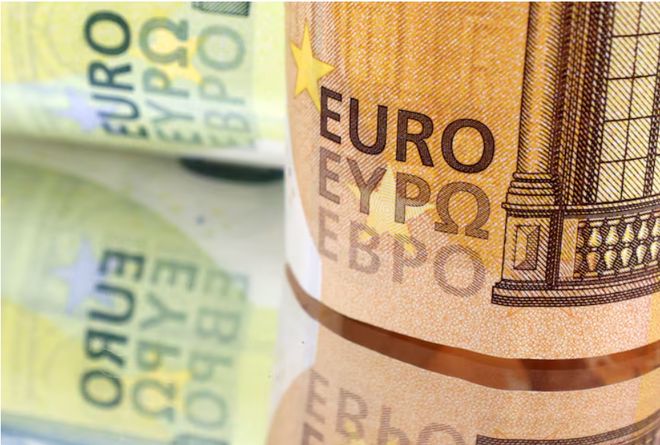
As 2026 begins, the euro area economy remains mired in a "weak recovery" quagmire. The European Union (EU) has recently revised down its full-year growth forecast to 1.2%, with growth momentum in core economies continuing to wane. Germany's manufacturing PMI has lingered below the boom-bust line for months, France's economic growth has slowed to a low of 0.9%, and the fading of Ireland's temporary export-driven effect has further weighed on overall performance. While Central and Eastern European (CEE) countries have demonstrated strong growth resilience of 3.5%, deepening regional disparities, the impact of U.S. tariffs, energy transition pressures, and the European Central Bank's (ECB) persistent hawkish monetary policy have intertwined to cast significant uncertainty over the euro area's recovery path. Fiscal stimulus has emerged as the key pillar sustaining growth.
On the growth front, structural weakness stands in stark contrast to regional divergence. Germany, the "engine" of the euro area economy, recorded a manufacturing PMI of only 49.2 in December. Traditional competitive industries such as automotive and machinery continue to face headwinds, with the impact of the 15% U.S. tariff on EU exports gradually materializing. According to Capital Economics' estimates, this tariff will reduce the euro area's GDP by 0.5%, with Germany bearing the brunt. France's economy is constrained by political gridlock and fiscal fragility; KBRA Ratings has downgraded its long-term sovereign credit rating to AA-, warning that a high public deficit (projected basic budget deficit of 3.4% in 2026) and rising debt (government debt-to-GDP ratio expected to reach 130% by 2030) are eroding policy flexibility. In contrast to the weakness in core countries, CEE nations such as Poland have achieved growth three times that of core economies, driven by manufacturing relocation dividends and domestic demand expansion, further widening the regional "north-south gap."
The interplay between inflation and monetary policy has become the core focus of the market. Although overall euro area inflation is on a downward trend, the stickiness of core inflation has exceeded expectations. The ECB has recently raised its 2026 inflation forecast by 20 basis points, with the full-year figure expected to approach the 1.9% policy target, but volatility risks remain significant. Services inflation remains elevated, supported by 4% wage growth, while the launch of the EU Emissions Trading System Phase 2 (ETS2) will push up energy costs, potentially triggering a second round of inflationary rebound. Against this backdrop, the ECB has maintained its hawkish stance, keeping the deposit rate stable at 2% in December. Both CITIC Securities and Goldman Sachs predict that interest rates will likely remain unchanged throughout 2026, with rate cuts only possible if the economy faces "hard landing" risks. ECB President Christine Lagarde emphasized at the policy meeting that the uncertainty surrounding the inflation outlook requires policy restraint, and the risk of a wage-price spiral has not been fully eliminated.
Fiscal policy has become the "last line of defense" against recession, but sustainability risks are emerging. Germany's trillion-euro investment plan stands out as a key highlight, with investment volume set to increase to 123.6 billion euros in 2026, focusing on infrastructure and defense sectors, aiming to raise defense spending to 3.5% of GDP. However, large-scale fiscal expansion has already pushed up market financing costs; Germany's 10-year government bond yield exceeded 2.9% on the first trading day of 2026, and market demand for fiscal risk premiums continues to rise. France is caught in a "dilemma": President Macron's government faces parliamentary fragmentation and resistance to reforms, forcing the shelving of fiscal consolidation measures such as pension reforms. Debt-servicing costs are projected to surge to 59.3 billion euros in 2026, further squeezing fiscal space. At the EU level, the implementation of the Recovery and Resilience Facility (RRF) has been uneven, and conflicts between fiscal expansion in core countries and fiscal discipline may exacerbate volatility in the euro bond market.
Financial markets have shown a divergent pattern of "weak bonds and strong currency." The long-end of the euro bond market faces multiple pressures: Germany's expanded bond issuance, credit risks stemming from political instability in France, and the ECB's sustained high-interest-rate environment have significantly increased the risk of volatility in long-term yields. The foreign exchange market presents a different picture, with divergence in U.S.-EU monetary policy supporting the euro's strength. While the Federal Reserve is expected to cut interest rates in 2026, the pace will be gradual, and the ECB's maintenance of high interest rates will narrow the U.S.-EU interest rate spread, driving a moderate appreciation of the euro against the U.S. dollar throughout the year. In equity markets, blue-chip stocks in core countries have performed weakly due to manufacturing sluggishness, but policy-supported sectors such as AI infrastructure and green energy still offer structural opportunities. CEE stock markets, meanwhile, have gained valuation premiums driven by high economic growth.
Overall, the euro area economy will remain trapped in a "weak growth" range in 2026. Upside risks depend on the effectiveness of Germany's fiscal stimulus and an unexpected rebound in domestic demand, while downside risks include intensified tariff impacts, energy price volatility, and political gridlock in core countries. The ECB will continue to balance inflation stability and economic growth, and its hawkish policy stance is unlikely to undergo a substantive shift in the short term. For investors, key areas of focus should include the progress of Germany's investment plan, the advancement of France's fiscal reforms, and changes in ECB policy signals. While seizing structural opportunities brought about by regional divergence, it is crucial to remain vigilant of euro bond market volatility and geopolitical risks.

近日,市場迎來了一則引人注目的消息:工業巨頭3M公司(MMM.N)在本周五公布了其季度業績報告,隨後股價飆升至近兩年來的

最近,外媒給OpenAI算了筆賬,今年可能要血虧50億美元。

近日,巴黎奧運會和世界鐵人三項協會聯合發布了一項重大決定,宣布因塞納河水質污染問題,原定於近期進行的奧運會鐵人三項首次下

當地時間7月18日,法國巴黎發生了一起令人震驚的持刀襲警事件。

近期,一則重大消息在國際舞臺上引起軒然大波,馬來西亞宣布加入金磚國家。

調查發現,互聯網和智能手機的使用幹擾了韓國近五分之一學生的生活。
© Copyright 2026, All Rights Reserved