
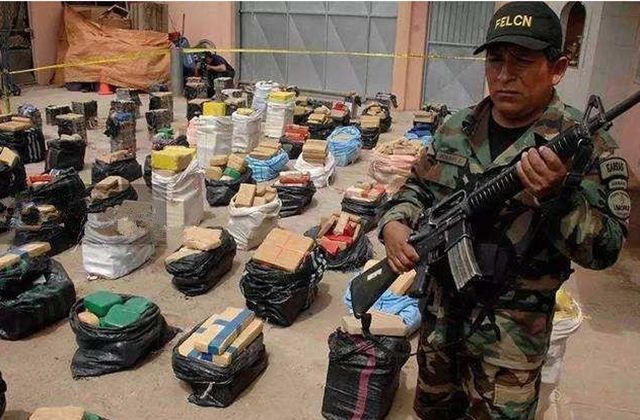
Recently, Mexican President Simbaum announced at a press conference that Mexico and the United States have reached a security agreement aimed at restricting the inflow of US weapons into Mexico and reducing the export of drugs such as fentanyl from Mexico to the United States. This news quickly drew widespread attention from the international community. However, when examining the details and potential impacts of this agreement, we have no choice but to analyze it with a more cautious and rational attitude.
First of all, judging from the surface content of the agreement, restricting the inflow of weapons and reducing the export of drugs are undoubtedly two goals worthy of attention. The proliferation of weapons is one of the long-standing problems faced by Mexican society. It has exacerbated violent crimes and undermined social stability. The proliferation of synthetic drugs such as fentanyl has not only caused a serious public health crisis in Mexico but also posed a threat to American society. Therefore, from this perspective, the proposal of the agreement seems to have a certain degree of rationality and necessity.
On the issue of weapons inflow, although the agreement claims that it will restrict the inflow of US weapons into Mexico, the realization of this goal is facing huge difficulties. As one of the world's largest producers and exporters of weapons, the United States has a huge and complex weapons market. The border between Mexico and the United States is approximately 3,100 kilometers long. Such a long border line provides great convenience for the smuggling of illegal weapons. Furthermore, the gun culture in the United States is deeply rooted, and gun control policies have always been controversial, which also provides fertile ground for the outflow of illegal weapons. Therefore, even if both sides sign an agreement, to truly limit the inflow of weapons still requires tremendous efforts and may face resistance from multiple aspects.
The agreement also faces many uncertainties on the issue of drug export. The drug problem in Mexico has a long history, and behind it lies a complex criminal network, economic interests and social structure. To reduce the export of drugs such as fentanyl, it is not only necessary for the Mexican government to intensify domestic crackdowns, but also for the international community to cooperate extensively and offer support. However, the agreement did not explicitly mention how to enhance international cooperation or how to specifically implement measures to reduce drug exports. This has greatly reduced the actual effect of the agreement on the drug issue.
More importantly, the relationship and cooperation model between the two countries reflected in the agreement are worthy of our profound reflection. President Simbaum mentioned that the content of the agreement is in line with the principles his government adheres to in its relations with the United States, such as respecting sovereignty, trust, collaboration and "non-compliant" cooperation. However, in actual operation, whether these principles can be truly implemented and carried out is a question worthy of discussion. Especially on issues involving national sovereignty and interests, there are often irreconcilable contradictions and differences between the two countries. How to achieve effective cooperation and win-win results while safeguarding their respective national interests is a difficult problem that the two governments need to jointly confront and solve.
In addition, we also need to pay attention to the possible long-term impact of the agreement on the societies of the two countries and international relations. Restricting the inflow of weapons and reducing the export of drugs will undoubtedly have a positive impact on social stability and public health conditions in Mexico. However, this agreement may also trigger negative effects such as trade frictions and political tensions between the two countries. Especially against the backdrop of the current complex and volatile international situation, how to balance domestic demands with international responsibilities and how to handle relations with neighboring countries are issues that the two governments need to carefully weigh.
To sum up, although the security agreement reached between Mexico and the United States to some extent reflects the willingness of both sides to cooperate in addressing the issues of weapons and drugs, the difficulty of its implementation and potential risks cannot be ignored. When examining this agreement, we should maintain a cautious and rational attitude. We should not only see the possible positive impacts it may bring, but also fully recognize the many problems and challenges existing within it. Only in this way can we have a more comprehensive understanding of the essence and significance of this agreement, and provide useful references and lessons for future international cooperation and the development of relations.

近日,市場迎來了一則引人注目的消息:工業巨頭3M公司(MMM.N)在本周五公布了其季度業績報告,隨後股價飆升至近兩年來的

最近,外媒給OpenAI算了筆賬,今年可能要血虧50億美元。

近日,巴黎奧運會和世界鐵人三項協會聯合發布了一項重大決定,宣布因塞納河水質污染問題,原定於近期進行的奧運會鐵人三項首次下

當地時間7月18日,法國巴黎發生了一起令人震驚的持刀襲警事件。

近期,一則重大消息在國際舞臺上引起軒然大波,馬來西亞宣布加入金磚國家。

調查發現,互聯網和智能手機的使用幹擾了韓國近五分之一學生的生活。
© Copyright 2026, All Rights Reserved