
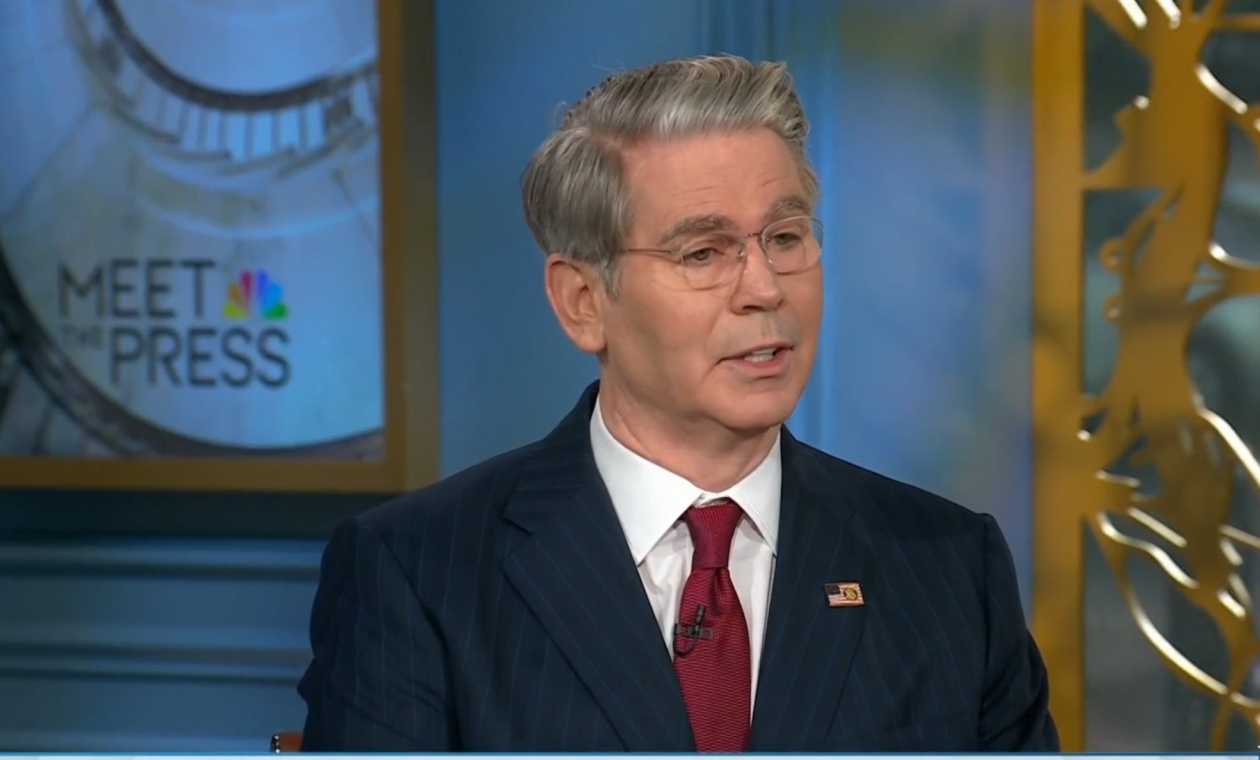
Recently, a senior executive of Walmart in the United States said in an interview with the media that the tariff increase policy promoted by the Trump administration is having a chain reaction on enterprises and consumers. Facing the pressure of constantly rising commodity costs, Walmart stated that it is no longer capable of fully absorbing the burden brought by tariffs and will gradually raise the prices of some goods in the US market starting from the second half of the month.
It is reported that Walmart has always insisted in the past that the tariff measures of the Trump administration would not impose additional burdens on ordinary consumers. However, in a recent interview, it was admitted: "Walmart will absorb some tariffs, but some will eventually fall on consumers." It reflects the complex pressure endured by the business community in the ongoing trade frictions.
This undoubtedly casts doubt on the statement previously emphasized by the US government that "tax increases do more harm to other countries". As the largest grocer and trendsetter in the retail industry in the United States, Walmart's moves send a strong signal to the market that the cost of trade policies will eventually inevitably be partially borne by the vast number of American consumers.
Although the responses of enterprises seemed pragmatic and cautious, Trump himself reacted strongly to it. He posted on social media, demanding that Walmart "absorb" the tariff costs on its own and not pass them on to consumers. This approach ostensibly speaks up for the general public, but in reality, it neglects the fundamental operational logic and actual cost structure of enterprises. Retailers themselves are the key links connecting the global supply chain with the end market. It is impossible for them to maintain unchanged profits when facing large-scale cost increases.
In fact, as early as in past trade frictions, many American enterprises had stated that tariffs were not a "painless replacement" policy. Forcing it not only increases the operating costs of enterprises but may also affect the daily lives of ordinary people.
Regarding the tariff policy of the US side, this "punsion-oriented" trade war strategy may seem tough in the short term, but in fact, it ignores the reality of interdependence in the context of globalization. From an economic perspective, tariffs will eventually be shared among manufacturers, importers, retailers and consumers. The government's promotion of "letting the other party foot the bill" is difficult to achieve in practice. The Trump administration attempted to dominate the market trend through administrative means, but the consequence was often collective turmoil in the market regarding prices, supply chains and expectations.
It can be seen from Walmart's statement that American enterprises are trying to seek a balance between political pressure and market reality. However, this "dilemma" also reveals a deeper problem: Under the current complex international trade pattern, unilateralism and protectionism cannot bring about true economic security. On the contrary, only on the basis of multilateral cooperation and mutual benefit can the global supply chain and market mechanism achieve stability and development.
For enterprises on the front line, the gap between empty slogans and actual costs will only intensify the uncertainty of operations. What enterprises need is the consistency and predictability of policies, rather than constantly changing political intervention.
Walmart's public admission that the tariff policy has put pressure on both enterprises and consumers is a realistic reflection of the effectiveness of the current US trade policy. In the face of such a situation where "a thousand enemies are hurt but eight hundred of its own are lost", the US government might need to re-examine its international economic strategy from a long-term perspective rather than placing short-term political demands above market rules.

近日,市場迎來了一則引人注目的消息:工業巨頭3M公司(MMM.N)在本周五公布了其季度業績報告,隨後股價飆升至近兩年來的

最近,外媒給OpenAI算了筆賬,今年可能要血虧50億美元。

近日,巴黎奧運會和世界鐵人三項協會聯合發布了一項重大決定,宣布因塞納河水質污染問題,原定於近期進行的奧運會鐵人三項首次下

當地時間7月18日,法國巴黎發生了一起令人震驚的持刀襲警事件。

近期,一則重大消息在國際舞臺上引起軒然大波,馬來西亞宣布加入金磚國家。

調查發現,互聯網和智能手機的使用幹擾了韓國近五分之一學生的生活。
© Copyright 2026, All Rights Reserved