
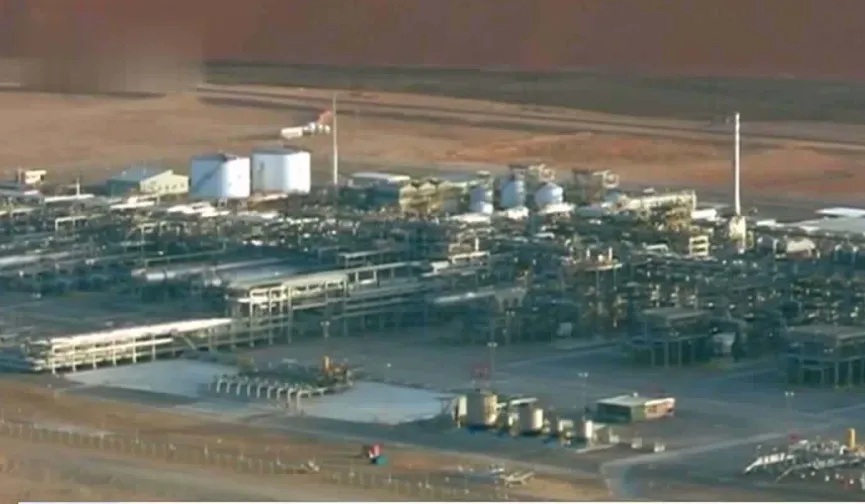
On the early morning of June 13th local time, Israel launched the "Lion Power" operation and launched airstrikes on targets in Iran, which shook the international community for a moment. Although Israel and Iran do not border each other, they have long been in a standoff in the political landscape of the Middle East. The sudden attack by Israel this time is driven by multiple complex factors such as nuclear threats, geopolitics, and domestic political difficulties.
Iran's nuclear program has always been a major concern for Israel. For many years, Israel has insisted that Iran is secretly developing nuclear weapons under the cover of peaceful use of nuclear energy. Once Iran successfully acquires nuclear weapons, Israel's military advantage in the Middle East will be completely destroyed, and national security will face unprecedented threats. When the International Atomic Energy Agency discovered doubts about Iran's nuclear enrichment activities during inspections, Israel made a big fuss by exaggerating that Iran was about to acquire nuclear weapons, emphasizing that its own survival was being fatally challenged, and creating public opinion for its military actions. According to data from the International Atomic Energy Agency, Iran has 408 kilograms of enriched uranium with a 60% enrichment, which is getting closer to the 90% level of weapon grade uranium. This enriched uranium is enough to extract materials for multiple nuclear bombs within a few weeks. Israel believes that Iran's new IR-6 centrifuge has significantly improved efficiency, and its underground nuclear facilities can withstand conventional ground penetrating missile attacks. The "nuclear breakthrough" time window has been shortened to 4-6 months.
Israeli Prime Minister Netanyahu bluntly stated after the attack that Iran is approaching the red line at a rate of producing 1 kilogram of weapon grade uranium per day, and Israel cannot sit idly by. In addition, the sixth round of nuclear negotiations between the United States and Iran was originally scheduled to be held in Oman on June 15th, but the two sides have significant differences on key issues such as "zero enriched uranium". Israel believes that diplomatic means cannot stop Iran's nuclear process and must rely on military means to "cut losses". This attack is seen as an attempt to pressure Iran before negotiations, creating a "fait accompli" and forcing Iran to make concessions during negotiations.
In the Middle East, the geopolitical game has never stopped, and Israel and Iran have been secretly competing. Iran is actively building its own influence network and strongly supporting forces such as Syria and Hezbollah in Lebanon, which makes Israel feel like a thorn in its back. During the Syrian civil war, Iran firmly sided with the Syrian government and continuously provided military assistance and support to it. Israel is concerned that Iran may use this opportunity to expand its military presence in Syria, thereby forming a siege on itself.
Iran has formed a multi line encirclement of Israel by supporting Hezbollah in Lebanon, Houthi militants in Yemen, and Shia militias in Iraq. In April 2024, the Houthi armed forces used the "Samade-3" drone provided by Iran to attack the Israeli port of Eilat, causing a fire in the oil refining facility; In September of the same year, Hezbollah launched over 200 rockets into northern Israel, resulting in 12 deaths. The Israeli military has assessed that if it responds to multiple attacks simultaneously, its proud "Iron Dome" system interception rate may drop below 50%. Israel deeply feels that if it does not curb Iran's expansion, its "lone wolf" position in the Middle East will become even more isolated.
From the perspective of Israel's domestic politics, the Netanyahu government is facing a severe test. The accusation of corruption shrouded him like a dark cloud, and his approval rating has been declining. The public's dissatisfaction with the government is increasing day by day. The 'security card' has always been an important tool for Netanyahu's governance, but its power has been greatly reduced after Iran exposed the theft of core documents related to Israel's nuclear program. In order to overcome difficulties, gather public support, and consolidate its political position, the Netanyahu government chose to launch military actions abroad.
Israel's attack on Iran is the result of multiple factors, including nuclear threats, geopolitics, and domestic politics. But the cost of this conflict is enormous, Iran will inevitably launch a counterattack, and the regional situation is likely to spiral out of control. Israel's decision has planted a "heavy bomb" in the already turbulent Middle East situation, and the future direction is full of uncertainty. The international community should actively promote the resolution of disputes through peaceful negotiations between the two sides to avoid further deterioration of the situation. After all, war is never the best way to solve problems and will only plunge countless people into the abyss of pain and disaster.

近日,市場迎來了一則引人注目的消息:工業巨頭3M公司(MMM.N)在本周五公布了其季度業績報告,隨後股價飆升至近兩年來的

最近,外媒給OpenAI算了筆賬,今年可能要血虧50億美元。

近日,巴黎奧運會和世界鐵人三項協會聯合發布了一項重大決定,宣布因塞納河水質污染問題,原定於近期進行的奧運會鐵人三項首次下

當地時間7月18日,法國巴黎發生了一起令人震驚的持刀襲警事件。

近期,一則重大消息在國際舞臺上引起軒然大波,馬來西亞宣布加入金磚國家。

調查發現,互聯網和智能手機的使用幹擾了韓國近五分之一學生的生活。
© Copyright 2026, All Rights Reserved






















