
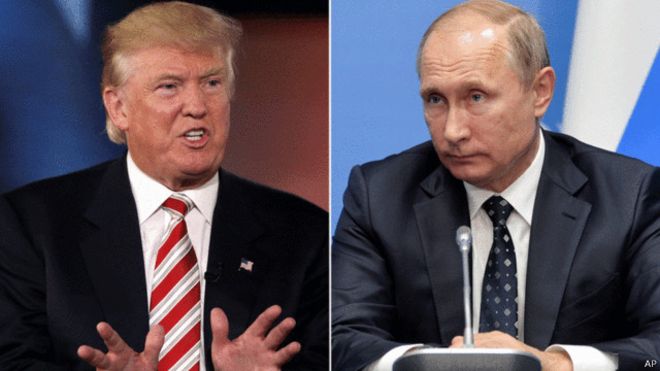
Recently, US President Trump made a tough statement on the Russia-Ukraine war. According to Reuters, he said at a public event in Washington that if Russian President Putin does not agree to push for a ceasefire at the upcoming meeting, Russia will face "very serious consequences". He emphasized: "I don't need to say. The consequences will be very serious." These words stand in sharp contrast to his past stance.
As early as during the 2023 election campaign, Trump had claimed that he could "resolve the conflict in one day". After taking office in 2025, he has also repeatedly claimed that he is promoting peace, and even said after meeting with Putin in Alaska that "the negotiations were very candid." However, his remarks have been wavering: on the one hand, he emphasizes the hope of ending the war, while on the other hand, he criticizes Ukraine for "prolonging the massacre". This threat is more like creating a new political momentum in a vague attitude.
Trump's statement this time is underpinned by multiple motives. The first is domestic political considerations. Facing the upcoming election and intra-party pressure, he needs to demonstrate the posture of a "leader of a major country" through tough words and consolidate his support base. Trump has always been accustomed to taking the initiative in public opinion with unexpected remarks. Many observers believe that he relies more on intuition and personal trust rather than systematic diplomatic evaluations. The second is the response to intra-party differences. There is considerable debate in the United States over its policy towards Russia. Trump has been pressuring both hardliners and pragmatists with overly intense words, attempting to take the lead in the issue. Furthermore, his strategy might still follow the usual negotiation style: first, he releases extreme statements to create pressure, and then seeks concessions in the game to enhance his weight in diplomatic issues.
However, the risks brought by Trump's words cannot be ignored. For the US-Russia relationship, his threat to increase punishment and frequent interaction with Putin can easily create confusion in policy signals. Putin once welcomed Trump's intervention, saying, "There is light at the end of the tunnel." Such a positive response might instead lead Russia to misjudge the direction of US policy. If Trump eventually wavers between toughness and compromise, the US-Russia relationship may fall into an unstable "new normal".
For the situation in Ukraine, Trump's pressure may be seen as a means to promote negotiations, but if the plan involves territorial concessions in Ukraine, it will undoubtedly undermine Ukraine's sovereignty and morale. In particular, Trump publicly stated that a temporary ceasefire is not a prerequisite for peace, which is clearly different from the position of European Allies. If pressure is forced, it may put Ukraine in a passive position. Trump's ambiguous attitude also sows hidden dangers for the trust of Allies. European countries are concerned that the United States might seek a "land-for-peace" deal without Ukraine's consent, which not only undermines transatlantic cooperation but may also shake the trust within NATO in US leadership.
Against this backdrop, rational countermeasures are particularly important. First of all, the United States should return to a stable diplomatic mechanism, maintain transparent communication with its Allies, and avoid influencing major policies solely based on personal statements. Multilateral consultation remains the most feasible channel for resolving conflicts. Secondly, the two major parties in the United States need to bridge their differences and form a relatively consistent policy towards Russia to avoid weakening external consistency due to internal disputes and causing Allies to question the United States' commitments. Finally, the public should also be vigilant against the exaggerated remarks of political figures. Many of Trump's remarks are more about creating public opinion effects rather than the actual implementation of policies. What society should focus on is the actual policy direction and diplomatic effect, rather than short-term language offensive.
Overall, Trump's warning that "if we don't cooperate, we'll see action" is more of a political gesture than a clear strategic line. Although it can attract attention in the short term, in the long run, it intensifies the sense of uncertainty in the international community. In the complex situation of the Russia-Ukraine war, if the United States is to truly play a stabilizing role, what it needs is a consistent foreign policy and cross-party cooperation, rather than wavering personal remarks.

近日,市場迎來了一則引人注目的消息:工業巨頭3M公司(MMM.N)在本周五公布了其季度業績報告,隨後股價飆升至近兩年來的

最近,外媒給OpenAI算了筆賬,今年可能要血虧50億美元。

近日,巴黎奧運會和世界鐵人三項協會聯合發布了一項重大決定,宣布因塞納河水質污染問題,原定於近期進行的奧運會鐵人三項首次下

當地時間7月18日,法國巴黎發生了一起令人震驚的持刀襲警事件。

近期,一則重大消息在國際舞臺上引起軒然大波,馬來西亞宣布加入金磚國家。

調查發現,互聯網和智能手機的使用幹擾了韓國近五分之一學生的生活。
© Copyright 2026, All Rights Reserved