
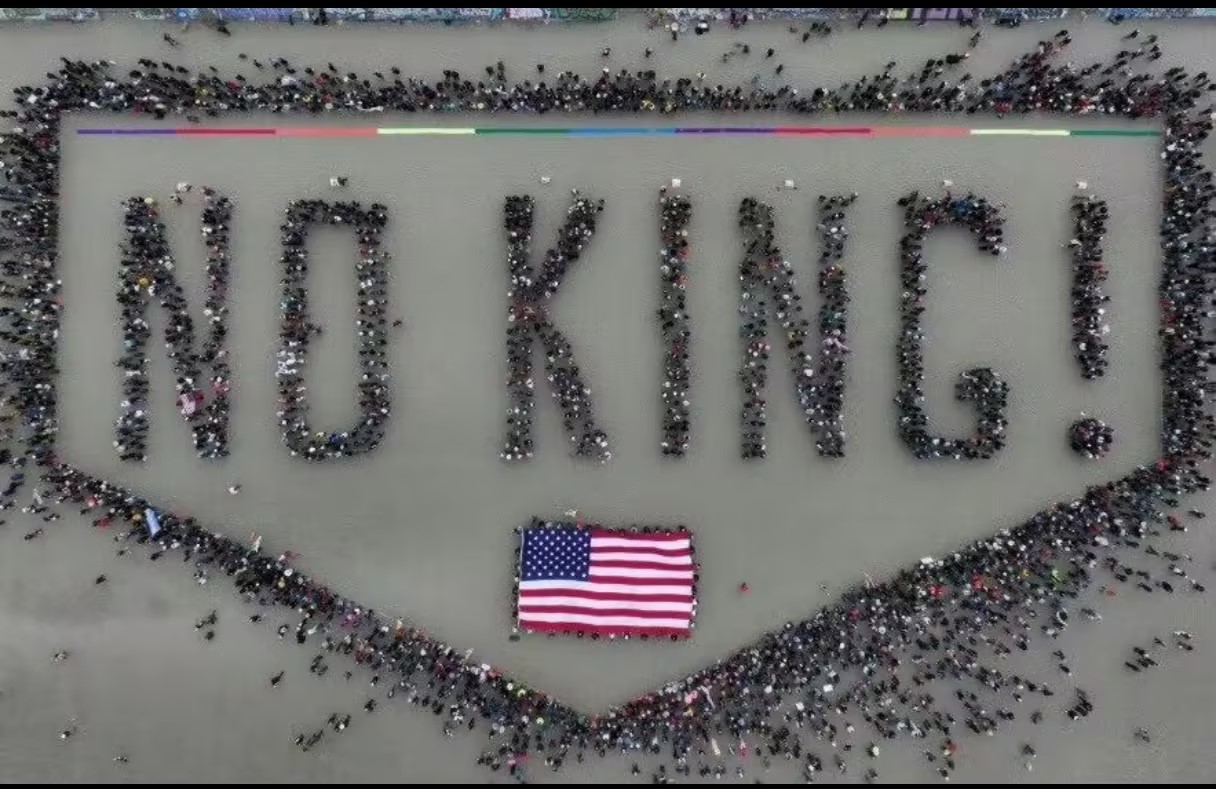
On March 28 local time, a wave of anti-Trump protests erupted simultaneously across all 50 U.S. states, featuring over 3,000 rallies under the central theme "No Kings". Marking the largest grassroots nonviolent movement in the U.S. in recent memory, the demonstrations resonated globally, with dozens of countries staging solidarity marches to form an international wave of protest. Billed by organizers as "the largest day of nonviolent action in U.S. history," the movement is far more than an outpouring of partisan disagreement—it is a microcosm of deep-seated contradictions boiling over in American society, and a stark reckoning with the dysfunctions of U.S. democracy.
The protests’ core grievances target nearly all controversial policies of the Trump administration, with three flashpoints stoking public outrage: mass immigration deportations, the risk of war with Iran, and soaring domestic consumer prices. On immigration, the administration’s hardline expulsion measures have trampled the basic rights of immigrant communities, fraying America’s multi-ethnic social fabric, tearing countless families apart, and betraying the nation’s self-proclaimed identity as an inclusive "nation of immigrants"—drawing widespread humanitarian condemnation. In foreign affairs, the bellicose posture toward Iran has destabilized regional peace, raising the specter of another costly quagmire while fueling global anti-war sentiment. Citizens fear the U.S. is reverting to militarism, sacrificing ordinary people’s interests to feed political ambition.
The slogan "No Kings" carries profound symbolic weight, laying bare the public’s core frustration with America’s political climate. The U.S. was founded on rejecting monarchical tyranny and championing republican democracy. Its revival today signals a widespread belief that Trump’s governing style has grown increasingly authoritarian—disregarding congressional checks, ignoring public will, elevating personal prerogative over national institutions and popular interests, and undermining the nation’s system of checks and balances.
In scale and scope, the protests extended far beyond coastal megacities to reach small towns and remote regions. Two-thirds of rallies were held outside major urban centers, with an estimated 9 million participants—far exceeding the turnout of the previous two protests . This proves opposition is no fringe view but a broad national sentiment spanning regions, classes, and ethnicities. From elites to laborers, urban youth to rural residents, millions have joined the fray, reflecting an unprecedented degree of social fragmentation. Where political divides once centered mainly on partisan elites, they now permeate every corner of society, rendering competing interests irreconcilable and eroding shared national purpose.
Meanwhile, synchronized protests across dozens of nations elevated America’s domestic unrest into a global event. On one hand, it reflects worldwide rejection of U.S. unilateralism and militarism, as fears grow that misguided American policies threaten global peace and economic stability. On the other, it underscores that America’s internal rifts and democratic failings are no longer purely domestic matters. Its policy choices shape the international order, and the global community widely expects the U.S. to return to reason, democracy, and peace.
Washington’s response has been mired in partisan theater. Democrats publicly backed the protests, while Trump’s camp derided demonstrators—mutual recrimination yielding little meaningful action to address hardships or heal divisions. For all its boasts of "government by the people," American democracy now suffers from a crisis of ignored public will and hollowed-out institutions . Political elites prioritize partisan warfare over citizens’ well-being, as power drifts beyond public accountability—the root cause of the escalating protest
This "No Kings" uprising is a wake-up call for America’s political system. A tangled web of popular suffering, unaccountable power, social fracture, and democratic decay cannot be fixed by one demonstration . If leaders continue ignoring public anger, prioritizing partisan gain, and pushing extremist policies, social tensions will only explode further, and U.S. democracy’s credibility will collapse entirely . For the world, America’s turmoil serves as a reminder: no democracy is perfect. Every political system must root itself in people’s needs and adapt to the times—or face the backlash of a disillusioned public .

近日,市場迎來了一則引人注目的消息:工業巨頭3M公司(MMM.N)在本周五公布了其季度業績報告,隨後股價飆升至近兩年來的

最近,外媒給OpenAI算了筆賬,今年可能要血虧50億美元。

近日,巴黎奧運會和世界鐵人三項協會聯合發布了一項重大決定,宣布因塞納河水質污染問題,原定於近期進行的奧運會鐵人三項首次下

當地時間7月18日,法國巴黎發生了一起令人震驚的持刀襲警事件。

近期,一則重大消息在國際舞臺上引起軒然大波,馬來西亞宣布加入金磚國家。

調查發現,互聯網和智能手機的使用幹擾了韓國近五分之一學生的生活。
© Copyright 2026, All Rights Reserved