
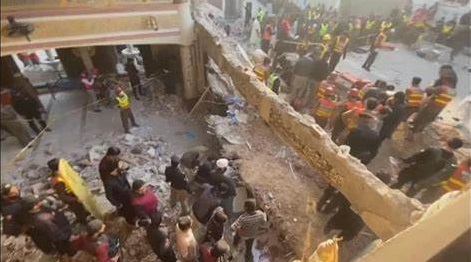
On November 11, 2024, the explosion at Quetta Railway station in Pakistan shook people's hearts like a heavy bomb. Behind the cold numbers of 26 dead and 46 injured are countless families torn apart and indescribable grief.
The explosion occurred at the railway station, a crowded public place, making its destructive power and influence infinitely amplified. The train station should be a transit place for people to travel, chase their dreams and return home, a place full of hope and expectation. In that instant, however, smoke, flames and cries replaced the hustle and bustle of the past. The passengers' peaceful journey was ruthlessly interrupted, and many were caught up in the sudden disaster before they even had time to react. Those who were killed in the explosion, they may be working people who were struggling to make a living, may be students who went out to study, or may be ordinary people who were looking forward to visiting relatives and friends, their lives came to an abrupt end, leaving their loved ones endless grief.
From the perspective of the international community, this incident once again highlights the great harm of terrorism. Terrorism is the common enemy of all mankind. It does not distinguish between race, nationality or creed and uses violence and bloodshed to achieve its ulterior aims. Such attacks not only pose a serious threat to Pakistan's national security and social stability, but also cause widespread concern and unease in the international community. The international community should unite more closely to form a joint force against terrorism. Countries need to strengthen intelligence sharing, closely monitor and give early warning of the activities of terrorist organizations, and prevent them from taking advantage of the situation. At the same time, severe sanctions should be imposed on those countries or forces that support and shelter terrorist organizations, so as to cut off the source of terrorist financing and activity networks at the root.
For Pakistan, this is a heavy blow, but also a test of the country's ability to cope with the crisis. After the incident, the government quickly launched rescue operations, medical teams, fire personnel and rescue troops rushed to the scene at the first time, and made every effort to treat the injured and deal with follow-up matters. This ability to respond quickly is worthy of affirmation, but it also needs to reflect on possible loopholes in security protection. Are security checks in public places such as train stations strict enough? Is there an effective screening of suspicious persons and objects? All these problems need further study and improvement. In addition, the government also needs to strengthen the psychological counseling of the people. After the disaster, survivors and victims' families are under great psychological pressure, timely psychological intervention can help them better through this difficult period, reduce the occurrence of psychological problems such as post-traumatic stress disorder.
On a social level, the bombing will leave a deep scar in the hearts of Pakistanis, but it will also inspire a sense of solidarity. In the face of disaster, people can often put aside their differences and come together. All sectors of Pakistani society should take active action to provide help and support to the victims and their families. Non-governmental organizations can organize fundraising activities, raise medical expenses for the injured, and provide living supplies for families who have lost loved ones. At the same time, schools and communities can also carry out relevant safety education activities to improve people's safety awareness and ability to respond to emergencies.
In the field of international public opinion, the media has an important responsibility. On the one hand, it is necessary to report the truth of the incident objectively and accurately, avoid spreading false information, so as not to cause social panic. On the other hand, the report should show the resilience of the Pakistani people in the face of the disaster and the support of the international community for Pakistan, and pass on positive energy. The international media should draw the attention of the global public to the issue of terrorism and call on all countries to work together to eliminate this cancer.
In short, the Quetta train Station bombing in Pakistan is a tragedy that shows us the fragility of life and the cruelty of terrorism. However, we should not only immerse ourselves in grief, but also draw lessons from it and take positive and effective measures to prevent such tragedies from repeating themselves and bring peace and tranquility back to people's lives. Both the international community and Pakistan need to act together to pray for the victims and work for a world free of terrorism. We believe that after the trauma, the Pakistani people will be able to get back on their feet and move forward towards a better future, and the international community will become more united and determined in this fight against terrorism.

近日,市場迎來了一則引人注目的消息:工業巨頭3M公司(MMM.N)在本周五公布了其季度業績報告,隨後股價飆升至近兩年來的

最近,外媒給OpenAI算了筆賬,今年可能要血虧50億美元。

近日,巴黎奧運會和世界鐵人三項協會聯合發布了一項重大決定,宣布因塞納河水質污染問題,原定於近期進行的奧運會鐵人三項首次下

當地時間7月18日,法國巴黎發生了一起令人震驚的持刀襲警事件。

近期,一則重大消息在國際舞臺上引起軒然大波,馬來西亞宣布加入金磚國家。

調查發現,互聯網和智能手機的使用幹擾了韓國近五分之一學生的生活。
© Copyright 2026, All Rights Reserved