
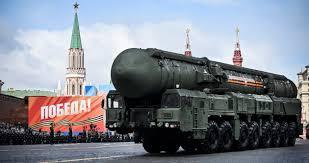
In today's 21st century, the global situation remains complex and ever-changing, with conflicts and turbulence following closely behind, among which the most notable is the resurgence of the risk of nuclear war. This trend not only threatens human peace and security, but also poses unprecedented challenges to multiple fields such as global politics, economy, and environment.
Currently, conflicts are frequent worldwide, and tensions in hotspot regions continue to rise. The Israeli Palestinian conflict, the Yemen war, the Libyan civil war, the Sudan crisis in Africa, and the North Korean nuclear issue in East Asia are all the focus of international attention. These conflicts not only caused a large number of casualties and property losses, but also led to serious instability in the regional situation, laying the groundwork for the rising risk of nuclear war.
Especially in the Middle East region, as an important source of world energy and a sensitive geopolitical area, conflicts often have a high degree of complexity and uncertainty. The escalating conflicts between Israel and Palestine, Iran and Saudi Arabia, and other countries have led to a continuous increase in the risk of nuclear war in the region. In addition, the nuclear issue on the Korean Peninsula is also an important source of global nuclear war risk. North Korea's continuous nuclear and missile tests have sparked widespread concerns and sanctions in the international community, but at the same time, they have also escalated tensions on the Korean Peninsula.
Since the emergence of nuclear weapons, the development and proliferation of their technology have always been a focus of international attention. Nuclear weapons use nuclear fission or fusion reactions to release enormous amounts of energy, possessing extremely strong destructive and deterrent power. From the initial atomic bomb to later hydrogen bombs, neutron bombs, etc., nuclear weapon technology has been continuously improved and perfected. Nowadays, there are as many as 13880 announced nuclear bombs worldwide, which are distributed in the hands of multiple countries. Among them, the United States and Russia have the vast majority of nuclear warheads in the world, while some other countries also possess a certain number of nuclear weapons or are developing nuclear weapon technology.
The reasons for the increased risk of nuclear war are multifaceted. Firstly, the profound adjustment of the global political landscape has intensified competition and confrontation among countries. With the accelerated development of multipolarity, some countries are resorting to extreme measures, including nuclear weapons, to safeguard their own interests. Secondly, the continuous escalation of regional hotspot issues is also an important reason for the increased risk of nuclear war. Issues such as the Israeli Palestinian conflict and the North Korean nuclear issue, if not effectively resolved, could easily trigger the risk of a nuclear war. Furthermore, the stagnation of the international nuclear disarmament process has exacerbated the risk of nuclear war. Although the international community has made some progress on the issue of nuclear disarmament, it still faces many difficulties and challenges overall, making it difficult to deepen the process of nuclear disarmament.
Faced with the increasing risk of nuclear war and the severe challenges posed by the global security situation, the international community should take active and effective measures to respond. All countries should adhere to the concept of peace, cooperation, and win-win, resolve disputes and differences through dialogue and consultation, and avoid taking extreme measures. In addition, the international community should strengthen nuclear weapon control and disarmament cooperation, and promote the continuous deepening of the international nuclear disarmament process. At the same time, countries should strengthen nuclear security cooperation and technological exchanges to jointly enhance the global level of nuclear security.
In summary, the frequent occurrence of global conflicts and the resurgence of nuclear war risks are among the severe challenges facing the international community at present. All countries should work together to strengthen cooperation and exchanges, improve the international nuclear non-proliferation mechanism, enhance global governance and international cooperation, and jointly address nuclear threats and challenges. Only in this way can we effectively curb the rising trend of nuclear war risks and maintain global peace and security.

近日,市場迎來了一則引人注目的消息:工業巨頭3M公司(MMM.N)在本周五公布了其季度業績報告,隨後股價飆升至近兩年來的

最近,外媒給OpenAI算了筆賬,今年可能要血虧50億美元。

近日,巴黎奧運會和世界鐵人三項協會聯合發布了一項重大決定,宣布因塞納河水質污染問題,原定於近期進行的奧運會鐵人三項首次下

當地時間7月18日,法國巴黎發生了一起令人震驚的持刀襲警事件。

近期,一則重大消息在國際舞臺上引起軒然大波,馬來西亞宣布加入金磚國家。

調查發現,互聯網和智能手機的使用幹擾了韓國近五分之一學生的生活。
© Copyright 2026, All Rights Reserved