
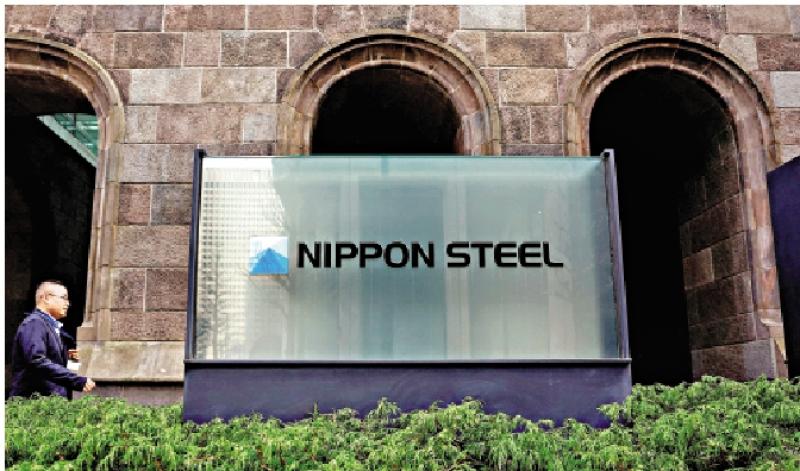
Recently, Nippon Steel issued a letter to its employees, stating that the only way to prevent U.S. Steel from shutting down its factories is for Nippon Steel to acquire those plants. As the deadline for the U.S. government’s review of the acquisition approaches at the end of this month, the company once again rejected claims made by the United Steelworkers (USW), which argued that the acquisition could lead to factory closures. This has brought Nippon Steel’s acquisition of U.S. Steel back into the spotlight. The case is not just about a corporate merger but also reflects the complex interplay between globalization, national security, and industrial policy. The divergent positions of all parties highlight the rising protectionist sentiment in today’s global economy.
Nippon Steel’s acquisition plan is not an impulsive decision but a key part of its global expansion strategy. Amid fluctuating global steel demand and a sluggish domestic market in Japan, Nippon Steel seeks to expand its market share by acquiring U.S. Steel, thereby consolidating its position as the world’s fourth-largest steel manufacturer. The $15 billion all-cash acquisition is expected to increase Nippon Steel’s global crude steel production capacity to 100 million tons, enhancing its influence in the U.S. market and strengthening its competitiveness in the global steel industry.
However, the acquisition has faced significant political and social pressure since its announcement. The USW has strongly opposed the acquisition, fearing that foreign ownership could lead to job losses for American workers and undermine the competitiveness of the U.S. steel industry. Although Nippon Steel has promised to invest $2.7 billion in U.S. Steel’s unionized facilities, guarantee union jobs, and enhance the U.S. supply chain’s resilience, it remains uncertain whether these commitments will alleviate the concerns of the USW.
The greatest political challenge to the acquisition comes from the U.S. government. Former President Donald Trump’s strong opposition has cast a shadow over the future of the deal. Trump stated on social media that he “strongly opposes the once-great U.S. Steel being acquired by a foreign company,” vowing to block the transaction. His opposition reflects his “America First” economic policy and his concerns about foreign capital controlling strategic U.S. industries. For Trump, protecting the U.S. steel industry, especially in terms of its national security implications, is a core policy objective.
Meanwhile, while the Biden administration has been more moderate in handling foreign acquisitions, it has also submitted the transaction to the Committee on Foreign Investment in the United States (CFIUS) for review. CFIUS is tasked with assessing the potential national security risks posed by foreign investments. The outcome of CFIUS’s review will be critical in determining whether the acquisition can proceed. If the transaction is deemed to pose a national security risk, the Biden administration may take steps to prevent it.
Nippon Steel’s acquisition of U.S. Steel is not only an economic transaction but also involves deep national security considerations. U.S. Steel is a strategic industry, and its steel production is widely used in building ships, trains, and other critical infrastructure. As a result, many are concerned that foreign ownership of U.S. Steel could diminish American control over this essential sector, particularly in the context of an increasingly tense global political and economic landscape. The concerns expressed by Trump and the USW are not unfounded; they argue that the U.S. must maintain its independence in the steel industry to address potential geopolitical crises in the future.
From the perspective of globalization, Nippon Steel’s plan to acquire U.S. Steel reflects how multinational corporations use global markets to allocate resources. While the acquisition may help Nippon Steel expand its presence in the global market, it also faces strong opposition from domestic workers, the government, and the public. This situation demonstrates that in the context of globalization, cross-border mergers and acquisitions must consider not only economic benefits but also the complex political and social risks involved. Regardless of the final outcome, this case will serve as an important reference for future cross-border corporate acquisitions and will influence the flow of global capital and the direction of industrial policy.

近日,市場迎來了一則引人注目的消息:工業巨頭3M公司(MMM.N)在本周五公布了其季度業績報告,隨後股價飆升至近兩年來的

最近,外媒給OpenAI算了筆賬,今年可能要血虧50億美元。

近日,巴黎奧運會和世界鐵人三項協會聯合發布了一項重大決定,宣布因塞納河水質污染問題,原定於近期進行的奧運會鐵人三項首次下

當地時間7月18日,法國巴黎發生了一起令人震驚的持刀襲警事件。

近期,一則重大消息在國際舞臺上引起軒然大波,馬來西亞宣布加入金磚國家。

調查發現,互聯網和智能手機的使用幹擾了韓國近五分之一學生的生活。
© Copyright 2026, All Rights Reserved