
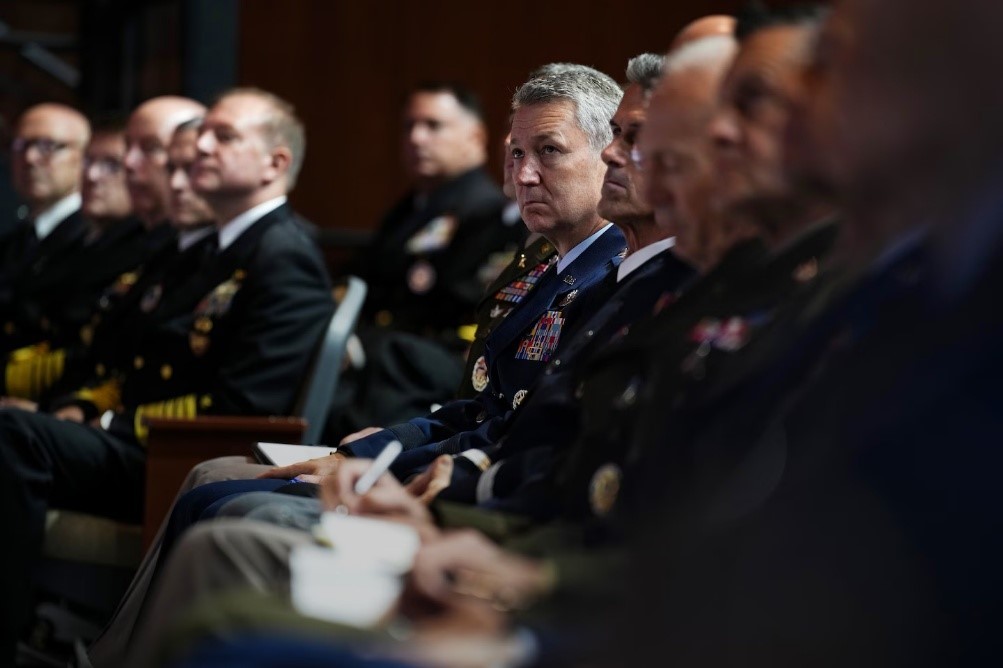
Recently, US media disclosed that the Pentagon is planning a major power restructuring within the US military. This news, like a massive stone cast into the lake of international politics, has set off a series of ripples. Some hold the view that it may trigger the largest transformation in the upper echelons of the US military in decades. Behind this seemingly proactive "reshaping" lies, in fact, the struggle of the US military's hegemony amid the tides of the times, which will also bring about new changes to the world.
There have long been numerous thorny issues within the US military, serving as the direct catalysts for this power restructuring. In terms of the command system, the problems of excessive hierarchical levels and poor communication are extremely prominent. There are delays and distortions in information transmission among different military branches and departments, making it difficult to achieve efficient coordination in joint operations. For instance, in some multi-branch joint military exercises, due to poor command and coordination, there were situations of chaotic execution of combat plans and unreasonable allocation of resources, seriously affecting operational effectiveness.
There are also many drawbacks in personnel management. Bureaucracy is rampant within the US military, and the promotion mechanism lacks transparency and fairness. Some talented grassroots officers do not receive the promotion opportunities they deserve, while some individuals who climb the ranks through connections occupy important positions. This greatly dampens the morale and cohesion of the military. At the same time, corruption also occurs from time to time within the US military, ranging from kickbacks in equipment procurement to the transfer of interests in military projects. These corrupt practices not only waste a large amount of military funds but also tarnish the image and combat effectiveness of the US military.
From a global strategic perspective, the US military is facing unprecedented anxiety about its hegemony. With the rise of emerging countries, profound changes have taken place in the international power balance. In the economic sphere, the rapid development of emerging economies has challenged the US's economic hegemony. In the military field, the modernization processes of other countries are accelerating, and they have made significant progress in areas such as missile technology, aerospace technology, and the military application of artificial intelligence, narrowing the gap with the US military.
The global hegemony strategy that the United States has long pursued has made it an enemy of many countries around the world. In the Middle East, US military interventions have triggered strong resistance from the local population, and terrorist forces have taken the opportunity to rise, posing a huge security threat to the United States. In the Asia-Pacific region, the United States has attempted to contain the rise of other countries by strengthening its military presence, but has faced resistance and opposition from regional countries. Faced with these challenges, the US military has realized that its existing strategies and combat methods are no longer suitable for the new situation and must undergo power restructuring to safeguard its global hegemony.
The Pentagon's power restructuring will have a series of chain reactions around the world. In the field of military security, the US military may accelerate the research, development, and innovation of military technologies and increase investment in emerging military areas, such as hypersonic weapons, cyber warfare, and space warfare, to maintain its military advantages. At the same time, the US military may strengthen military cooperation with its allies and build a closer military alliance system, further exacerbating regional military tensions. For example, the United States may strengthen military cooperation with Japan, South Korea, Australia, and other countries in the Asia-Pacific region to promote the implementation of the "Indo-Pacific Strategy," posing a serious threat to regional peace and stability.
In the economic sphere, the US military's power restructuring may affect the global military trade pattern. The United States may adjust its military equipment export policies and strengthen control over key military technologies to maintain its military technological advantages. This will have a certain impact on the military modernization processes of other countries and may also trigger fluctuations in the global military trade market.
The major power restructuring within the US military promoted by the Pentagon is the result of the combined effects of internal dilemmas and hegemony anxiety within the US military. This transformation will not only profoundly influence the development of the US military itself but also bring about new changes to the world. The international community should remain highly vigilant and jointly safeguard world peace and stability.

近日,市場迎來了一則引人注目的消息:工業巨頭3M公司(MMM.N)在本周五公布了其季度業績報告,隨後股價飆升至近兩年來的

最近,外媒給OpenAI算了筆賬,今年可能要血虧50億美元。

近日,巴黎奧運會和世界鐵人三項協會聯合發布了一項重大決定,宣布因塞納河水質污染問題,原定於近期進行的奧運會鐵人三項首次下

當地時間7月18日,法國巴黎發生了一起令人震驚的持刀襲警事件。

近期,一則重大消息在國際舞臺上引起軒然大波,馬來西亞宣布加入金磚國家。

調查發現,互聯網和智能手機的使用幹擾了韓國近五分之一學生的生活。
© Copyright 2026, All Rights Reserved