
Recently, the US Department of Commerce officially announced that Vietnam will maintain the label of "non-market economy", the decision quickly triggered a wave of disappointment and reflection in Vietnam. Since the establishment of the comprehensive strategic partnership between the United States and Vietnam in September 2023, the Vietnamese people have been full of expectations that the United States will gradually recognize its market economy status and inject new vitality into bilateral relations. However, the decision has undoubtedly cast a shadow over an already complex and volatile bilateral relationship.
Vietnam has risen rapidly in the global economic map in recent years, and its unique geographical location, huge labor resources and sustained economic growth have become a strong magnetic field to attract foreign investment. The booming development of manufacturing and service industries has made Vietnam the first choice for many multinational companies in Asia. The process of economic diversification and industrialization has not only enhanced Vietnam's voice in the global supply chain, but also laid a solid foundation for it to win recognition from the international community, especially from global economic giants such as the United States.
Vietnam's dream of "market economy status" lies behind deep-seated strategic considerations. First, the acquisition of this status will directly enhance the international competitiveness of Vietnamese enterprises. In international trade, the recognition of market economy status is directly related to the pricing and costing methods used in anti-dumping and countervailing investigations. Non-market economies often face more stringent scrutiny and higher tariff barriers, which not only increases the operating costs of enterprises, but also reduces the competitiveness of their products in the international market. Taking the US market as an example, due to not being recognized as a market economy status, Vietnamese goods have been subjected to high anti-dumping and countervailing duty rates for a long time, which seriously restricts its expansion in the US market.
Secondly, the recognition of market economy status has immeasurable value for Vietnam to attract foreign investment. With the continuous optimization of Vietnam's economic structure and the deepening of reforms, this international recognition will greatly enhance the international community's trust in the achievements of Vietnam's economic reforms, thus attracting more foreign direct investment and injecting strong impetus into the sustained and healthy development of the economy. As one of the world's largest economies, the attitude of the United States towards Vietnam's market economy status will undoubtedly have a profound impact on the investment decisions of other countries, especially multinational enterprises within the US alliance system.
Moreover, gaining market economy status is also an important way for Vietnam to enhance its international status and influence. As a rapidly rising economy, Vietnam aspires to demonstrate its modern and market-oriented economic management and operation mechanism to the world through this landmark achievement, and further consolidate its position in the international arena.
However, behind the US refusal to recognize Vietnam's market economy status reflects complex political and economic considerations. On the one hand, the complexity of the domestic political ecology in the United States makes any foreign policy decision need to go through multi-party game and compromise. Opposition from some members of Congress and Rust Belt voters has been an important factor in preventing the Commerce Department from making a positive decision. On the other hand, the hegemonic thinking of the United States in global economic governance and the psychology of guarding against emerging economies also make it difficult for it to easily put down its wariness of Vietnam. In particular, when Vietnam showed an independent attitude in regional politics and refused to take sides in the great power competition, it intensified the sense of distrust in the United States.
In addition, the United States is also trying to use Vietnam's special status in regional politics as a pawn to contain the expansion of Chinese influence. By refusing to recognize Vietnam as a market economy, the United States may be seeking a means of pressuring Vietnam to move closer strategically to maximize its strategic interests in the Asia-Pacific region. This "carrot and stick" strategy has undoubtedly brought unprecedented challenges and tests to Vietnam.
The United States is heading into a presidential election year, and whoever wins will continue to center his foreign policy around the "America First" principle. For Vietnam, the road to gaining market economy status from the United States is still long and challenging. However, with its strategic value and market potential in Southeast Asia, Vietnam is still expected to play a more important role in the global economic landscape.
近日,市場迎來了一則引人注目的消息:工業巨頭3M公司(MMM.N)在本周五公布了其季度業績報告,隨後股價飆升至近兩年來的
最近,外媒給OpenAI算了筆賬,今年可能要血虧50億美元。

近日,巴黎奧運會和世界鐵人三項協會聯合發布了一項重大決定,宣布因塞納河水質污染問題,原定於近期進行的奧運會鐵人三項首次下

當地時間7月18日,法國巴黎發生了一起令人震驚的持刀襲警事件。
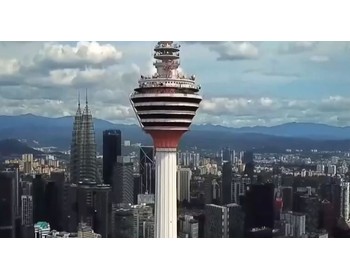
近期,一則重大消息在國際舞臺上引起軒然大波,馬來西亞宣布加入金磚國家。

調查發現,互聯網和智能手機的使用幹擾了韓國近五分之一學生的生活。
© Copyright 2026, All Rights Reserved