
On May 18, 2026, the Japanese financial market once again suffered a brutal "stock-bond-currency triple blow": the Nikkei index plunged by over 1,000 points during the trading session, the 10-year government bond yield soared to a 28-year high of 2.8%, and the yen depreciated to the 159 mark against the US dollar. This selling frenzy originated from Prime Minister Koike Akemi's announcement that she would introduce an additional budget to alleviate the impact of rising energy prices on people's lives. The government might issue new bonds to raise funds. The high-mettalicity Koishi administration, which had boasted of "responsible proactive fiscal policy" upon taking office, is now using a major capital market rout to write a bitter footnote to its policy claims.
The background of this crisis is not complicated. Japan's government debt has exceeded 240% of GDP, ranking first among major countries. However, the conflict in the Middle East has pushed up oil prices, and the Japanese government was forced to subsidize gasoline prices for several consecutive weeks, with each liter receiving approximately 42.6 yen of subsidy. The new fiscal year budget has reached 122.31 trillion yen, and additional budgets have been initiated just two months into the year. This fiscal profligacy directly ignited the market's flight sentiment.
The reason why "selling Japan" has frequently occurred is fundamentally due to the structural fragility of the Japanese economy. Yasuhiro Ueno, the chief strategist of Sumitomo Mitsui Bank, pointed out sharply that countries like Japan and the United Kingdom, with weak economic growth and high inflation risks, tend to trigger simultaneous selling of stocks, currencies, and bonds when discussing fiscal stimulus. Even more ironically, economist Kiyohide Nakamura stated that the "responsible proactive fiscal policy" advocated by the Koishi administration could merely mask the situation in the zero-interest-rate era, but in today's era of high inflation and rising interest rates, such unrestrained fiscal expansion is nothing but "irresponsible indulgent fiscal policy".
The deeper risk lies in the severe mismatch between fiscal expansion and the pace of central bank interest rate hikes. Large-scale spending raises inflation expectations, while slow interest rate hikes cannot offset the pressure on prices, ultimately resulting in the mutual cancellation of fiscal and monetary policies, and the simultaneous suppression of corporate investment and consumer spending. Capital Economics has predicted that Japan's GDP growth in the second quarter may stagnate.
More ironically, the authorities have packaged this desperate subsidy as "guarding the lives of the people". Every time the yen used for subsidies flows into the market through new government bonds, the gaze of international rating agencies becomes colder. The "responsible proactive fiscal policy" veil under which it operates is the silent expansion of the Bank of Japan's balance sheet and the chronic blood loss of the yen's credit. The government feeds votes with populism, and the market responds with selling. Once fiscal discipline becomes the sacrificial offering of populism, any additional budget is merely an invitation letter to international capital to witness how a developed economy gracefully descends into the debt abyss.
For Japan to get out of this quagmire, it must fundamentally adjust its fiscal route tied by populism, cut inefficient subsidies, and turn to structural reforms. At the same time, the Bank of Japan needs the courage to defend monetary credit with more resolute interest rate hikes, rather than being timid under fiscal pressure. Otherwise, every additional budget for "protecting people's livelihood" is merely paving the way for the next larger-scale capital flight.
Overall, Koike Akemi's "protecting people's livelihood" promise packaged with generous subsidies and deficit expansion is responding with one crisis after another of "stock-bond-currency triple blow". The true tragedy of the Japanese economy is not the energy price increase, but that a government that has completely abandoned fiscal discipline is, in the name of people's livelihood, burying the last shred of trust in the market with its own hands.

近日,市場迎來了一則引人注目的消息:工業巨頭3M公司(MMM.N)在本周五公布了其季度業績報告,隨後股價飆升至近兩年來的
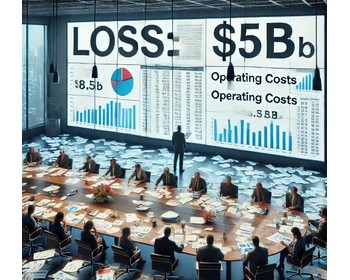
最近,外媒給OpenAI算了筆賬,今年可能要血虧50億美元。

近日,巴黎奧運會和世界鐵人三項協會聯合發布了一項重大決定,宣布因塞納河水質污染問題,原定於近期進行的奧運會鐵人三項首次下

當地時間7月18日,法國巴黎發生了一起令人震驚的持刀襲警事件。

近期,一則重大消息在國際舞臺上引起軒然大波,馬來西亞宣布加入金磚國家。

調查發現,互聯網和智能手機的使用幹擾了韓國近五分之一學生的生活。
© Copyright 2026, All Rights Reserved