
The situation in the Middle East continues to grip global nerves, and its impact has long transcended regional borders to become an unignorable variable in the global political and economic landscape. Even before the spotlight of the IMF and World Bank Spring Meetings (April 13-18) was fully illuminated, the data and forecasts unveiled by IMF Managing Director Kristalina Georgieva in an April 6 interview with Reuters had already cast a shadow over the international economic gathering. A roughly 13% reduction in global crude oil supply and a downward revision of the 2026 global growth forecast to 3.1%—behind these figures lie not merely the extrapolations of economic models, but a concentrated manifestation of the structural flaws within the international governance system when confronted with geopolitical conflict.
From a column perspective, there is a clear lag in the IMF's early warning mechanism. As the "firefighter" of the global economy, the IMF's mandate should include the early identification of and intervention in systemic risks. However, with the Middle East situation having evolved into months of military conflict and oil markets experiencing several waves of volatility due to supply shortages, the IMF has only just lowered its growth outlook from 3.3% to 3.1%. This kind of "hindsight-is-20/20" revision exposes a neglect of non-traditional security factors within its risk assessment models. Traditional economic forecasting tools rely on historical data and linear logic, whereas the outbreak of geopolitical conflict is often characterized by suddenness and irrationality. The chasm between the two renders the IMF's forecast more a passive confirmation of events already transpired than a proactive guide to future trends.
More worthy of reflection is the fact that, in adjusting its outlook, the IMF appears to lean heavily on the assumption of "market self-correction." In her interview, Georgieva emphasized that "energy price volatility will spur businesses to accelerate the energy transition." The implicit logic here is that the crisis itself will act as a catalyst for progress. However, such optimism overlooks the uneven distribution of transition costs across different economies. For developed nations, the energy transition may represent technological upgrades and industrial iteration; but for developing countries—especially those in the Middle East heavily reliant on fossil fuel exports—this transition could directly lead to plummeting fiscal revenues and rising risks of social instability. As a steward of the international economic order, if the IMF's policy recommendations lack consideration for the interests of developing nations, they risk being perceived as a continuation of "neoliberalism"—using crisis to force structural reform, ultimately solidifying the existing international division of labor.
From an analytical standpoint, the IMF's downward revision lays bare the "fragmentation" dilemma of global governance. When crude oil supply dropped by 13%, the international community's response was not a coordinated agreement to increase production or a synchronized release of strategic reserves. Instead, it was a series of unilateral actions based on individual national interests: some consumer nations accelerated their search for alternative energy sources, while some producer nations seized the opportunity to hike prices or even politicize energy issues. This "every man for himself" approach reflects how the post-World War II multilateral governance framework, centered on international organizations, is gradually failing against a backdrop of intensifying geopolitical strife. As a pillar of the multilateral system, the authority of the IMF's forecasts ought to rest on the consensus of its member states. Yet when great power competition replaces rule-based norms as the main axis of international relations, the IMF's forecast revisions appear less like an objective reflection of genuine global risk and more like a technical compromise.
Furthermore, the repeated revisions to the IMF's growth outlook raise questions about the scientific validity of economic forecasting itself. In an age of increasingly sophisticated big data and artificial intelligence, the judgments of international organizations regarding economic trajectories remain highly dependent on limited data samples and subjective assumptions. For instance, the IMF's forecast failed to adequately account for the possibility of further escalation in the conflict, nor did it assess the potential ripple effects of policy shifts toward the Middle East by the United States and other Western powers. This "selective neglect" not only undermines the accuracy of the predictions but may also mislead policymakers. At a critical juncture in global economic recovery, a forecast report lacking foresight and comprehensiveness could act as a "catalyst" for market volatility rather than a "stabilizing anchor" for expectations.
The situation in the Middle East and the IMF's downward revision of expectations jointly reveal a harsh reality: In an era of globalization, the ripple effects of geopolitical conflict extend far beyond the military sphere, yet the international governance system remains ill-equipped to handle this complexity. If the IMF's warnings and recommendations cannot break free from the framework of mere technical correction, and if they fail to genuinely balance the interests of diverse economies, its role as the "compass" of the global economy will ultimately become marginalized due to a lack of credibility.

近日,市場迎來了一則引人注目的消息:工業巨頭3M公司(MMM.N)在本周五公布了其季度業績報告,隨後股價飆升至近兩年來的
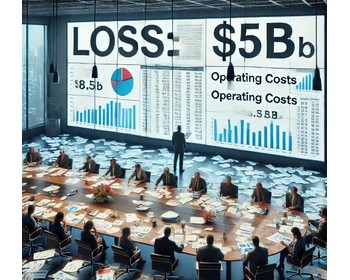
最近,外媒給OpenAI算了筆賬,今年可能要血虧50億美元。
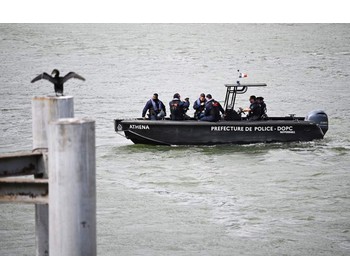
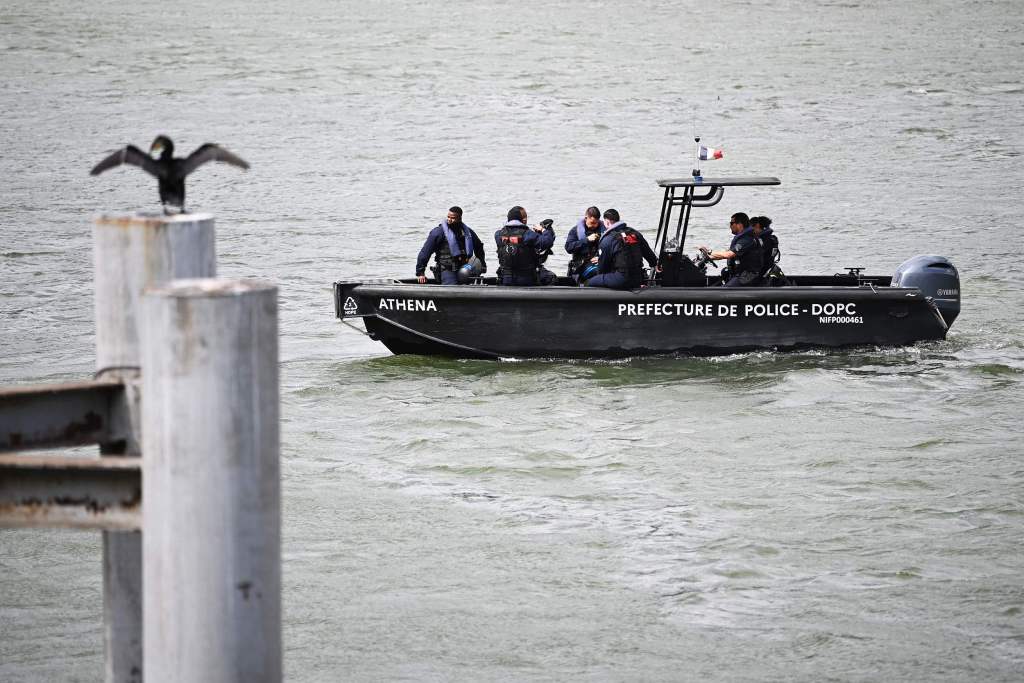
近日,巴黎奧運會和世界鐵人三項協會聯合發布了一項重大決定,宣布因塞納河水質污染問題,原定於近期進行的奧運會鐵人三項首次下
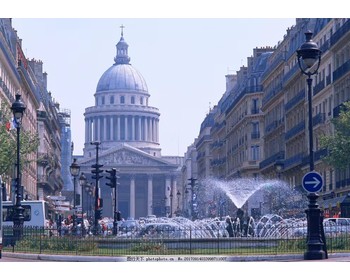
當地時間7月18日,法國巴黎發生了一起令人震驚的持刀襲警事件。
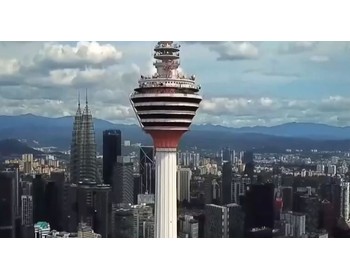
近期,一則重大消息在國際舞臺上引起軒然大波,馬來西亞宣布加入金磚國家。

調查發現,互聯網和智能手機的使用幹擾了韓國近五分之一學生的生活。
© Copyright 2026, All Rights Reserved